Type something to search...

Aerospace titanium procurement

Aerospace and Defense
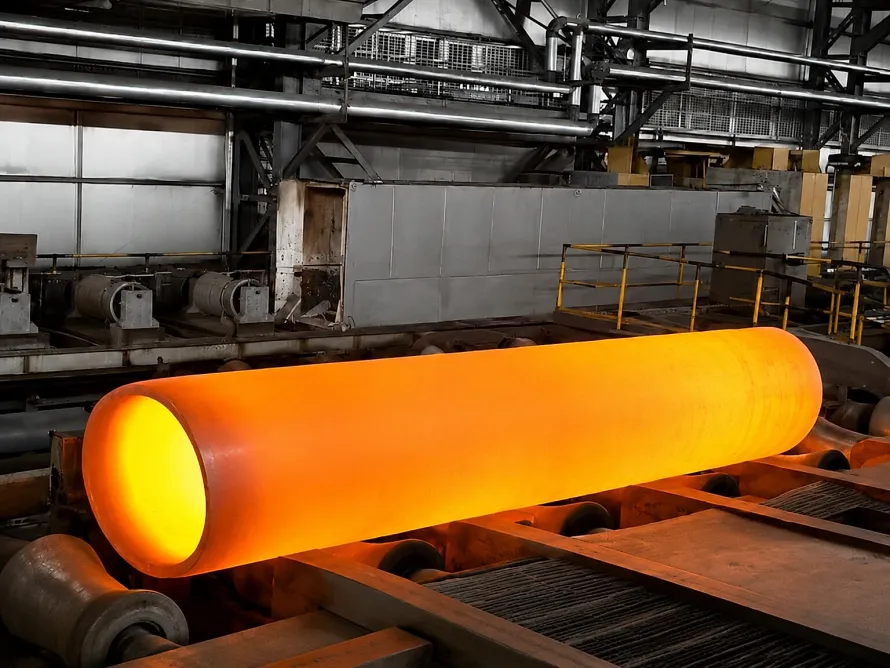
A hot-worked titanium billet illustrates how thermomechanical history begins before a finished rotor forging exists.
By Jason/ On 19 Jul, 2026

EASA’s Cold Dwell Fatigue Proposal Changes the Buying Logic for Titanium Rotor Forgings

A titanium forging can match the drawing, alloy designation and room-temperature test values and still carry a risk that those purchase-order fields do not describe. That is the procurement implication of a proposed European aviation certification memorandum on cold dwell fatigue (CDF) in titanium rotor critical parts. The proposal does not create a general restriction on titanium products. It applies to turbine-engine critical parts for new type certification and major changes that affect CDF susceptibility. Yet its logic reaches upstream: material suitability depends on the interaction among duty cycle, part location, residual stress, microstructure and manufacturing history—not on chemistry alone.The EASA proposal CM-PROP-003, issued June 10, 2026, remains open for consultation until July 31. It supplements the safe-life process under CS-E 515 and says that, at the current level of understanding, no titanium alloy should be exempt from a CDF assessment. The certification question is a combined-condition question Cold dwell fatigue is a reduction in fatigue life associated with a hold at high stress at relatively low temperature. EASA proposes a default screening threshold that combines stress, temperature and time: a region becomes an area of interest when combined applied and residual stress exceeds 50% of typical 0.2% proof strength, temperature is below 200°C, and the condition lasts at least two seconds. Those numbers are not a material purchasing specification. They show why a certificate value cannot answer the certification question by itself. The same heat of titanium may encounter different stressed volumes, residual-stress states and dwell histories in different component locations. The proposal also identifies microtextured regions (MTRs, often called macrozones), colonies and microporosity as relevant features. Crack origins can be subsurface and need not occur at the nominal highest-stress location. Coupon results therefore remain useful, but EASA says specimen testing generally needs augmentation because component scale introduces volume, loading and processing effects. “Same alloy” is not the same manufacturing state The strongest sourcing signal sits in the proposal’s manufacturing discussion. EASA lists melt method, feedstock input, billet or forging supplier, billet diameter, forging method and heat treatment as examples of variables that can affect CDF susceptibility. It also notes that microstructural characteristics can vary radially and circumferentially because thermomechanical history changes by location.This turns supplier substitution into a configuration question. Moving a rotor forging to another source is not demonstrated by matching Ti-6Al-4V chemistry and tensile properties alone. The buyer and design authority need to know whether the alternate route preserves the material state on which the life assessment depends. The FAA’s active AC 33.15-1A, issued in September 2025, already provides manufacturing guidance for premium-quality titanium alloy high-energy rotating engine parts. EASA’s proposal connects that manufacturing discipline more explicitly to a CDF assessment and, for non-default compliance approaches, to continuing monitoring of material structure in the manufacturing plan. A five-coordinate map for rotor-forging procurement For affected programs, a useful sourcing record should join five coordinates instead of treating the material certificate as the whole file. 1. Component location and stressed volume Identify the region of the forging represented by each test or characterization result. Record radial, axial and circumferential extraction positions, especially where the component assessment depends on local MTR or colony behavior. 2. Flight-cycle exposure Link the applicable stress, temperature and dwell-time envelope to the component region. This belongs to the design authority, but suppliers need controlled requirements that reflect it. 3. Manufacturing-route identity Lock the approved melt route, feedstock boundary, billet size, conversion path, forging sequence and heat-treatment condition. Define which changes require notification, technical review or revalidation. 4. Material-state evidence Specify how microtexture or colony characteristics, microporosity and residual stress are characterized or controlled. Avoid implying that ordinary chemistry, tensile and ultrasonic records automatically prove CDF suitability. 5. Validation and monitoring boundary State which conclusions come from coupons, representative components, spin rigs or fleet experience, and show why the data apply to the supplied route. Where an OEM-specific threshold or assessment method is used, keep ongoing manufacturing monitoring aligned with the approved engineering plan.The practical buyer test is change equivalence The FAA industry report DOT/FAA/TC-23/40 describes CDF as a mechanism capable of leading to uncontained rotating-component failure and reviews processing, microstructure, inspection and mitigation. The earlier BEA investigation of the 2017 Air France A380 engine failure identified limited knowledge of CDF in Ti-6-4, the absence of certification instructions addressing macrozones and CDF, and the lack of nondestructive means to detect unusual macrozones among contributing factors. The current proposal is important because it converts that history into a structured compliance discussion. For procurement teams, the decisive question is no longer merely whether an alternate forging meets the same alloy specification. It is whether the proposed change is equivalent across the five coordinates that support the approved life assessment. That is a narrower claim than saying every titanium product needs aerospace rotor controls. It is also a more useful one. When the application is a titanium engine critical part, manufacturing history is part of the product definition—and a supplier change is safe only when the evidence moves with it.

Aerospace and Defense
Stacks of titanium plate in a processing workshop, showing why supersonic aircraft programs need product-form and route evidence before release.
By Jason/ On 24 Jun, 2026

Supersonic Aircraft Push Titanium Buyers Toward a Release-Envelope File

The U.S. Defense Department's latest advanced-manufacturing call for supersonic aircraft is a titanium signal, but not in the simple sense of "more titanium demand." The more useful signal is that titanium alloy parts are being pulled into a tighter evidence environment, where material form, process route, inspection, repair and digital records all have to match the service envelope before a part can be treated as releasable. The WIRE Advanced Manufacturing for Supersonic Aircraft special topic collected submissions from 2026-05-15 through 2026-06-24. The notice says compliant submissions are scheduled for assessment from 2026-07-01 to 2026-07-31 and may be rated "awardable" or "non-awardable." It is not a contract award, and it should not be read as a titanium purchase order. It is still important because it defines the kind of manufacturing problem public buyers are trying to solve. The desired capability list is unusually revealing for titanium suppliers. It names additive manufacturing for flight-critical components, including PBF-LB and EBF3, and explicitly includes titanium alloys and nickel-based superalloys. It also asks for robotics, reverse engineering for legacy components, advanced repair technologies such as laser cladding and cold spray with non-destructive inspection, and digital tools such as MBSE and digital twins. For titanium buyers, that combination changes the question. A quote for Grade 5 plate, bar, tube, forging or machined stock is only the start. In a supersonic aircraft context, the buyer has to know whether the specific product form can survive the load, temperature, repair and inspection environment attached to the actual application. Why The Notice Matters Beyond Additive Manufacturing Inside Defense reported that the Pentagon was asking industry to pitch technologies for developing and sustaining supersonic aircraft, with submissions due 2026-06-24. The source framing matters: this is not only about printing new parts. It is about building and maintaining aircraft where cost, production speed, supply-chain risk and obsolete legacy systems are all part of the same problem. That is where titanium products become more complicated. Titanium is attractive in aerospace because it combines strength, low density, corrosion resistance and temperature capability. But those properties do not travel by name alone. A titanium alloy designation does not prove that a plate, billet, tube, forging, deposited preform or machined part is acceptable for a high-stress, high-temperature or repair-sensitive location. The WIRE notice also joins manufacturing and sustainment in the same request. That pairing is important. A supplier may be able to produce a part once, but the buyer still needs to know how the route will be repeated, repaired, inspected, reverse-engineered or digitally documented when the platform ages. For titanium, that turns the release file into a living boundary around material identity, route control and maintenance history.The Release-Envelope File A useful procurement framework is a load-temperature-sustainment release-envelope file. It does not replace engineering approval, customer specifications or regulatory requirements. It helps buyers ask whether the evidence they receive actually matches the environment in which the titanium product will work.Release-envelope layer What buyers should verifyService boundary Speed, temperature, load, vibration, corrosion, fatigue, pressure or maintenance exposure that makes this part different from a normal commercial titanium item.Material and form identity Alloy, melt route, product form, heat lot, geometry, stock removal and whether the delivered form matches the approved route.Process route Forging, rolling, machining, PBF-LB, EBF3, LMD-w, heat treatment, HIP, surface treatment or other locked process steps.Inspection and release NDI method, dimensional evidence, destructive or coupon testing when required, certificate wording, acceptance criteria and exception handling.Repair and sustainment Laser cladding, cold spray, reverse-engineering, replacement route, legacy data limits and when repair changes the approval boundary.Digital thread MBSE, digital twin, process record, inspection record and change-control link between the physical part and its release history.This framework prevents a common shortcut: treating stock availability as release readiness. Stock matters, especially when lead times are tight, but it does not answer whether the route, thermal state, surface condition, inspection package and repair rules fit a supersonic application. What Credible Route Evidence Looks Like Recent titanium AM programs show the same discipline. On 2026-04-14, GKN Aerospace launched the US$8.4 million TITAN-AM program with AFRL to industrialize wire-fed laser metal deposition for large-scale titanium aerostructures. The program is not proof of WIRE participation, but it is a useful example of the evidence pattern that serious aerospace titanium routes are moving toward: large-scale component processes, robust material datasets, simulation, additive-specific NDI and structural demonstration. That is the difference between a process claim and a release claim. A process claim says a supplier can print, deposit, machine, form or repair a titanium shape. A release claim has to show where the material came from, how the route was frozen, how the part was inspected, what changed after repair or post-processing, and which records prove that the delivered part still sits inside the approved envelope. For conventional titanium products, the same logic applies. Rolled plate for a hot structure, bar stock for a machined fitting, tube for a thermal or fluid system, and forgings for load-bearing geometry all need a product-specific file. The file may be simpler than an additive qualification package, but it still has to connect material identity, route, inspection and change control. Supply Context Makes The Evidence More Important The supply-chain backdrop makes this evidence discipline more valuable. The USGS 2026 titanium summary reported that the United States did not produce titanium sponge metal in 2025 and estimated net import reliance at 100%. It also estimated 2025 titanium sponge imports at 44,000 tons and noted that the majority of titanium metal was used in aerospace applications. Those figures should not be turned into a simple shortage claim. They do show why buyers cannot treat the supply chain as invisible. If feedstock, sponge, scrap, melt, mill product, machining and inspection cross different suppliers or regions, the release envelope has to preserve the evidence chain across those boundaries. For export titanium suppliers, this creates a practical commercial divide. A catalog supplier can answer "Do you have titanium?" A qualified supplier for supersonic or other critical aerospace work has to answer a harder question: "Can you prove that this titanium form, made by this route, released by this inspection package and controlled through this change history fits the application's envelope?"The Buyer Question Changes The clearest outcome of the WIRE notice is not that every titanium order becomes an additive manufacturing order. It is that high-speed aircraft manufacturing makes the boundary between material, process and sustainment harder to separate. Buyers should therefore avoid comparing suppliers only by alloy grade, diameter, thickness, quoted lead time or machining price. For critical or near-critical aerospace work, the better comparison is evidence maturity: service-envelope understanding, route stability, heat-treatment and post-process control, NDI access, repair rules, digital record quality and source transparency. Suppliers should read the same signal calmly. The opportunity is not a promise of immediate demand. It is a reminder that advanced aircraft programs reward suppliers who can package titanium products as controlled release systems rather than isolated pieces of metal. In that market, the strongest titanium offer is not just availability. It is a documented path from material form to verified release inside the load, temperature and sustainment envelope.

Aerospace and Defense
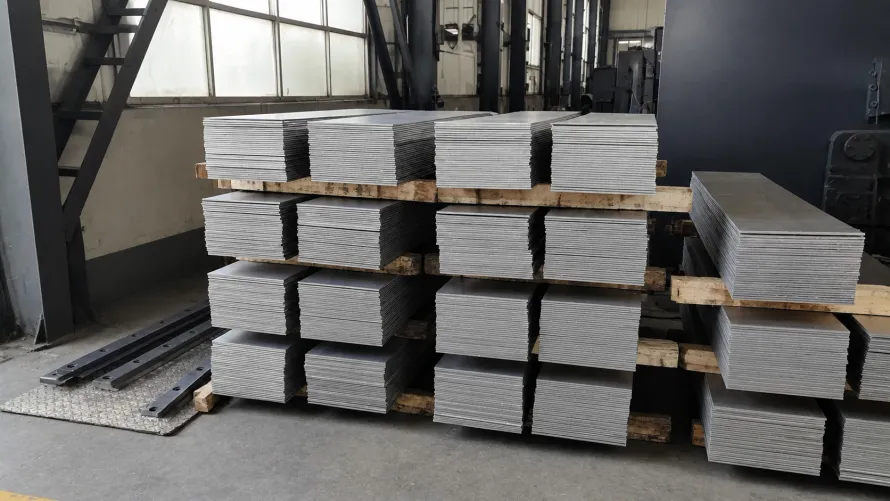
Stacked titanium plates in a workshop, illustrating why aerospace-linked buyers need product-form capacity reserved before release dates are trusted.
By Jason/ On 12 Jun, 2026

Aircraft Backlogs Show Why Titanium Buyers Need a Capacity-Reservation File

The latest aircraft backlog data is not just an airline or airframer story. It is a schedule-risk signal for buyers of aerospace-linked titanium bars, plates, sheets, forgings, billets, tubes and machined components.On June 3, 2026, Aerospace Global News reported that Airbus and Boeing had 16,683 commercial aircraft on backlog at the end of April, citing ADS commercial aerospace market information. ADS estimated that this represented about 12 years of work for the global aerospace industry at current projected production rates. A week later, Forecast International reported that Airbus delivered 81 aircraft during May and Boeing delivered 60, leaving both manufacturers with more than a decade of production coverage. For titanium buyers, the useful conclusion is not that every titanium product is suddenly short. The better conclusion is narrower: when aircraft demand runs far ahead of near-term production, approved titanium capacity becomes a schedule asset. A quote for material is no longer enough. Buyers need evidence that the specific product form, process route, inspection path and release date have been reserved. Backlog Is Not The Same As Released Titanium Capacity Aircraft backlog creates long visibility, but it does not automatically create released titanium parts. Aerospace programs consume titanium through controlled product forms and approved routes. The order book must move through mill products, forgings, machining, special processes, inspection, customer approval, documentation and logistics before it becomes deliverable hardware. That distinction matters because titanium is not a single interchangeable input. ATI's long-term Boeing titanium agreement, announced in 2025, named long products such as ingots, billets, rectangles and bars, as well as flat-rolled products including plate, sheet and coil. Those are different capacity lanes. A buyer waiting for sheet cannot automatically use bar stock. A machined part that requires a forged input cannot be covered by available plate. A near-net-shape preform cannot replace a legacy route unless the application and approval basis allow it. The same discipline applies at the market level. The USGS 2026 titanium summary reported that the majority of U.S. titanium metal use was in aerospace, with other uses including armor, chemical processing, marine hardware, medical implants and power generation. It also reported no U.S. titanium sponge metal production in 2025 and 100% net import reliance for titanium sponge metal. Those facts make titanium structurally important to aerospace supply chains, but they still do not convert aircraft backlog into a product-form guarantee. The buyer risk sits between those two facts: strong aircraft demand on one side, and product-specific release capacity on the other. What Changes For Titanium Procurement When an order book stretches across many years, titanium buyers should stop treating delivery dates as simple calendar promises. A delivery date is only credible if it is backed by a reserved path through the supplier's actual constraint points. For titanium plate, that path may include rolling capacity, thickness range, surface condition, ultrasonic inspection, flatness control, cutting and packaging. For bar and billet, it may include melt history, heat treatment, straightness, diameter tolerance, machining allowance, testing and certificate wording. For forgings and machined components, it may include input material identity, die or route availability, rough machining, final machining, NDT, dimensional evidence, first article status and customer-specific release rules.The most common procurement mistake is to ask only whether the supplier has material. In a tight aerospace cycle, the sharper question is whether the supplier has reserved the right combination of material, process capacity, inspection capacity and documentation capacity for the buyer's part. That is especially important for distributors and export buyers. A distributor may show available titanium stock, but the buyer still needs to know whether the stock is eligible for the required specification, whether it can be cut or machined in time, whether third-party testing is available, whether certificates match the program's wording, and whether the route can survive customer review. A processor may quote a forged blank, but the buyer still needs to know whether heat treatment and ultrasonic inspection are reserved, not merely available in theory. The Capacity-Reservation File The practical response is a capacity-reservation file. It should sit beside the purchase order, drawing package and material certificate. Its purpose is to connect the commercial promise to the operational path that makes the titanium product releasable.Evidence layer Buyer question Records to requestProduct form What exact titanium form is being reserved? Bar, billet, plate, sheet, tube, forging, preform or machined component description; grade; size range; specification basisApproved route Which route is allowed for this application? Melt or mill route, forging or machining route, customer approval boundary, substitute-route limitsCapacity owner Who controls the constrained step? Mill, forge, processor, heat treater, machining shop, NDT provider, packer or exporterSchedule hold Which dates are actually reserved? Production slot, heat treatment date, inspection window, document review, packing date and shipment handoffInspection release What proves the product can leave the supplier? Mechanical test, chemistry, UT or other NDT, dimensional report, surface inspection and nonconformance closureDocumentation package What will the buyer receive with the shipment? MTR, certificate of conformity, traceability record, packing list, export documents and customer-specific wordingChange trigger What forces re-approval or schedule reset? New input lot, route change, subcontractor change, inspection method change, drawing revision or late split shipmentFallback boundary What is the approved alternative if capacity slips? Alternate size, alternate source, partial release, substitute product form or requalification requirementThis file is not bureaucracy for its own sake. It prevents a visible stock photo, a broad aerospace claim or a generic certificate from being mistaken for a controlled delivery path. Available Stock Can Still Miss The Aircraft Clock The June data shows why this matters. Airbus' own orders and deliveries page listed 81 May deliveries, 379 May gross orders and 262 deliveries for 2026 to date. Forecast International's May analysis put Airbus backlog at 9,247 aircraft and Boeing backlog at 6,758 aircraft as of May 31. Those figures point to demand visibility, but also to a production system where monthly execution still matters. For titanium suppliers, that means capacity credibility is becoming a sales and quality issue at the same time. A supplier that can show reserved process slots, clear inspection ownership and stable certificate wording may be easier for a buyer to trust than a supplier with larger generic inventory but vague release control. For buyers, the opposite is also true. A low price or quick verbal promise can become expensive if the order waits behind heat treatment, NDT, machining, customer review or export documentation. The risk is not always that titanium is unavailable. The risk is that releasable titanium is not available in the required form, route and window. Alternative Routes Need The Same Discipline Aircraft backlog also encourages buyers to consider alternative sourcing routes: near-net-shape preforms, additive manufacturing, different mill sources, distributor stock, split shipments or partial machining before final approval. Some of these routes can reduce waste or shorten one step. None should be treated as a shortcut around evidence. If a forged block is replaced by a near-net-shape preform, the buyer needs to know the approved baseline, material data, inspection method, machining allowance and customer acceptance boundary. If distributor stock is substituted for planned mill material, the buyer needs traceability, age, surface condition, test coverage and certificate wording. If a supplier proposes a different approved source, the buyer needs to know whether the source is approved for the exact product family and application, not only for titanium in general. Backlog pressure rewards flexibility, but only controlled flexibility. The Buyer Takeaway The aircraft market is sending a clear signal: demand visibility is strong, but delivery execution remains the hard part. For titanium products, that shifts the buyer's best question from "Do you have material?" to "What capacity has been reserved for my approved route?" A professional answer should connect the product form, route, capacity owner, schedule hold, inspection release, document package, change trigger and fallback boundary. Without that file, the buyer has a quote. With it, the buyer has a verifiable delivery path. That is the practical meaning of the current backlog for titanium procurement. The aircraft order book is long. The titanium evidence file has to be specific.

Ready to Start Your Project?

Get factory-direct pricing on titanium products. No minimum order.

Get a Free Quote
Quick Inquiry