Type something to search...

Eu titanium implant evidence

Medical and Dental
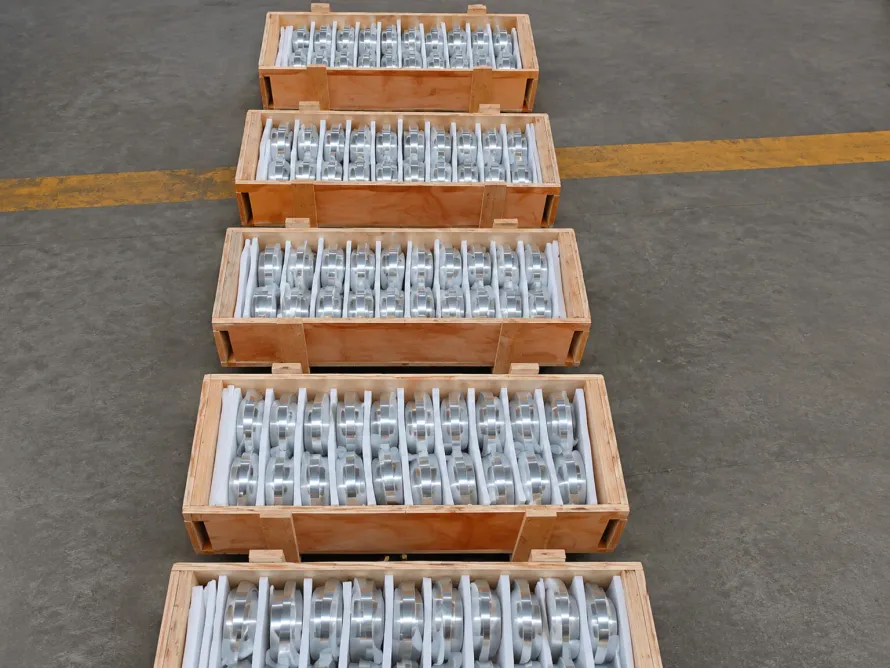
Separated crates of machined titanium products illustrate why representative device groups still need clear batch and configuration boundaries.
By Jason/ On 21 Jul, 2026

EU Implant Relief Changes the Review Sample, Not the Titanium Evidence

Two European Union medical-device rules that took effect on July 19 change how certain established implant categories can move through conformity assessment. Commission Delegated Regulation (EU) 2026/1359 expands the class IIb implantable devices exempt from technical-documentation assessment for every device. Commission Delegated Regulation (EU) 2026/1451 expands the list of implantable and class III devices that may avoid a new clinical investigation when the regulation's conditions are met. The change is regulatory relief, not an evidence waiver. For manufacturers using titanium in medical implants, including nails, anchors, spinal posterior fixations and dental implants, the practical question is no longer simply whether a device type is familiar. It is whether the reviewed representative device genuinely covers the alloy, route, geometry, surface and supplier changes present across the family. What changed on July 19 The two delegated regulations address different burdens and preserve different obligations.Regulatory change What the relief permits What it does not removeRegulation (EU) 2026/1359 For newly listed class IIb implantable device types, technical-documentation assessment no longer has to apply to every device. The wider Article 52(4) route uses at least one representative device per generic device group. The manufacturer's technical documentation, quality system, conformity assessment and evidence for the devices covered by the group.Regulation (EU) 2026/1451 Listed implantable and class III device types may be exempt from the obligation to perform a clinical investigation when the clinical evaluation is based on sufficient clinical data and complies with any relevant product-specific common specification. The obligation to plan, conduct and document a clinical evaluation.This distinction matters because an exemption changes the unit of regulatory review. It does not automatically change the controlled unit of manufacturing evidence. A device category is not a titanium material family The regulations are written around device types, not around titanium grades or production routes. A nail or dental implant may use titanium, but the category name does not establish that commercially pure titanium and a titanium alloy are equivalent. Nor does it show that wrought, machined and powder-bed-fused routes share the same material state, surface condition or validation history. The risk is a family-definition shortcut: a manufacturer may have a familiar device category while introducing a new alloy, heat-treatment route, additive process, machining site, coating, cleaning sequence or critical dimension. Regulatory sampling can still be appropriate, but only if the representative-device rationale captures the differences that could affect safety or performance.The representative-device gap The Commission's MDCG 2019-13 rev.1 sampling guidance predates the new list, but it shows the mechanics of a defensible sampling plan. The plan should identify the devices covered, their Basic UDI-DI, the generic device group, the relevant technical-documentation identifier, planned assessment dates and assessment status. That structure makes the titanium supplier's role clearer. The device manufacturer and notified body own the conformity-assessment and representative-device decisions. A titanium supplier does not provide the clinical evaluation. It can, however, make the selected family defensible by keeping material heats, specifications, conversion routes, process records, inspection results and change notices traceable to affected component batches. When those records are disconnected, the representative device becomes a label rather than a reliable proxy. A six-field evidence boundary for titanium devices The following map turns the regulatory change into a practical review for manufacturers, quality teams and suppliers.Evidence field Boundary question Typical controlled recordsDevice family Which intended use, device type, Basic UDI-DI and generic device group does the representative device cover? Family rationale, configuration list, intended-use record, technical-documentation indexTitanium identity Which material specification, grade, chemistry limit, heat or powder lot and material condition are included? Material certificate, chemistry and mechanical results, heat or lot genealogyManufacturing route Which melt, wrought, additive, heat-treatment, machining and supplier-site routes are inside the assessed family? Approved route, validated process record, equipment and site identity, subcontractor controlsGeometry and surface Which sizes, load-bearing sections, porosity, finish, coating, cleaning state and tissue-contact surfaces are represented? Drawings, inspection plan, surface and dimensional results, worst-case rationaleVerification and clinical bridge Which technical, biological and clinical characteristics support similarity, and who owns each part of the evidence? Verification reports, risk-management links, biocompatibility inputs, clinical-evaluation cross-referencesChange control and release Which changes trigger reassessment, and how is each shipped lot connected to the approved boundary? Change notification, deviation approval, release certificate, lot traceability and retained recordsThis map aligns with the MDR's requirement for a clear medical titanium regulatory evidence chain and with MDCG 2020-5, which treats equivalence as a comparison of technical, biological and clinical characteristics. It also keeps responsibility visible: the material supplier supports the technical evidence chain; the manufacturer integrates that evidence into device risk management, verification and clinical evaluation.Relief is not a novelty waiver The new rules describe listed devices as well-established technologies. That description should not be extended automatically to every material-process combination used inside them. ASTM WK84537, for example, is developing a specification for PBF-LB Titanium-27Niobium-21Zirconium medical parts and states that no such standard presently exists. The work item is not a regulatory decision, but the contrast is useful: a device category can be established while a particular alloy and manufacturing route still need their own process, property and acceptance framework. The same logic applies to a supplier-site transfer, a new heat-treatment subcontractor, a changed surface treatment or a geometry that moves outside the tested range. None necessarily defeats representative sampling. Each must be tested against the boundary that made the representative device representative. The procurement consequence The strongest use of the July 19 relief is not to reduce the titanium dossier indiscriminately. It is to remove duplicative review while making the family map more precise. Before accepting a quotation or approving a source change, buyers should ask for the device-family boundary, the material and route matrix, the worst-case or representative configuration logic, the change triggers and the lot-level release link. A supplier that cannot connect those elements may still deliver metal meeting a purchase specification, but it has not demonstrated that the metal belongs inside the manufacturer's assessed device family. The defensible conclusion is simple: the EU rules can reduce file-by-file regulatory review for well-established devices. They do not make titanium grades, processes, surfaces or suppliers interchangeable. Review sampling is regulatory efficiency; evidence continuity remains product control.

Ready to Start Your Project?

Get factory-direct pricing on titanium products. No minimum order.

Get a Free Quote
Quick Inquiry