Type something to search...

Implant material

Medical and Dental
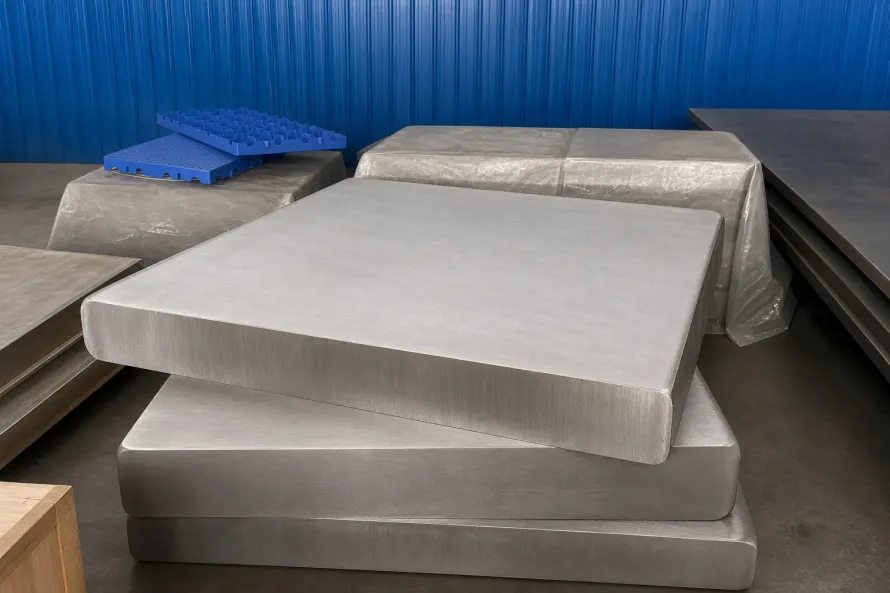
Real wrought titanium plate stock represents one product form in a controlled medical-material supply chain; it is not an implant.
By Jason/ On 27 Jul, 2026

ASTM F136-26 Makes Version Control Part of Medical Titanium Purchasing

ASTM F136-26 became the active edition of a central medical-titanium material specification on February 9, 2026. The update is easy to reduce to a line on a purchase order: “ASTM F136.” That shorthand is no longer enough for a controlled supply chain. The active specification covers wrought, annealed Ti-6Al-4V ELI, UNS R56401, used to manufacture surgical implants. ASTM lists strip, sheet, plate, bar, forging bar and wire within its product classification. That scope creates a precise material-input boundary. It does not approve a finished implant, validate every titanium product form or replace the downstream records created by forging, machining, surface treatment, cleaning, packaging and device release. The buyer mechanism is version control. A standard identifier without its edition, product form, material condition and test basis can connect different parties to different technical requirements while everyone believes they ordered the same material.The 2026 Edition Defines A Material, Not A Device The official ASTM F136-26 page describes chemical, mechanical and metallurgical requirements for wrought annealed Ti-6Al-4V ELI. It identifies the material as R56401 and lists the covered product forms. It also states that agreements between purchaser and supplier must meet the specification’s minimum requirements. That last point matters. Customer drawings, dimensional tolerances, ultrasonic or surface requirements, heat-treatment details, sampling plans, certificate wording and change-notification clauses may add controls. They cannot quietly lower the minimum material basis while still claiming full conformance. ASTM also warns that SI and inch-pound values are to be treated separately rather than mixed as exact equivalents. That is a practical document-control issue. A drawing, purchase order, inspection plan and certificate package should use one consistent unit system for each requirement instead of combining rounded values from both systems. Nothing in the public scope supports calling generic Grade 5 stock, Ti-6Al-4V powder, tube, castings or a finished device “ASTM F136 material” without verifying the relevant product and process boundary. The ELI designation, wrought route, annealed condition, product form and required evidence all matter. A Standard Revision Can Create A Split-Baseline Risk Medical supply chains rarely update every document at the same moment. A design file may cite an earlier edition. The purchasing system may carry only “F136.” A distributor certificate may reference the edition used by the mill. A machine shop may rely on a customer drawing whose general notes have not been revised. The device manufacturer may evaluate change under its own quality and regulatory procedures. If those baselines drift, the material can be physically sound while the release record remains ambiguous. The problem is not solved by automatically replacing every historical callout with the newest edition. A revised standard must be reviewed against the approved design and quality system before it becomes the contract baseline. This is the industry insight: standards maintenance is a controlled technical change, not an administrative refresh. The affected parties need to decide which edition governs current orders, existing inventory, repeat production and future design changes. A Six-Line Standard-To-Device Bridge A useful purchasing record connects six lines before medical titanium is released downstream.Line Question to close EvidenceEdition Which ASTM F136 edition governs the order and why? Drawing or specification callout, contract review and revision approvalProduct form and condition Is the item strip, sheet, plate, bar, forging bar or wire, and is the required wrought annealed condition clear? Item description, mill route, dimensions, condition and lot identityMaterial tests Which chemical, mechanical and metallurgical results demonstrate conformance? Heat analysis, test reports, sampling basis and exception reviewUnits and acceptance Are requirements expressed consistently in SI or inch-pound terms? Drawing, inspection plan, calibrated method and certificate valuesDownstream transformation What forging, machining, heat treatment, surface processing, cleaning or packaging follows the mill product? Controlled route, subcontractor records, inspection and lot genealogyDevice release Who decides that the transformed part remains acceptable for the regulated device? Device record, risk review, change control and authorized releaseThe bridge separates supplier responsibility from device-manufacturer responsibility without creating a gap between them. Product Form Determines What The Certificate Can Prove A bar certificate can establish the identity and tested state of the bar lot. It does not prove the dimensions, surface condition or cleaning status of a machined implant component. A plate certificate does not automatically apply to a wire or powder route. A forging-bar record does not by itself approve a forged part made at another site under a separate thermal cycle. For buyers of Ti-6Al-4V ELI, the safest item description therefore starts with the exact product form, dimensions, condition, edition and supplementary requirements. The supplier’s certificate should repeat enough of that identity to make later lot splits and transformations auditable.When stock is cut, relabelled or divided across orders, the heat and lot relationship must survive. When a machining route removes most of the starting material, the device record still needs to point back to the correct parent stock. When surface processing or cleaning changes, the finished condition needs its own evidence instead of borrowing authority from the mill certificate. What Suppliers And Buyers Should Do Now Suppliers should confirm which edition their quoted and stocked material supports, how that edition appears on certificates, and whether customer-specific supplements remain aligned. They should not silently upgrade a callout or imply device approval from material conformance. Buyers should review open purchase orders, approved supplier records, drawings and incoming-inspection plans for split-baseline risk. Existing inventory should not be rejected merely because a new edition exists; it should be evaluated against the governing contract and approved device baseline. New orders should state the intended edition rather than relying on an undated standard number. The restrained conclusion is straightforward. ASTM F136-26 gives medical titanium buyers an active, authoritative material specification. Its value is strongest when the edition, product form, material condition, tests, downstream route and device-release authority remain connected. The standard is one controlled bridge in that chain. It is not the entire chain. Related Products & Services For a controlled downstream route, review titanium CNC machining and the product-form considerations behind titanium forgings. Industry FAQ What does ASTM F136-26 cover? It covers wrought annealed Ti-6Al-4V ELI, UNS R56401, for surgical implant manufacture in specified forms including strip, sheet, plate, bar, forging bar and wire. Does ASTM F136-26 approve a finished implant? No. It is a material specification. Device design, transformation, cleaning, packaging, regulatory controls and authorized release remain separate downstream responsibilities. Why should a purchase order state the ASTM edition? An undated F136 callout can leave the buyer, mill, distributor and manufacturer working to different requirement baselines. The edition must be reviewed and controlled with the approved design. Can generic Grade 5 stock be called ASTM F136 material? Not without verifying the ELI chemistry, wrought annealed condition, covered product form, applicable tests and documentary evidence required by the governing edition and purchase agreement.

Ready to Start Your Project?

Get factory-direct pricing on titanium products. No minimum order.

Get a Free Quote
Quick Inquiry