Type something to search...

Medical device qms

Medical and Healthcare
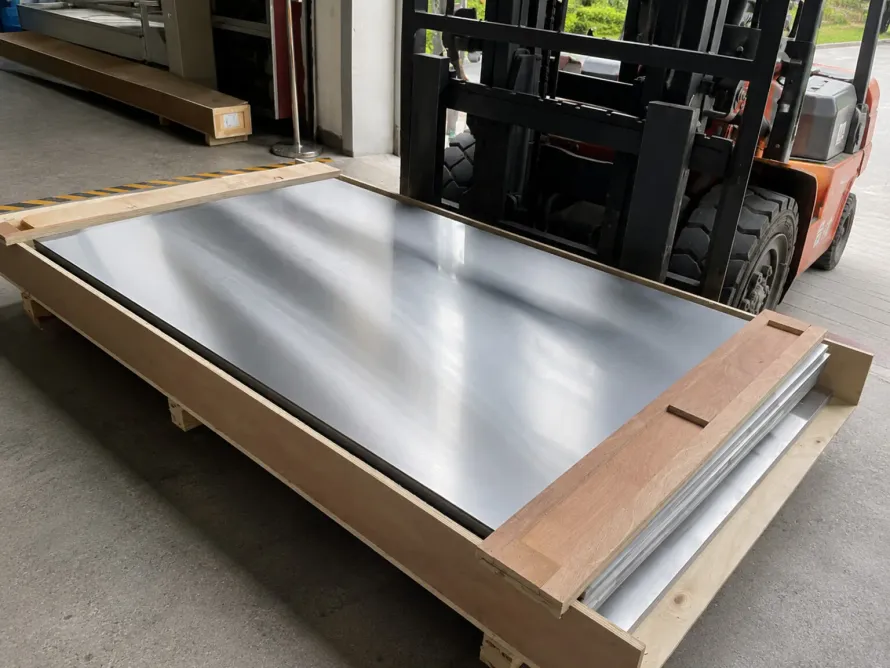
Representative titanium plate stock in protected handling shows the material input boundary for regulated manufacturing; it is not an implant.
By Jason/ On 26 Jul, 2026

Walter Reed’s Titanium Plate Clearance Redraws the Medical Supply Chain

Walter Reed National Military Medical Center says its 3D Medical Applications Center has become the first U.S. point-of-care facility to receive FDA premarket clearance for a patient-specific implant. The cleared product is the 3D MAC Titanium Cranial Plate System, used to reconstruct cranial and facial defects. The durable industry signal is not simply that a titanium implant cleared the 510(k) pathway. It is that a care provider has also become a regulated design and manufacturing node. That changes where the medical titanium supply chain begins, where design authority sits and which records must travel with material, data and finished devices.The Clearance Defines A Specific Device And Applicant The FDA’s 510(k) record for K253116 identifies the device as the 3D MAC Titanium Cranial Plate System and the applicant as the Surgeon General, Department of the Army. FDA received the submission on September 24, 2025 and recorded a substantially equivalent decision on June 18, 2026. Walter Reed’s July 16 account says the plate system is designed and manufactured through its 3D Medical Applications Center. It also explains that the team implemented a quality management system before submission and plans to let other military and veterans’ health facilities act as contract design hubs under the controlled design envelope while manufacturing remains at Walter Reed. These facts set a clear boundary. The clearance is not an approval of titanium in general, every patient-specific plate, every hospital printer or every distributed manufacturing model. It belongs to a defined device and regulated organization. Point Of Care Becomes Point Of Manufacture Traditional device supply chains often separate the hospital from the legal manufacturer. Clinicians use the device, while design control, supplier qualification, production records and release authority sit with an external company. The Walter Reed model compresses that distance. Clinical imaging, patient-specific design, manufacturing and surgical use can occur within one connected care network. Shorter information paths can improve coordination, but they also concentrate responsibility. Once a point-of-care group becomes the manufacturer, it must control more than printer operation:which patient data are approved for design; which design rules define the allowed implant family; which material and process routes are inside the validated envelope; which software, equipment and post-processing states are controlled; which inspection and release records belong to each device; how complaints, corrections and design changes feed back into the system.The mechanism is organizational. Distributed capability is safe only when authority and evidence are more precise than the physical network is dispersed. A Six-Node Manufacturer MapNode Controlled responsibility Evidence that must remain connectedClinical input Define the defect, intended reconstruction and patient constraints Approved imaging set, prescription, clinical review and patient identifier controlsDesign hub Convert clinical input into geometry within an authorized envelope Designer authorization, software version, design checks and controlled file historyMaterial system Supply the titanium input permitted by the device process Specification, heat and lot identity, certificate, incoming acceptance and change noticeManufacturing site Build or machine the device through the validated route Equipment status, parameter set, environment, post-processing and operator recordsDevice release Verify the individual implant and authorize distribution Inspection, test results, nonconformance disposition, label and device history recordNetwork governance Keep remote designers and the manufacturing site inside one system Quality agreements, training, access control, audit trail and change managementThis map is the reusable framework. A network can add design hubs without adding uncontrolled manufacturers only when each hub works inside the same design envelope and quality system, with one clear release authority. Material Suppliers Move Upstream Of A Regulated Record For a titanium supplier, point-of-care manufacturing does not remove the need for material evidence. It changes the customer that must integrate it. The hospital-based manufacturer needs to connect incoming material to a patient-specific device record. A certificate that ends at a distributor’s sales order is insufficient if the device history cannot recover heat, lot, product form, processing condition and relevant changes.Suppliers of medical titanium bar, plate or other permitted inputs should expect questions about:the exact material specification and revision; heat, lot and product-form genealogy; melting, conversion and heat-treatment route where required; certificate test methods and sampling scope; surface, cleanliness and packaging controls relevant to the next process; advance notice for source, route, site or specification changes.The supplier does not become the device manufacturer merely by providing compliant titanium. It does become part of the manufacturer’s controlled supplier and traceability system. The Design Envelope Is The Real Scaling Unit Walter Reed says other institutions may work as contract designers, sending controlled files back for manufacture. That model scales expertise differently from installing a printer at every hospital. The scalable unit is not the machine. It is the design envelope: the permitted anatomical indications, geometry rules, fixation features, material-process combination, verification methods and review authority within which a patient-specific design may vary. This distinction prevents two opposite errors. An envelope that is too narrow cannot serve real patient variation. An envelope that is too broad hides meaningful changes in geometry, load path, material or manufacturing risk. Expansion should therefore happen through evidence-backed boundary changes, not informal similarity judgments. For buyers and quality teams, a useful review asks:Which variables may change patient by patient without new validation? Which changes require engineering review? Which changes require partial or full revalidation? Who can release a design created at a remote hub? Can the final device record reconstruct every approved input?Clearance Does Not Eliminate Local Manufacturing Risk FDA’s 510(k) decision means the agency found the device substantially equivalent to a legally marketed predicate within the submission framework. It does not certify every future device automatically. Patient-specific production still has ordinary manufacturing risks: wrong dataset, uncontrolled design revision, material mix-up, equipment drift, incomplete post-processing, inspection gaps, labeling errors and a mismatch between the released file and the made part. A point-of-care model can reduce handoffs between clinic and factory, but it must replace informal handoffs with controlled digital and physical records. Speed is valuable only when the identity of the patient, design, material, process and released implant stays intact. What Medical Titanium Buyers Should Take From The News Walter Reed’s milestone shows that a hospital can become more than the endpoint of a medical-device supply chain. It can own a regulated manufacturing system and coordinate remote design nodes. For titanium procurement, the implication is practical:qualify the material supplier as part of the device QMS; map incoming heat and lot data into the device history; hold each design inside a controlled, validated envelope; keep remote design authority separate from manufacturing and release authority; evaluate changes against the cleared device and production system; preserve one traceable record from clinical input to distributed implant.The strongest point-of-care model is therefore not the one with the most printers. It is the one whose manufacturer map makes every responsibility, boundary and record recoverable. Industry FAQ What did FDA clear for Walter Reed? FDA record K253116 identifies the 3D MAC Titanium Cranial Plate System. The submission received a substantially equivalent decision on June 18, 2026. Why is this a supply-chain milestone? The care provider is also a design and manufacturing node, so clinical data, design control, titanium input, production records and release authority must operate inside one regulated system. Does the clearance cover every hospital-made titanium implant? No. It applies to the identified device and applicant, not to every hospital, titanium grade, design, machine or process. What should the titanium supplier preserve? The supplier should preserve specification, heat and lot identity, processing and certificate evidence, packaging controls and change notifications that can be connected to the finished device history.

Ready to Start Your Project?

Get factory-direct pricing on titanium products. No minimum order.

Get a Free Quote
Quick Inquiry