Type something to search...

Titanium mtr mtc evidence

Manufacturing and Technology
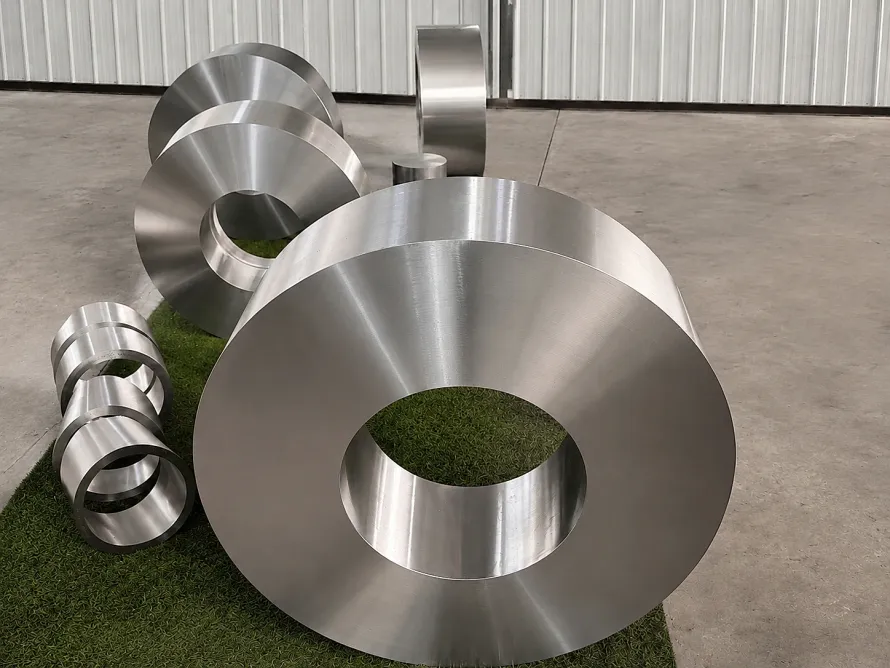
Clean titanium ring forgings in a workshop, showing product geometry that still needs route, heat-treatment and release evidence.
By Jason/ On 10 Jul, 2026

Titanium Heat-Treatment Release Evidence for Buyers

AGF DEFCOM's latest furnace addition looks, at first glance, like a straightforward capacity story. On 2026-06-23, the U.S. metal additive manufacturing supplier announced a second Solar Atmospheres Mentor Pro furnace, saying the added heat-treating capacity would reduce scheduling bottlenecks and improve workflow. A few weeks earlier, on 2026-05-14, the company said it had added two EOS M-400 systems, bringing its listed metal AM platform to 4 EOS M-400 printers, 15 EOS M-300 systems and an EOS M-290. For titanium buyers, the useful reading is narrower and more practical. More printing or furnace capacity does not by itself create releasable Ti-6Al-4V parts, machined titanium components or certified product lots. It changes where the evidence question sits. If more builds can be printed, more parts still have to pass through stress relief, annealing, aging, machining, inspection and final release without losing material identity or route control. That is why the current signal matters beyond one supplier announcement. AGF's public service page lists heat treatment, post-machining, material testing and Ti-6Al-4V among its relevant capabilities and materials. Separately, Solar Atmospheres said on 2026-06-01 that its Eastern Pennsylvania facility had commissioned a 12-foot horizontal vacuum furnace designed primarily for titanium HDH processing and also usable for standard vacuum heat-treatment work. Solar listed a 54 in x 54 in x 144 in working zone, a 15,000-pound load car, a 300HP external forced-cooling system and dual mechanical pumping systems. Those details point to the same industrial mechanism: titanium supply does not become buyer-ready at the moment a machine is installed. In titanium AM, forging, HDH powder routes, machined components, rectangular bar stock and ring products, the thermal step can be the bridge between a promising intermediate and a product that quality teams can release. Capacity Is Not the Same as ReleaseHeat treatment is not a decorative finishing step for titanium. Solar's additive manufacturing heat-treatment guidance explains that metal AM builds can carry internal stresses from repeated heating and cooling, and that heat treatment can alter microstructure and improve mechanical properties such as strength, hardness and fatigue resistance. Its titanium heat-treatment page also identifies stress relieving, annealing, solution treating and aging as process families used to tailor titanium alloy performance. That technical context changes how a buyer should read furnace-capacity news. A second furnace may reduce queue time. It may help a supplier run more jobs in parallel. It may make scheduling more reliable. But it does not answer the release question unless the order file shows which material entered the furnace, what condition it was in, which cycle was run, what atmosphere or vacuum control was used, how post-processing changed the geometry, and what inspection record closed the lot. The same distinction applies to HDH capacity. Hydriding and dehydriding can support titanium powder or feedstock processing, but a larger furnace does not automatically mean a powder lot, forged preform, rectangular bar, machined ring or AM part is approved for a buyer's application. The route must still be connected to chemistry, batch history, contamination control, particle or product condition, heat-treatment history, inspection and final certificate wording. This is the same logic behind an exposure-to-release evidence file for titanium powder. This is especially important when titanium buyers compare conventional and additive routes. AM suppliers often discuss material savings, near-net-shape production and faster throughput. Those advantages are real only when the post-build route is controlled. A Ti-6Al-4V part that leaves the printer is not the same evidence object as a Ti-6Al-4V part that has passed stress relief, machining, dimensional verification, NDT where required, and a release packet tied to the purchase order. The Heat-Treatment-to-Release File A practical buyer framework is to ask for a heat-treatment-to-release file. It should not be a generic certificate bundle. It should connect the product form, the thermal route and the final acceptance decision.Evidence layer Buyer question Why it mattersMaterial entry Which alloy, lot, build, forging, bar, plate or tube entered the thermal route? Prevents the furnace record from floating away from the physical product.Pre-heat-treatment condition Was the part printed, forged, machined, welded, HDH processed or stress-loaded before treatment? The starting condition affects the purpose of the cycle and the inspection risk.Furnace and scope Which furnace, qualified range and process family were used? Capacity only helps when the furnace is suitable for the order's material and specification boundary.Cycle and atmosphere record What time, temperature, loading, vacuum or atmosphere controls were recorded? Titanium is sensitive to route control, contamination and mechanical-property drift.Post-process route What machining, straightening, cleaning, surface work or handling followed the cycle? Later steps can change dimensions, surface condition and release status.Inspection and testing Which dimensional, mechanical, surface, FPI, NDT or customer-specific checks closed the route? Inspection converts a completed process into evidence a quality team can review.Release and change control What certificate language, lot boundary and change trigger travel with the shipment? This prevents a capacity claim from being mistaken for repeatable release authority.This framework is useful because it separates three things that are often blurred in supplier news. Installed equipment is capacity. Process capability is route confidence. Lot release is evidence for a specific buyer order. A newsroom article can responsibly discuss the first two from public sources, but buyers should reserve acceptance decisions for the third. What Buyers Should Not Overread The public sources do not show that AGF's new furnace qualifies any specific titanium part, customer program or specification. They do not publish furnace-cycle records, customer approvals, MTR/MTC packets or lot-level release evidence. The Solar furnace source gives strong capacity and equipment detail, but it also does not prove released product supply for any buyer's titanium order. That limitation is not a weakness in the story. It is the story. Titanium procurement risk often appears when teams treat capacity language as a substitute for release language. The safer interpretation is that furnace and AM additions can shorten a constrained route only when documentation moves at the same speed as production. The same discipline applies to distributed production, where point-of-need titanium release evidence has to stay attached to the part. For a buyer of titanium forgings, machined rings, rectangular bars, AM Ti-6Al-4V components or HDH-linked powder-route products, the next RFQ should therefore ask fewer generic capacity questions and more release questions: What thermal route is quoted? Which records will be shipped? How is the lot boundary preserved after machining? Which changes require requalification? Which inspection results close the order? The clearest conclusion is restrained but useful. Vacuum furnace additions are a positive capacity signal for titanium manufacturing. They become a procurement advantage only when the supplier can attach that capacity to a heat-treatment-to-release file for the exact product form being bought.

Market and Supply Chain
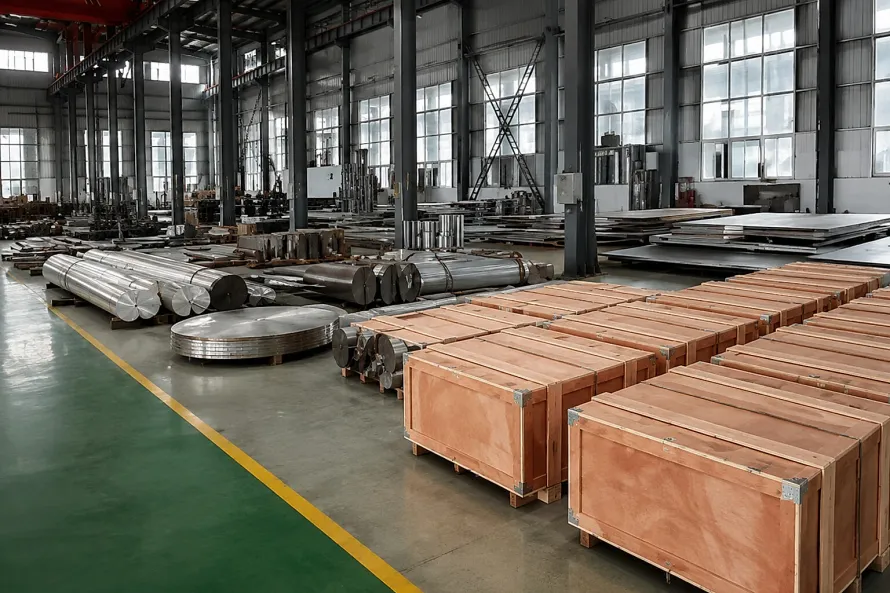
Titanium stock, round material and export crates in a factory warehouse, showing why a sponge-price signal still needs product-form, conversion and release evidence
By Jason/ On 05 Jul, 2026

Sponge Titanium's July Price Dip Is a Quote Window, Not a Release Guarantee

SMM's 2026-07-01 sponge titanium note is a useful signal for titanium buyers, but it is not a finished-product discount notice. SMM reported Grade-0 sponge titanium at approximately USD 6,700–6,800 per tonne, down 2% from early June, with June sponge production around 25,700 mt and cumulative output up 11.04% year on year. It also reported May exports at 745 mt, with cumulative exports down 7.52% year on year. That mix matters because it points in two directions at once. Supply-side pressure and weaker exports may reopen quote assumptions. Yet buyers of titanium bar, tube, plate, forgings, welded assemblies or machined parts cannot treat a sponge-price move as proof that certified stock is ready to release. A lower upstream price can create a quote window. It does not, by itself, create a released lot. The better procurement question is not simply, "Did sponge fall?" It is: which exact titanium form, route, lot, inspection packet and shipment trigger does this quote release? The Price Signal Sits Upstream Sponge titanium is the input side of a longer route. Argus describes the conventional path as sponge being melted into ingots and then forged into mill products, and notes that roughly 1.17t of sponge is typically required for 1t of mill products. That conversion chain is exactly why a sponge signal should be read as an upstream pressure indicator, not as a direct price tag for finished titanium products. For a mill, distributor or contract manufacturer, the product sold to a buyer may sit several steps away from sponge: melt route, alloy chemistry, ingot or billet identity, forging or rolling, tube making, annealing, straightening, machining, surface condition, dimensional inspection, NDT, MTR or MTC review, packing and export documentation. Each layer can add time, cost and release conditions. SMM's related market analysis also framed the sponge market as a weak-demand environment with price divergence, high ore cost pressure, weak exports and seasonal demand softness, while noting that prices could recover in Q3 toward roughly USD 6,900 per tonne if new downstream demand is released. That is valuable timing context, but it still belongs upstream of the buyer's release decision (see our earlier read on China's sponge overcapacity). Demand Does Not Move on the Same Clock The demand side is not quiet just because one upstream titanium indicator softens. Airbus's official orders and deliveries page reported 81 commercial aircraft deliveries in May 2026 and 262 deliveries for 2026 to date through May. Investing.com, citing Bloomberg, later reported that Airbus delivered around 350 aircraft in the first half of 2026, about 90 in June, and would still need about 520 more deliveries in the second half to reach its 870 aircraft target. Those numbers should not be converted into a titanium shortage claim. They do, however, show why qualified-route demand can remain sensitive even when sponge inventory looks easier. Aerospace programs, chemical equipment, marine hardware, medical-adjacent products and power-sector uses do not buy "sponge" in the abstract. They buy released forms with defined alloy, size, standard, surface, inspection and documentation requirements. USGS adds the structural backdrop: in its 2026 titanium summary, it estimated U.S. imports for consumption of titanium sponge at 44,000 tons and net import reliance at 100%, while noting that most titanium metal is used in aerospace. That does not make every titanium order aerospace-grade. It does remind buyers that source, route and documentation can matter as much as the spot input signal. The Inventory-to-Release BridgeFor titanium product buyers, the practical tool is an inventory-to-release bridge. It turns a price or stock signal into the evidence needed before a purchase order, shipment plan or price adjustment is trusted (a companion to our stockpile-to-release evidence file).Bridge layer What the market signal can show What buyers still needSponge price and inventory Current input pressure, regional availability and supplier sentiment Named source boundary, price validity date, grade/purity scope and whether the quote actually uses that inputMelt and alloy route Potential conversion path from sponge to ingot, billet or slab Heat or lot identity, chemistry, melt route, VAR or other route evidence, and traceability through conversionProduct form Whether bar, tube, plate, forging or machined-part supply may loosen Form-specific standard, size, tolerance, surface condition, heat-treatment state and packing requirementProcess capacity Whether mills or processors may have room to quote Reserved furnace, rolling, tube-making, machining, inspection and release windows for the actual orderRelease packet Whether the lot can satisfy acceptance MTR, MTC, NDT, dimensional results, certificate wording, concession closure and buyer-specific flow-downCommercial quote Whether price can be reopened Quote date, validity period, currency, freight, duty, Incoterms, shipment trigger and change ruleThis bridge prevents a common procurement mistake: treating a material-market direction as if it were a supplier release file. A supplier may have raw material exposure without a finished lot. A distributor may have stock without the exact size or certificate language. A processor may have product form available but not the NDT slot, export route or shipment window a buyer needs. Where Buyers Can Use the Dip The price dip is still useful. It can justify asking suppliers to refresh quotes, separate raw input movement from conversion charges, and explain whether any change applies to new production, existing stock or reserved inventory. It can also help buyers decide whether to split demand across immediate stock, near-term conversion and longer-term framework orders. For common commercial sizes, the best use is often a structured quote review. Ask whether the supplier is quoting from finished stock, semi-finished stock, allocated sponge or fresh mill production. Ask whether the quoted material is commercially pure titanium or an alloy such as Grade 5 / Ti-6Al-4V. Ask which standard, size range, tolerance and surface condition are included. If the price changed, ask which cost layer changed: input, conversion, inspection, freight, duty or currency (a breakdown we mapped in the surcharge-to-quote evidence file). For project-specific titanium parts, the dip is a negotiation opening, not a release shortcut. A machined titanium component, formed shell, welded assembly or precision tube order may carry order-specific inspection, drawing, customer approval, export-document and packing conditions. If those conditions are not cleared, a cheaper input does not put the product on a truck. Where the Dip Should Not Be OverreadDo not read a China Grade-0 sponge titanium note as a global aerospace-approved titanium price. Do not read it as a landed import price after freight, duty, financing and currency (see the regional gaps in titanium price regional divergence). Do not read it as the price of Grade 5 bar, precision tube, ASTM plate, forged rings or machined parts. And do not read it as evidence that a particular lot has passed inspection. The article's most important boundary is simple: a quote window is a commercial opportunity; a release guarantee is an evidence file. They are connected, but they are not the same thing. That distinction should shape RFQs in July. Buyers can fairly ask suppliers to reflect the current sponge signal in quote assumptions where the route supports it. Suppliers can fairly respond that conversion, alloy, size, certification, inspection, freight and timing still control the delivered price. Both sides reach a cleaner discussion when the quote is tied to the inventory-to-release bridge. The strongest buyer request is therefore specific: show the material basis, product form, process route, inspection status, certificate language, price validity and shipment trigger. If those items line up, the July sponge dip may become a useful buying moment. If they do not, it remains what it started as: a market signal waiting to be converted into released titanium supply.

Ready to Start Your Project?

Get factory-direct pricing on titanium products. No minimum order.

Get a Free Quote
Quick Inquiry