Type something to search...

Titanium procurement

Market and Supply Chain
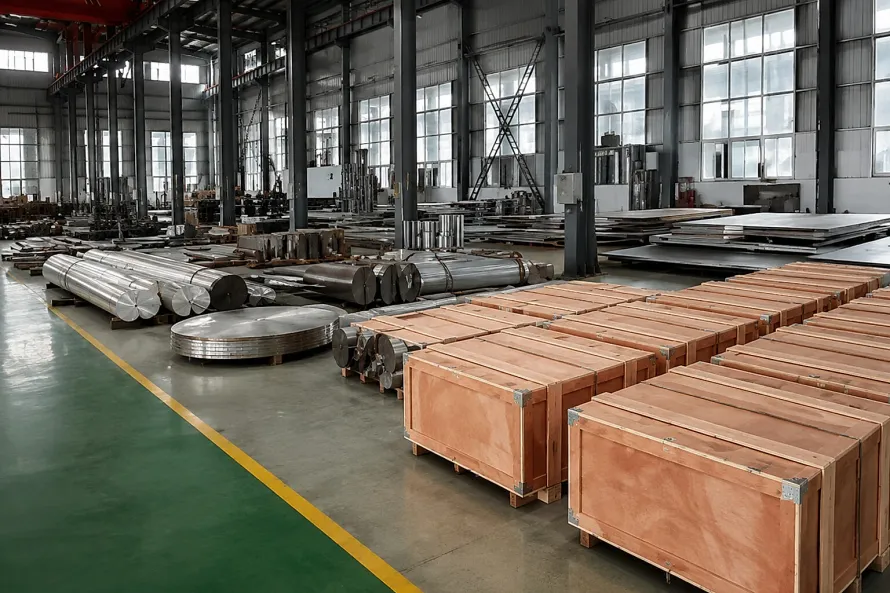
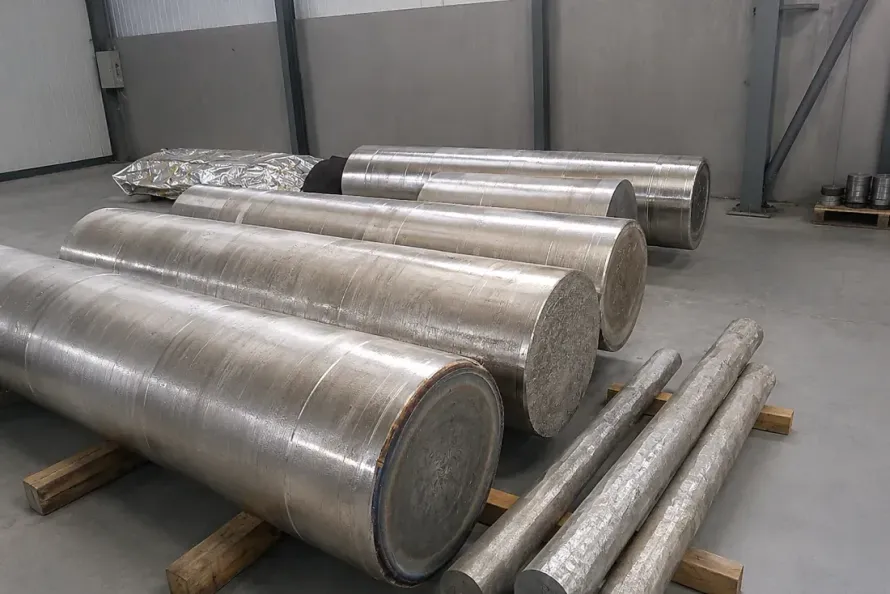
Titanium stock, round material and export crates in a factory warehouse, showing why a sponge-price signal still needs product-form, conversion and release evidence
By Jason/ On 05 Jul, 2026

Sponge Titanium's July Price Dip Is a Quote Window, Not a Release Guarantee

SMM's 2026-07-01 sponge titanium note is a useful signal for titanium buyers, but it is not a finished-product discount notice. SMM reported Grade-0 sponge titanium at approximately USD 6,700–6,800 per tonne, down 2% from early June, with June sponge production around 25,700 mt and cumulative output up 11.04% year on year. It also reported May exports at 745 mt, with cumulative exports down 7.52% year on year. That mix matters because it points in two directions at once. Supply-side pressure and weaker exports may reopen quote assumptions. Yet buyers of titanium bar, tube, plate, forgings, welded assemblies or machined parts cannot treat a sponge-price move as proof that certified stock is ready to release. A lower upstream price can create a quote window. It does not, by itself, create a released lot. The better procurement question is not simply, "Did sponge fall?" It is: which exact titanium form, route, lot, inspection packet and shipment trigger does this quote release? The Price Signal Sits Upstream Sponge titanium is the input side of a longer route. Argus describes the conventional path as sponge being melted into ingots and then forged into mill products, and notes that roughly 1.17t of sponge is typically required for 1t of mill products. That conversion chain is exactly why a sponge signal should be read as an upstream pressure indicator, not as a direct price tag for finished titanium products. For a mill, distributor or contract manufacturer, the product sold to a buyer may sit several steps away from sponge: melt route, alloy chemistry, ingot or billet identity, forging or rolling, tube making, annealing, straightening, machining, surface condition, dimensional inspection, NDT, MTR or MTC review, packing and export documentation. Each layer can add time, cost and release conditions. SMM's related market analysis also framed the sponge market as a weak-demand environment with price divergence, high ore cost pressure, weak exports and seasonal demand softness, while noting that prices could recover in Q3 toward roughly USD 6,900 per tonne if new downstream demand is released. That is valuable timing context, but it still belongs upstream of the buyer's release decision (see our earlier read on China's sponge overcapacity). Demand Does Not Move on the Same Clock The demand side is not quiet just because one upstream titanium indicator softens. Airbus's official orders and deliveries page reported 81 commercial aircraft deliveries in May 2026 and 262 deliveries for 2026 to date through May. Investing.com, citing Bloomberg, later reported that Airbus delivered around 350 aircraft in the first half of 2026, about 90 in June, and would still need about 520 more deliveries in the second half to reach its 870 aircraft target. Those numbers should not be converted into a titanium shortage claim. They do, however, show why qualified-route demand can remain sensitive even when sponge inventory looks easier. Aerospace programs, chemical equipment, marine hardware, medical-adjacent products and power-sector uses do not buy "sponge" in the abstract. They buy released forms with defined alloy, size, standard, surface, inspection and documentation requirements. USGS adds the structural backdrop: in its 2026 titanium summary, it estimated U.S. imports for consumption of titanium sponge at 44,000 tons and net import reliance at 100%, while noting that most titanium metal is used in aerospace. That does not make every titanium order aerospace-grade. It does remind buyers that source, route and documentation can matter as much as the spot input signal. The Inventory-to-Release BridgeFor titanium product buyers, the practical tool is an inventory-to-release bridge. It turns a price or stock signal into the evidence needed before a purchase order, shipment plan or price adjustment is trusted (a companion to our stockpile-to-release evidence file).Bridge layer What the market signal can show What buyers still needSponge price and inventory Current input pressure, regional availability and supplier sentiment Named source boundary, price validity date, grade/purity scope and whether the quote actually uses that inputMelt and alloy route Potential conversion path from sponge to ingot, billet or slab Heat or lot identity, chemistry, melt route, VAR or other route evidence, and traceability through conversionProduct form Whether bar, tube, plate, forging or machined-part supply may loosen Form-specific standard, size, tolerance, surface condition, heat-treatment state and packing requirementProcess capacity Whether mills or processors may have room to quote Reserved furnace, rolling, tube-making, machining, inspection and release windows for the actual orderRelease packet Whether the lot can satisfy acceptance MTR, MTC, NDT, dimensional results, certificate wording, concession closure and buyer-specific flow-downCommercial quote Whether price can be reopened Quote date, validity period, currency, freight, duty, Incoterms, shipment trigger and change ruleThis bridge prevents a common procurement mistake: treating a material-market direction as if it were a supplier release file. A supplier may have raw material exposure without a finished lot. A distributor may have stock without the exact size or certificate language. A processor may have product form available but not the NDT slot, export route or shipment window a buyer needs. Where Buyers Can Use the Dip The price dip is still useful. It can justify asking suppliers to refresh quotes, separate raw input movement from conversion charges, and explain whether any change applies to new production, existing stock or reserved inventory. It can also help buyers decide whether to split demand across immediate stock, near-term conversion and longer-term framework orders. For common commercial sizes, the best use is often a structured quote review. Ask whether the supplier is quoting from finished stock, semi-finished stock, allocated sponge or fresh mill production. Ask whether the quoted material is commercially pure titanium or an alloy such as Grade 5 / Ti-6Al-4V. Ask which standard, size range, tolerance and surface condition are included. If the price changed, ask which cost layer changed: input, conversion, inspection, freight, duty or currency (a breakdown we mapped in the surcharge-to-quote evidence file). For project-specific titanium parts, the dip is a negotiation opening, not a release shortcut. A machined titanium component, formed shell, welded assembly or precision tube order may carry order-specific inspection, drawing, customer approval, export-document and packing conditions. If those conditions are not cleared, a cheaper input does not put the product on a truck. Where the Dip Should Not Be OverreadDo not read a China Grade-0 sponge titanium note as a global aerospace-approved titanium price. Do not read it as a landed import price after freight, duty, financing and currency (see the regional gaps in titanium price regional divergence). Do not read it as the price of Grade 5 bar, precision tube, ASTM plate, forged rings or machined parts. And do not read it as evidence that a particular lot has passed inspection. The article's most important boundary is simple: a quote window is a commercial opportunity; a release guarantee is an evidence file. They are connected, but they are not the same thing. That distinction should shape RFQs in July. Buyers can fairly ask suppliers to reflect the current sponge signal in quote assumptions where the route supports it. Suppliers can fairly respond that conversion, alloy, size, certification, inspection, freight and timing still control the delivered price. Both sides reach a cleaner discussion when the quote is tied to the inventory-to-release bridge. The strongest buyer request is therefore specific: show the material basis, product form, process route, inspection status, certificate language, price validity and shipment trigger. If those items line up, the July sponge dip may become a useful buying moment. If they do not, it remains what it started as: a market signal waiting to be converted into released titanium supply.

Market and Supply Chain
Copi Mineral-Sands Approval: Why Titanium Buyers Need an Ore-to-Mill Evidence Map
By Jason/ On 31 May, 2026

Copi Mineral-Sands Approval: Why Titanium Buyers Need an Ore-to-Mill Evidence Map

The New South Wales Government's approval of the A$693 million Copi Mineral Sands Project on May 27, 2026 is a real upstream titanium signal. It is not yet a titanium bar, plate, sheet, tube, forging or machined-part supply signal. That distinction matters. The approved project in Far South West NSW is expected to process up to 27,000,000 tonnes of material and produce up to 400,000 tonnes a year of critical mineral ore for 18 years. The government release names titanium-bearing minerals including ilmenite and rutile, along with zircon and rare earth concentrates such as monazite. RZ Resources places the project inside the Murray Basin mineral-sands region, a district known for rutile, zircon, ilmenite and other critical minerals. For critical-minerals policy, that is meaningful. For titanium product buyers, it is only the beginning of the file. Rutile and ilmenite are important because they can sit at the front of titanium metal supply chains. Marubeni, which announced a strategic investment and collaboration with RZ in 2025, describes rutile and ilmenite as feedstocks for titanium metal. But a feedstock is not the same thing as titanium sponge, an ingot, a rolled plate, a forged billet, a seamless tube or a machined aerospace component. The value has to travel through processing, conversion, melting, mill production, inspection and certification before it becomes usable procurement evidence. That is the gap titanium buyers should watch. Mineral Sands Are Not Mill Products Critical-minerals headlines often compress the supply chain. A new project is approved, the mineral suite includes titanium-bearing minerals, and the story is presented as a supply-security gain. The headline is not wrong. It is just incomplete for buyers who purchase titanium products rather than mineral concentrate. An aerospace buyer does not qualify ilmenite. It qualifies material form, process route, inspection evidence and supplier release. A medical device manufacturer does not approve rutile. It approves a specific titanium alloy, specification, melt route, surface condition, validation file and regulatory boundary. A chemical-equipment buyer does not install mineral-sands optionality. It installs plate, tube, fittings, welds and documentation that can survive corrosion-service review. Upstream supply can reduce strategic exposure, but only if the downstream path is visible. The USGS Mineral Commodity Summaries 2026 illustrates why this distinction matters. Its titanium chapter says U.S. producers of titanium ingot and downstream products were reliant on imports of titanium sponge and scrap in 2025. That is a downstream constraint. More mineral-sands potential can help the long chain, but it does not automatically solve the sponge, scrap, melt, rolling, forging, machining or qualification steps that buyers actually depend on. For a titanium buyer, the better question is not whether a country approved a mineral-sands project. The better question is whether that project can be mapped into a route that eventually supports the product form, alloy, quality evidence and delivery schedule the buyer needs.The Ore-to-Mill Evidence Map An ore-to-mill evidence map is a practical way to avoid over-reading upstream news. It connects the mineral event to the buyer's product file without pretending every intermediate step is already solved.Evidence layer Buyer question What to verifyApproval boundary What has actually been approved? State approval, remaining federal or environmental approvals, conditions, infrastructure scope and timelineOre and mineral suite What titanium-bearing material is present? Ilmenite, rutile or leucoxene identity, reserve/resource basis, expected output and mineral specificationSeparation route Can the ore become saleable feedstock? Concentrator design, mineral separation plant capacity, product testing, impurity control and logistics pathTitanium feedstock identity Is the output suitable for the intended titanium route? Rutile or ilmenite grade, chemistry, chloride-route suitability, customer specification and off-take boundaryConversion route How does feedstock move toward metal? Titanium tetrachloride, sponge, upgraded slag, pigment diversion, metal route or third-party converter dependencyMelt and mill route Where does metal become product form? Sponge or scrap input, VAR or EB melt path, ingot control, rolling, forging, tubing, machining and heat treatmentInspection and release What proves the order is usable? Chemistry, mechanical tests, ultrasonic or dimensional inspection, MTR, certificate wording, traceability and customer approvalThe map does not downgrade the project. It protects the buyer from using the wrong unit of confidence. A mining approval can support long-term feedstock confidence. A mineral separation plant can support product concentration and testing. A strategic partner can improve marketing, investment or customer access. But a titanium mill-products buyer still needs to know where the chain leaves mineral products and enters metal products. That transition is where many procurement assumptions break. The Processing Step Is The First Bottleneck RZ says its Brisbane Mineral Separation Plant can process up to 400,000 tonnes of heavy mineral concentrate annually and is intended to handle products including titanium, zircon and rare earth concentrate. The company also says that, when Copi is operational, Copi product will use roughly half of the plant's capacity, leaving room for other critical-minerals projects. That matters because mineral separation is the first place where a resource story becomes a product story. Ore in the ground is optionality. Heavy mineral concentrate is still not titanium metal, but it is closer to a marketable intermediate. A separated rutile or ilmenite product can be tested, sold, blended, upgraded or routed into downstream conversion. It can also be rejected, delayed or diverted if chemistry, impurities, logistics or customer fit do not match the buyer's route. For titanium buyers, the key is not just whether the plant has nameplate capacity. It is whether the product coming out of the separation step is specified enough to enter the next step of the metal chain. That means asking about feedstock chemistry, contaminant limits, particle or mineral characteristics where relevant, customer specifications, sampling methods, shipping lots and change control. These details may sound remote from a bar, sheet, tube or forging order. They are remote in time, but not remote in risk. If the feedstock cannot enter the intended downstream route, the mine approval will not shorten the buyer's titanium lead time. Where Critical-Minerals Headlines Can Mislead Buyers The first mistake is treating titanium-bearing minerals as titanium metal. Rutile and ilmenite are essential inputs, but they do not carry the same procurement meaning as sponge, ingot or certified mill product. The second mistake is treating annual ore output as available titanium. The NSW release gives a project scale, not a downstream metal-yield guarantee for titanium buyers. No buyer should convert project tonnage into titanium bar, plate or forging availability without a verified processing and conversion basis. The third mistake is ignoring approval sequence. The NSW release states that the project still requires Commonwealth Government approval under the Environment Protection and Biodiversity Conservation Act 1999. That does not erase the state approval, but it does mean buyers should keep regulatory status separate from commercial availability. The fourth mistake is assuming all titanium demand benefits equally. Pigment, feedstock, titanium metal, aerospace alloy, medical alloy and industrial corrosion-resistant products sit in related but different chains. A mineral-sands project can support some chains before others. A buyer of Gr.5 (Ti-6Al-4V) aerospace bar should not read the same signal as a pigment producer, a zircon buyer or a rare-earths customer. What Titanium Product Suppliers Can Do With This Signal For titanium product suppliers, the Copi approval is not a reason to claim immediate material security. It is a reason to build a clearer upstream-to-downstream explanation. If a supplier is selling titanium bars, plates, sheets, tubes, forgings or machined components, the useful claim is not "there is more titanium in the ground." The useful claim is "we can show how our input material is sourced, converted, melted, processed, inspected and released." That file should connect upstream risk to order-level evidence. It should show whether sponge, scrap, billet, slab, forging stock, plate, tube or bar came from qualified sources. It should explain whether the material route is stable or dependent on a converter, melting partner, toll processor or distributor. It should show which standards and certificates travel with the order and which customer approvals remain application-specific. For export buyers, that kind of file is more valuable than broad critical-minerals language. It tells them which supply-chain step is stronger, which step is still exposed and which step they need to qualify before award. The Procurement Test The Copi approval is good news for upstream optionality. It adds scale, jurisdictional diversity and critical-minerals momentum around titanium-bearing feedstocks. It also shows why titanium buyers need to read mining approvals with a product-form lens. The procurement test is simple: can this upstream event be connected to the exact titanium form I buy? If the answer stops at ilmenite, rutile or heavy mineral concentrate, the file is still upstream. If the answer reaches sponge, scrap blend, melt route, mill form, inspection record, customer approval and release certificate, the file starts to become procurement evidence. For titanium supply chains, the mine is not the mill. The ore is not the alloy. The approval is not the certificate. The value appears when the path between them can be proven. Related Products & ServicesTitanium Rods / Bars — Gr.1/Gr.2/Gr.5/Gr.23 stock and made-to-order Titanium Sheets & Plates — ASTM B265 mill form Titanium Tubes — seamless and welded, ASTM B338/B861 routes Titanium Forgings — forged billet, ring and block stock Aerospace Applications — Gr.5 and Gr.23 ELI route Medical Applications — ELI grades, surgical and implant

Chemical and Energy
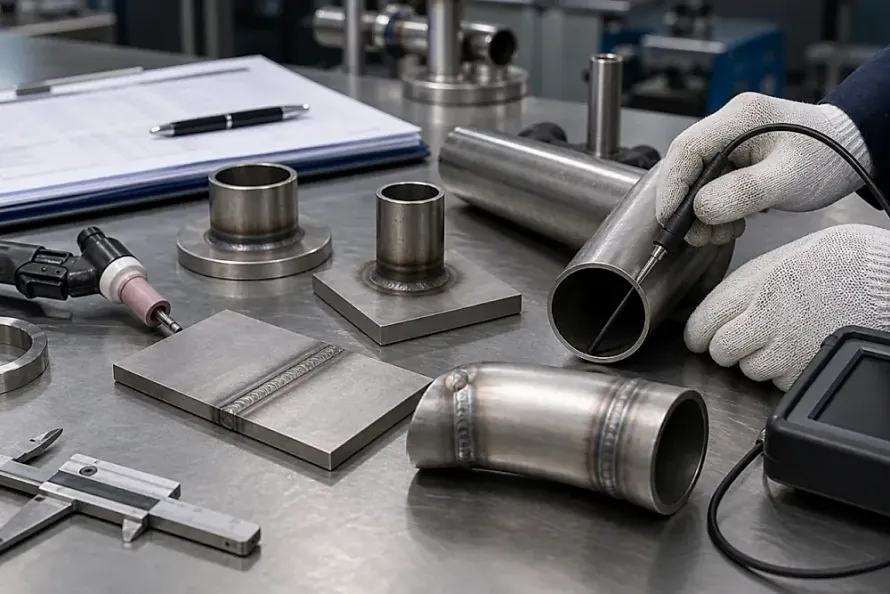
A clean chemical-process fabrication bench with titanium tube sections, plate coupons, weld samples and inspection tools, showing how welded titanium equipment needs documented fabrication evidence
By Jason/ On 07 May, 2026

Avantium's Titanium Weld Repairs Show Why Chemical Plants Need a Fabrication Evidence Chain

Avantium's update on titanium weld repairs at its FDCA Flagship Plant is a useful reminder for chemical process buyers: titanium's value does not end at corrosion resistance. In real plant equipment, titanium must also pass through fabrication, welding, inspection, repair documentation and commissioning checks before it becomes a reliable production asset.On April 30, Avantium said repair work on titanium weld issues at its FDCA Flagship Plant had been successfully completed. The company said final testing and safety checks were underway before commissioning could resume, and that it would provide a further update once those checks were completed (Avantium). Trade coverage described the repair completion as an important step toward bringing the plant closer to start-up after construction-related titanium weld issues delayed commissioning (ChemAnalyst). The public information does not identify the exact weld defect, the titanium grade, the affected equipment or the inspection method. That limitation matters. A serious article should not turn a short company update into a diagnosis. The stronger industry lesson is about buyer evidence: when titanium is used in chemical processing, the material certificate is only one part of the risk file. Why Titanium Welding Changes The Buyer Question Titanium is attractive in chemical service because it can resist aggressive corrosion environments that would quickly challenge many common alloys. That is why titanium tubes, plates, welded assemblies and heat-exchanger components appear in chemical, polymer, desalination, chlor-alkali and other process applications. ASTM's product category for seamless and welded titanium and titanium alloy tubes covers condensers and heat exchangers, showing how closely titanium tube supply is tied to process-equipment duty (ASTM B338) — see also our dedicated B338 spec page. But titanium's corrosion performance is not a free pass through fabrication. TWI's guidance on titanium and titanium alloy weldability emphasizes that titanium welds must be protected from atmospheric contamination, with shielding and cleanliness playing a central role in weld quality (TWI). For buyers, that turns a purchase order into more than a grade-and-size discussion. A titanium tube or plate — typically Gr.2 for general chemical service or Gr.7 (Ti-Pd) for hot reducing acids — can meet the requested chemistry and still create commissioning risk if the weld procedure, shielding practice, cleaning route or inspection record is weak. Conversely, a supplier that can document fabrication controls makes the material easier to trust in a process line where downtime, leakage, rework or delayed start-up can be expensive. The Evidence Chain Chemical Buyers Should Request The practical framework is simple:Evidence gate What buyers should verify Why it mattersService duty Process media, temperature, pressure, cleaning chemistry and corrosion assumptions Titanium grade selection depends on the actual operating environmentMaterial form and grade Tube, plate, sheet, fitting, spool, vessel part, grade and heat identity The form determines weld access, inspection method and mechanical riskWeld procedure and shielding Qualified procedure, filler route, shielding gas coverage and purge control Titanium weld quality is sensitive to contamination and heat-affected conditionsCleanliness control Surface preparation, handling, tool segregation and post-weld cleaning Contamination can undermine corrosion or weld performanceNDT and pressure testing Visual inspection, dye penetrant, radiography, ultrasonic checks, leak testing or hydrostatic testing when applicable Inspection evidence turns fabrication claims into auditable recordsRepair dossier and handoff Nonconformance record, repair method, retest results and commissioning acceptance Repairs must close the loop before equipment enters productionThis framework is not only for large chemical developers. It applies to export buyers sourcing titanium tube bundles, heat-exchanger tubes, welded pipe spools, reaction-vessel internals, pump components or machined corrosion-service parts. The more severe the service, the less useful it is to ask only whether the material is titanium. What The Avantium Case Does And Does Not Prove The Avantium update does not prove that titanium is unreliable in chemical plants. It also does not prove that a particular supplier, welder or material route failed. The source language is narrower: a construction-related titanium weld issue was repaired, and final testing and safety checks were needed before commissioning could resume. That is still enough to matter. Commissioning is where paperwork, fabrication and operating reality meet. A weld that requires repair may already have passed through procurement, workshop production and installation planning. When an issue is discovered late, the commercial problem is no longer only the cost of the weld. It can become schedule risk, retesting workload, safety review, documentation revision and trust in the handoff package. For titanium suppliers, the opportunity is to reduce that late-stage uncertainty. A supplier of titanium plate, tube or fabricated assemblies should be able to explain how material traceability flows into weld maps, procedure qualifications, inspection reports, repair controls and final acceptance records. That evidence will not make every project simple, but it gives the buyer a clearer way to separate a capable fabrication partner from a material-only seller. What Export Suppliers Should Prepare Export titanium suppliers serving chemical process equipment buyers should build documentation around fabrication risk, not only around inventory. A useful shipment package may include mill test certificates, heat and lot traceability, dimensional records, surface-condition notes, weld procedure references, inspection reports, repair history if any, pressure or leak-test evidence, and clear marking that links parts back to records — all aligned to the relevant ASTM specs (e.g. B338 for tube, B265 for plate, B348 for bar). For welded products, the documentation should also make responsibilities clear. Who controls purge shielding? Who verifies cleanliness before welding? Which NDT method is used, and at what acceptance level? Who signs off a repaired weld before commissioning? These questions may sound procedural, but they are exactly the questions that protect titanium's material value in a chemical plant. The defensible conclusion is that titanium process equipment is becoming an evidence business. Corrosion resistance may win the material selection, but fabrication evidence wins the commissioning argument. Buyers that ask for that evidence early will have fewer surprises later. Suppliers that can provide it will look more useful than suppliers that only sell titanium by grade, diameter and thickness. Related Products & ServicesTitanium Tubes — seamless and welded, certified to ASTM B338 Titanium Sheets & Plates — Gr.2/Gr.7 chemical-service forms to ASTM B265 Titanium Pipes — large-diameter pipe spools for process duty Titanium Fabrication — qualified weld procedures + NDT Titanium CNC Machining — corrosion-service machined components Titanium Standards & Specifications — full B265/B338/B348 documentation

Aerospace and Defense
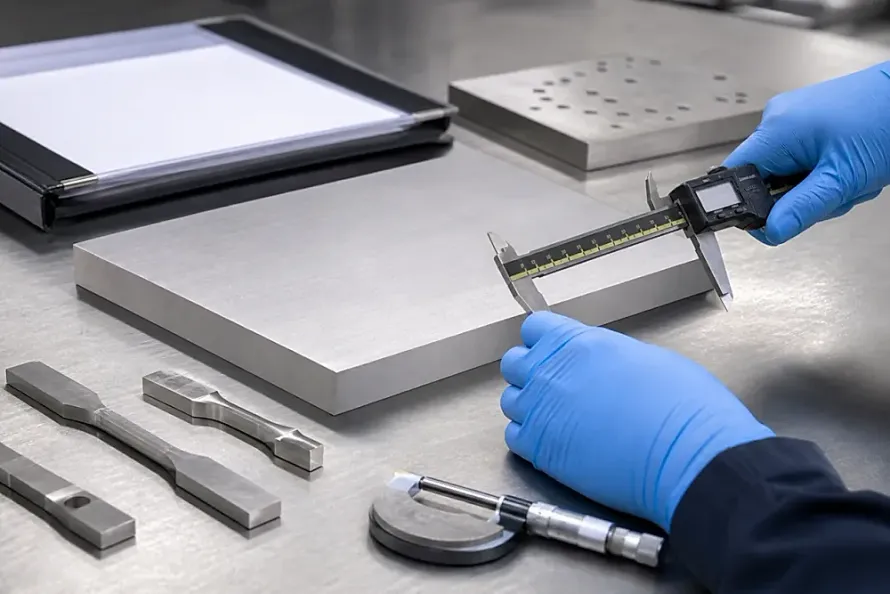
A titanium quality-control bench with plates, machined coupons, calipers and gloved inspection hands, showing how aerospace procurement depends on traceable evidence
By Jason/ On 06 May, 2026

Aerospace Orders Are Turning Titanium Procurement Into a Qualification Chain

voestalpine's new aerospace order book is not only a contract story. It is a signal about how aircraft supply chains are valuing titanium products in 2026: not as isolated bars, sheets, tubes or forgings, but as qualified material packages tied to processing, inspection evidence, certification readiness and delivery control. The Austrian steel and technology group said on April 8 that its High Performance Metals Division had secured aerospace orders worth around EUR 1 billion over five years. The agreement includes Airbus-related business and covers high-performance materials, complex forged parts and global logistics. The company said its aerospace portfolio includes bars, sections, sheets, plates and special forged parts, with titanium alloy forgings produced at Kapfenberg and high-tech titanium sheets produced at Muerzzuschlag. It also described heat treatment, surface treatment, additive manufacturing processes and a global service network as part of the division's capability set (voestalpine).For titanium processors and export buyers, the important point is not that one European supplier won a large order. The more useful signal is that aerospace customers are buying a chain of assurance. A titanium plate, bar or forged billet has limited value in aircraft programs if it is separated from the route that proves chemistry, mechanical performance, heat history, inspection status, traceability and delivery reliability. Why the Order Matters Beyond One Supplier Aerospace demand remains strong enough to keep pressure on qualified material channels. Airbus reported 9,037 commercial aircraft in its order backlog at the end of March 2026, even as Q1 deliveries fell to 114 aircraft from 136 a year earlier. The company said it was continuing its ramp-up while navigating Pratt & Whitney engine shortages (Airbus). That pattern matters for titanium because aircraft production is constrained by qualified components and inputs, not only by final assembly demand. Reuters reported in February that aviation supply constraints had become a durable operating condition, with some component and material orders stretching toward a year. In the same report, a Future Metals executive said titanium and nickel tubing lead times were still 50 to 60 weeks, far above the pre-pandemic norm of about 20 weeks (Reuters via Investing.com). Even if some lead times have improved from 2025 extremes, the procurement lesson remains: qualified titanium availability is still a planning variable, especially for tubing, forgings and precision material forms that must enter certified assemblies. The raw-material side adds another layer. The U.S. Geological Survey's 2026 titanium summary said the United States did not produce titanium sponge metal in 2025 and estimated net import reliance for sponge at 100%. It also reported estimated 2025 sponge imports of 44,000 metric tons and noted that most titanium metal use was in aerospace applications, with the rest spread across armor, chemical processing, marine hardware, medical implants, power generation and other uses (USGS). That does not mean every titanium buyer faces an immediate shortage. It does mean downstream buyers should distinguish between feedstock exposure, mill product availability and qualified component readiness. These are related, but they are not the same risk. The New Buyer Framework: Five Gates, Not One Price For titanium bars, tubes, plates, sheets and forgings, aerospace procurement increasingly works through five gates:Gate What buyers need to verify Why it mattersMaterial form Bar, tube, plate, sheet, forging, billet, wire or powder route The form determines downstream machining, forming, inspection and qualification workProcess route Melting, rolling, forging, heat treatment, machining or additive manufacturing path Process history affects mechanical properties and repeatabilityInspection evidence Chemical tests, mechanical tests, ultrasonic or other non-destructive inspection, dimensional records Aerospace programs need proof, not only supplier claimsCertification package Standards, mill test certificates, traceability, conformity documents and customer-specific approvals Documentation failure can stop an otherwise usable materialDelivery resilience Lead time, logistics, inventory discipline and alternate qualified routes Aircraft programs need predictable flow, not spot availabilityThis framework is more practical than asking whether titanium prices are rising or falling. A lower raw-material price does not solve a missing NDI record. Available plate stock does not solve a forgings bottleneck. A fast quote does not replace customer-approved process history.Additive Manufacturing Reinforces the Same Lesson The same evidence-chain logic is visible in titanium additive manufacturing. On April 13, GKN Aerospace announced an $8.4 million TITAN-AM program with the U.S. Air Force Research Laboratory to industrialize Laser Metal Deposition with Wire for large titanium aerostructures. The program is not framed only around printing parts. It focuses on process industrialization, titanium material datasets, simulation, non-destructive inspection techniques and component demonstration (GKN Aerospace; see our earlier read on TITAN-AM and the aerospace titanium qualification picture). That detail is important for traditional titanium product suppliers. Wire-fed additive manufacturing does not simply replace forged or machined products overnight. It adds another qualified route that still depends on material data, inspection methods and customer confidence. For some structural components, additive routes may reduce waste or shorten specific process chains. For many other applications, forged billet, rolled plate, tube or machined bar stock will remain the practical route. In both cases, buyers are rewarding suppliers that can explain the process route and prove repeatability. What Export Titanium Suppliers Should Take From This For export suppliers of titanium bars, tubes, plates, sheets and forgings, the commercial opportunity is not to imitate the scale of voestalpine's aerospace business. Most suppliers will not compete directly for integrated aircraft-program packages. The useful takeaway is narrower and more actionable: serious buyers are screening for evidence maturity. A supplier that sells titanium tubes into heat exchangers, plates into chemical equipment, bars into machined parts or forgings into aerospace-adjacent applications can strengthen its position by making the evidence chain easier to inspect. That means clearer grade control across Gr.1/Gr.2/Gr.5/Gr.7/Gr.12 and Gr.23 grades, more disciplined heat and batch traceability, test records that match the buyer's standard, transparent processing limits, and realistic lead-time communication. The same applies outside aerospace. Medical, chemical processing and energy buyers may not have the same program structure as Airbus suppliers, but they often care about the same titanium properties: corrosion resistance, strength-to-weight ratio, fatigue behavior, cleanliness, dimensional stability and documented compliance. When raw material supply is globally concentrated and qualified processing capacity is uneven, documentation becomes part of the product. The defensible conclusion is simple: aerospace orders are not just pulling more titanium through the system. They are pulling titanium through a more demanding qualification chain. Suppliers that can connect product form, process route, inspection evidence, certification and delivery discipline will be easier for buyers to evaluate. Suppliers that only describe titanium as available stock will look less prepared for the procurement reality now shaping high-value titanium demand.Related Products & ServicesTitanium forgings — Gr.1/Gr.2/Gr.5/Gr.7/Gr.12, AMS 4928 / ASTM B381 channels Titanium tubes — heat exchanger and aerospace-adjacent tubing with traceable mill certs Titanium sheets & plates — chemical, marine and structural plate stock Titanium bar / rod — ASTM B348 / B381 with batch traceability Titanium wire — feedstock-grade wire for AM and welding routes Special titanium alloys (Gr.5 / Gr.23 / Ti-6Al-4V ELI) — aerospace and medical-grade reference Contract machining services — finish machining, dimensional verification and inspection-friendly delivery Titanium industry news — ongoing tracking of aerospace titanium qualification, procurement and supply-chain shifts

Ready to Start Your Project?

Get factory-direct pricing on titanium products. No minimum order.

Get a Free Quote
Quick Inquiry