Type something to search...

Titanium procurement evidence

Market and Supply Chain
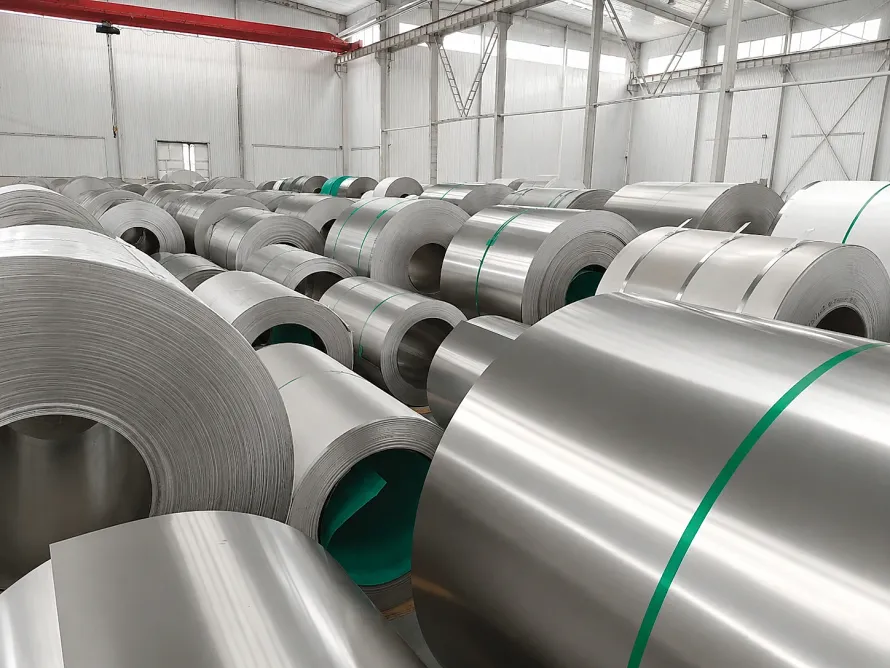
Titanium sheet coils stored in a warehouse, showing why strategic mineral supply still has to be tied to product form, allocation, and release evidence.
By Jason/ On 20 Jun, 2026

G7 Critical Minerals Plan Makes Titanium Buyers Ask a Stockpile-to-Release Question

As of June 20, the G7's June 17, 2026 critical minerals declaration is not a titanium product announcement. That is exactly why it is useful for titanium buyers. The declaration talks about stockpiling, recycling, traceability, price transparency and a first platform focus on lithium and nickel, not about titanium coils, tubes, plates, forgings or machined parts. But it points to a procurement problem that titanium buyers already know: strategic material access is only valuable when it can be converted into releasable product evidence.The G7 statement says leaders will launch a Critical Minerals Production Alliance and a Critical Minerals Action Plan, with initial efforts around lithium and nickel and a commitment to add at least five minerals every year. It also points to stockpiling, recycling, traceability and price-transparency work, and to cooperation with the International Energy Agency. This is policy language, but it is not abstract. It is a signal that governments are trying to move from broad critical-mineral concern to managed supply-chain instruments. For titanium product buyers, the practical reading is narrower than the headline. Titanium is already treated as a critical or strategic material in major markets: the U.S. final 2025 critical minerals list includes titanium, and EU critical raw material policy separately identifies titanium metal as strategically relevant. At the same time, the USGS titanium mineral commodity summary reports that the United States had no domestic titanium sponge production in 2025 and that apparent consumption of sponge and scrap was concentrated in aerospace, armor and other high-performance uses. That combination makes titanium sensitive to the gap between policy security and product-level release. What the policy signal really changes The G7 declaration does not create new titanium bar, tube, plate or forging capacity by itself. It changes the questions buyers should ask when a supplier, distributor or market commentator points to strategic stockpiles, recycling projects, allied production, government-backed minerals agreements or new transparency tools as evidence of supply security. A stockpile can secure a material category without securing a buyer's specification. A recycling route can improve circularity without proving alloy chemistry, oxygen control, contamination limits or downstream conversion. A traceability platform can identify where material came from without proving that a batch was converted through the exact route required by a drawing, standard or customer approval. Price transparency can help procurement teams see market pressure without answering whether the shipment can pass receiving inspection. This is where policy becomes a titanium product story. The relevant mechanism is not whether critical minerals are politically important. It is whether strategic material instruments can be connected to a chain of evidence that starts with material identity and ends with a released product form.Why titanium is exposed below the headline Titanium buyers are rarely buying a generic mineral. They are buying a product form: coil, sheet, plate, bar, tube, forged ring, machined blank, fitting, pressure component, fastener or medical component. Each form has its own route, inspection access and release logic. Sponge, scrap, master alloy, ingot, billet, coil, tube and finished component cannot be treated as interchangeable proof. That distinction matters more when policy attention rises. UNCTAD's June 2026 Global Trade Update says critical-mineral supply chains face high concentration, rising trade measures and a fast-growing web of mineral agreements. The report says more than 100 export measures have been introduced since 2020 and identifies 58 new critical-mineral agreements since 2022. Even when the material basket differs from titanium, the pattern is relevant: policy tools multiply faster than product qualification pathways. For titanium procurement teams, that means the weakest link may sit below the policy story. The constraint may be sponge availability, remelt route, billet allocation, rolling capacity, tube mill capacity, forging route, heat treatment, NDT access, test turnaround, certificate wording, customer approval or shipment documentation. A policy plan can reduce upstream uncertainty while leaving the order-level release question untouched. The stockpile-to-release file buyers should request The reusable framework is a stockpile-to-release evidence file. It is not a demand for more paperwork. It is a compact bridge between a strategic material claim and the exact product that will be received, inspected and used.Boundary to verify Evidence to request What it preventsMaterial category Critical-mineral or strategic-material status, material description, alloy family and any excluded grades Treating a broad policy label as proof for a specific titanium alloy or formSource and allocation Stockpile source, recycled input, supplier allocation note, batch identity and timing Assuming strategic availability equals reserved order supplyConversion route Sponge, scrap, melt, remelt, billet, rolling, tube making, forging, machining or PM route record Mistaking upstream material access for product-form readinessProduct specification Grade, standard, drawing revision, dimensions, heat treatment and delivery condition Comparing quotes that cover different product statesInspection and release MTC or MTR, chemistry, mechanical tests, dimensional checks, NDT, surface condition and lot release Letting a policy-backed material claim bypass normal receiving evidenceStorage and handling Stockpile age, packaging, contamination controls, re-test rule and hold-point record Releasing aged or transferred material without condition evidenceTrade and claim boundary Origin, tariff code, recycled-content statement, sanctions/export-control screen and certificate wording Confusing resilience language with compliant import or customer documentationThe table is deliberately order-level. It gives procurement, engineering and quality teams a way to ask whether a strategic supply claim survives contact with the product actually being purchased.Where suppliers can add useful evidence A titanium supplier does not need to claim that a G7 policy will change tomorrow's delivery schedule. That would overstate the source. The useful move is to make the supplier's own evidence chain clearer when buyers ask whether supply is resilient. For coil, sheet and plate, that means connecting stock origin, grade, thickness, surface condition, heat number, packing state and certificate wording. For tube, it means route, dimensions, wall tolerance, surface condition, pressure or eddy-current testing where relevant, and cleanliness. For forgings and machined parts, it means starting stock, route lock, heat treatment, machining boundary, NDT and final geometry evidence. For recycled or secondary titanium, it means contamination control, chemistry, conversion route and customer approval boundary. The common thread is traceability with release discipline. Traceability tells the buyer where material came from. Release discipline tells the buyer why this lot, in this form, under this specification, can be accepted.The defensible conclusion The G7 critical minerals plan is worth watching because it shows governments trying to build instruments around mineral security rather than only talking about supply risk. But titanium buyers should not convert that signal into a simple availability story. The material is strategic, but the product is qualified. For procurement teams, the right response is to ask for the bridge: where the material came from, who controlled the conversion, what product form was created, which inspection evidence belongs to the lot, and what claim is safe to put into the purchase file. If a supplier can answer those questions, critical-mineral policy becomes useful procurement context. If not, a stockpile remains a category of material, not a released titanium product.

Manufacturing and Technology
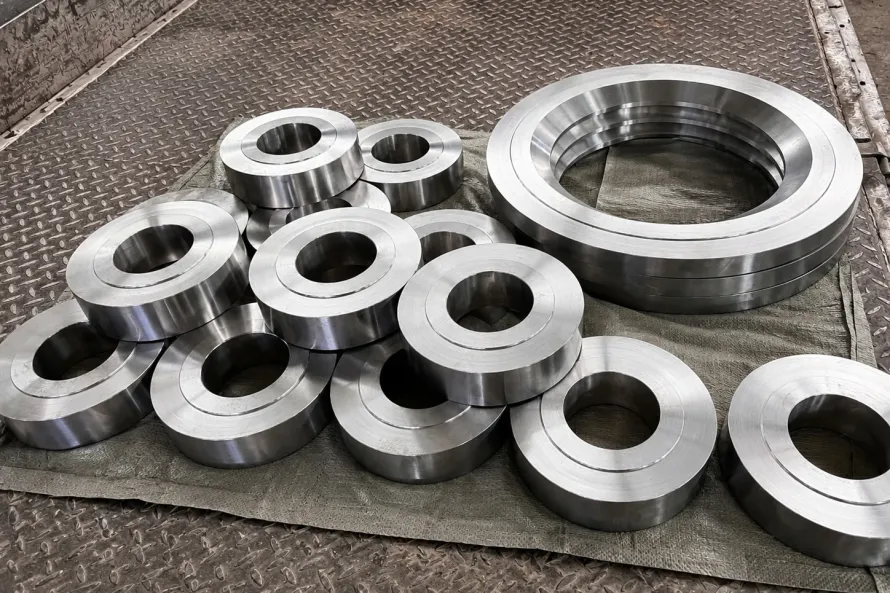
Machined ring blanks staged for inspection, showing why titanium forging supply must connect geometry, process route, and release records after a supplier change.
By Jason/ On 19 Jun, 2026

FSG's Custom Alloy Deal Turns Titanium Forging Supply Into a Route-Boundary Question

Forged Solutions Group's June 18, 2026 acquisition of Custom Alloy is more than another consolidation item in aerospace and defense manufacturing. The useful signal for titanium buyers is narrower and more practical: when a forging platform adds a qualified supplier with its own conversion, machining, heat-treatment and testing chain, the buyer's real question is not whether the supplier is larger. It is where the qualified route begins and ends for the exact titanium product being purchased.The announcement describes Custom Alloy as a vertically integrated manufacturer of specialized forgings, fittings and pipe for defense and industrial end users. It also says the company can manufacture in over 170 alloys, with open and closed die forging supported by in-house conversion, machining, heat treatment and testing. Custom Alloy is also described as a Level 1 qualified U.S. Navy manufacturer for nuclear forgings and fittings. That is a serious process chain. But it is not the same thing as a blanket approval for every titanium bar, ring, pipe, fitting or machined component that a buyer may want to source. What the deal actually changes The deal adds a U.S. forging and fitting specialist to a group that already presents itself as a high-specification forging supplier for aerospace, defense and space markets. FSG says its broader platform includes rolled rings, closed die, extrusion and open die forging capabilities across titanium, nickel, steel and aluminum alloys for global OEM and Tier 1 customers. Its own site describes shafts, rings, discs, asymmetric forgings and extruded cylinders in a range of titanium and other advanced alloys. For procurement teams, that combination matters because forged titanium products rarely fail at the level of the brochure category. They fail, or get delayed, at the boundary between a named capability and a releasable order. A ring forging is not simply "a forging." It carries an alloy grade, melt source, stock condition, forging practice, heat-treatment rule, machining allowance, inspection plan, acceptance standard, certificate wording and packaging requirement. Change one boundary and the buyer may need a fresh approval step. An acquisition can make the route stronger if it brings more controlled process steps under one organization. It can also make the evidence file more complex if legacy approvals, site scopes, customer lists, quality systems and engineering authority do not align neatly. The article-worthy point is not that FSG now has more scale. The point is that scale only helps a titanium buyer when the path from material input to shipped geometry can be proven. Why alloy breadth is not product approval "Over 170 alloys" is useful information, but alloy breadth is not the same as titanium-product release. A company may be able to forge many alloys while only certain grades, product forms, dimensions, heat-treatment cycles or customer programs are qualified for a specific application. The same caution applies to phrases such as aerospace, defense, nuclear, Navy, OEM or Tier 1. They point to demanding markets; they do not automatically define the approved route for a buyer's order. That distinction is especially important for titanium because product form changes the risk profile. A forged ring, a pipe fitting, an extruded cylinder, a machined disc and a near-net blank can share a titanium alloy family but still require different proof. Heat input, deformation history, machining depth, surface condition, ultrasonic inspection access and final geometry all affect what the buyer can rely on.This is where acquisition news becomes a practical buyer signal. If the new platform can combine forging, machining, heat treatment and testing, it may reduce outside handoffs. But a buyer still needs to know which facility owns each operation, which specifications govern the route, which tests are performed in house, which are subcontracted, and whether the final certificate names the route clearly enough for receiving inspection. The route-boundary file buyers should request The reusable framework is a route-boundary file. It is not a longer version of a material certificate. It is a compact map showing how a supplier's platform capability becomes a releasable titanium product for one order, one drawing, one specification set and one shipment.Boundary to verify Evidence to request Why it mattersAlloy and starting stock Melt source, stock condition, material certificate and any customer material restrictions Prevents broad alloy capability from being mistaken for the approved titanium grade and input conditionForging method and site Open die, closed die, rolled ring or extrusion route; facility name; route revision Shows whether the stated platform capability matches the actual product formHeat treatment and conversion Furnace or conversion step, controlling specification, batch record and hold-point evidence Connects metallurgical history to final mechanical and inspection resultsMachining and geometry Drawing revision, machining allowance, key dimensions, surface condition and nonconformance rule Separates a rough forging from a finished or semi-finished releasable componentTesting and inspection NDT method, mechanical tests, dimensional checks and who performed each test Confirms that the release evidence belongs to the same route and lotChange control after acquisition Legacy approval status, site-scope changes, customer notification requirements and certificate wording Keeps ownership change from being confused with automatic approval transferThe table is deliberately operational. Buyers do not need acquisition commentary in a purchase file. They need a route map that lets quality, engineering and receiving teams see whether the supplier's new or expanded platform actually touches their titanium part.Where titanium suppliers can add value For titanium product suppliers, the opportunity is not to repeat that the market wants stronger domestic or allied supply chains. Serious buyers already know the headline. The value is to make the boundary visible before the order becomes urgent. A supplier quoting titanium rings, pipes, fittings, discs or machined blanks can separate itself by showing how the route is controlled: whether the material is forged, rolled, extruded or machined from stock; which operations are internal; which external processors are used; which inspection records travel with the batch; and what changes would trigger buyer approval. This is especially useful when the buyer is comparing a legacy source with a newly acquired, newly integrated or newly qualified source. It also helps avoid a common sourcing mistake. Buyers sometimes ask whether a supplier "can do titanium." The better question is whether the supplier can release the specific titanium product form under the buyer's governing specification, inspection level and delivery condition. A yes to the first question is a capability statement. A yes to the second is a supply-chain decision. The FSG-Custom Alloy deal is therefore a useful market signal, but not because it proves a simple capacity story. It shows why titanium forging procurement is moving toward route evidence. Supplier scale, alloy range and special-market language all matter. They become commercially useful only when they connect to the exact route that turns metal input into a released product.

Market and Supply Chain
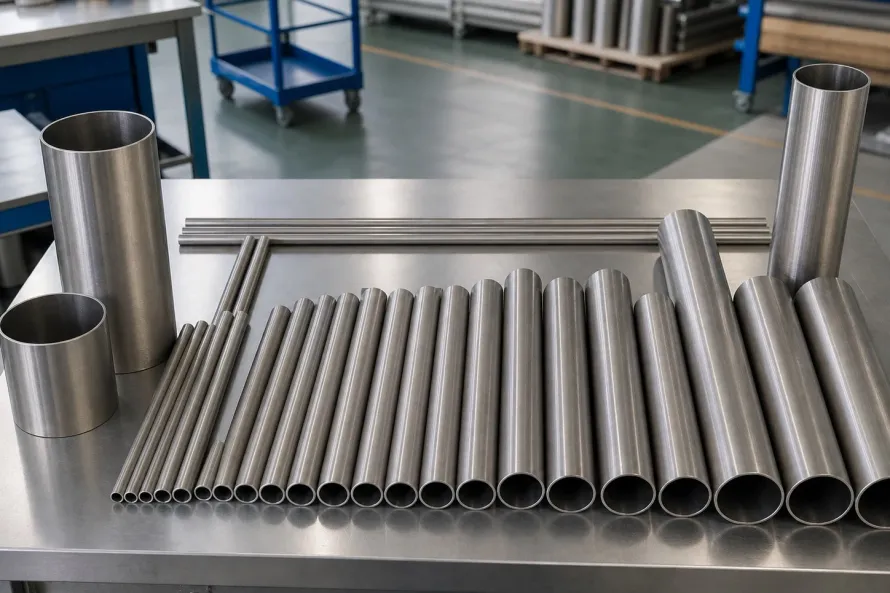
Titanium tubes and rods in multiple sizes show why mineral supply news still has to be connected to exact product forms before buyers trust availability.
By Jason/ On 13 Jun, 2026

IperionX's Titan DFS Shows Why Titanium Buyers Need a Feedstock-to-Product Boundary File

On June 4, 2026, IperionX announced a Definitive Feasibility Study for the Titan Critical Minerals Project near Camden, Tennessee. The company reported US$813 million in after-tax NPV8, 39% IRR and US$1.9 billion in after-tax free cash flow from an initial 14-year mine plan designed to produce heavy rare earth concentrate, titanium minerals and zircon. For titanium product buyers, the important point is not the investment case. It is the boundary. A mineral project can strengthen upstream optionality, but it does not automatically create released titanium bars, tubes, plates, forgings, powder, or machined components that a procurement team can place into an approved application.That distinction matters because "minerals-to-metals" is a useful strategic phrase and a risky purchasing shortcut. It compresses ore body, mineral separation, chemical conversion, sponge or powder production, melting or consolidation, mill processing, machining, inspection, certificate release and customer allocation into a single line. Buyers need those stages separated before a supply story becomes an order-ready product story. Mineral Supply Is Not Product Release The Titan DFS describes a multi-critical-mineral project producing titanium minerals, not a finished titanium product catalog. Its own metrics include ilmenite, rutile and other mineral outputs. Those are important feedstocks, but they sit upstream from the evidence that most titanium buyers actually need: grade, product form, process route, heat or lot identity, dimensional condition, inspection status, MTR or MTC scope, and approved delivery timing. Official market context reinforces the distinction. In its 2026 titanium summary, the U.S. Geological Survey reported that the United States did not produce titanium sponge metal in 2025 and listed net import reliance for titanium sponge metal at 100%. The same summary says most U.S. titanium metal use was in aerospace, with the remainder spread across armor, chemical processing, marine hardware, medical implants, power generation and other applications. That does not make every upstream titanium-mineral project immediately useful to every buyer. Aerospace, chemical, medical and energy customers do not buy "titanium minerals" as a substitute for released tubing, plate, billet, bar or machined parts. They buy a product form with a route, standard, certificate and acceptance boundary. Where The Boundary Can Break The strongest part of the IperionX announcement for buyers may be its cautionary language. The company says the DFS is a technical and economic assessment based on assumptions, and that project development requires financing, permits, procurement, construction, commissioning and operating performance consistent with those assumptions. That caution is not a footnote for investors only. It is also a procurement signal. Before a titanium product buyer treats a critical-minerals announcement as supply assurance, the buyer has to ask which boundary has actually been crossed. One boundary is resource confidence: whether the feedstock basis is defined and permitted. Another is mineral processing: whether the output is ilmenite, rutile, zircon, heavy rare earth concentrate, scrap-derived titanium powder, sponge, ingot, billet, or another intermediate. A third is product conversion: whether a supplier can turn that input into the exact product form, alloy, size range, surface condition and inspection route required by the application.The final boundary is release evidence. Even if feedstock is domestic, resilient or lower-carbon, the buyer still needs the certificate bridge: heat or lot traceability, processing history, test results, inspection records, dimensional evidence, packaging identity and change-control language that match the purchase order. The Feedstock-to-Product Boundary File A practical boundary file should not be long, but it should be explicit. The buyer is not trying to audit a mining company from scratch. The buyer is trying to prevent a strategic supply claim from being mistaken for released product evidence.Boundary layer Buyer question Evidence to requestResource and reserve basis What upstream material is being claimed, and what is still assumed? Source announcement, reserve basis, permit status and stated development conditions.Mineral product identity Is the output a mineral concentrate, titanium sponge, powder, ingot, billet or finished product? Product definitions, process flow and intermediate-output specifications.Conversion route Which process turns feedstock into usable titanium metal? Sponge, scrap, powder, melt, consolidation or mill-route evidence, plus route limits.Product form Which buyer product is actually available? Bar, tube, plate, sheet, forging, fitting, powder or machined-part scope by size and condition.Qualification scope Does the route match the application and customer approval basis? Applicable standards, customer approvals, first-article or process-qualification records.Certificate bridge Can the supplier connect feedstock identity to released goods? Heat, lot, MTR or MTC, inspection records, chemical and mechanical test data.Allocation and timing Is there committed capacity for this product form? Offtake, reservation, lead-time and shipment-window evidence, not only project economics.Change control What happens if route, feedstock, site or process assumptions change? Notification rules, requalification triggers and nonconformance handling.This framework is useful because it keeps a buyer from asking the wrong question. The issue is not whether a project is strategically interesting. The issue is whether the supplier can trace the claimed feedstock through every stage that affects the buyer's final product risk. How Buyers Should Read Minerals-to-Metals Claims IperionX's June 10, 2026 DFS presentation announcement frames Titan as part of a critical mineral-to-metals platform serving defense, aerospace, nuclear, semiconductors, robotics and advanced manufacturing supply chains. That is exactly the kind of phrase titanium buyers will see more often as critical-minerals policy, defense-industrial-base funding and low-carbon material claims move closer to purchasing conversations. The company also announced in 2025 that it had been awarded up to US$47.1 million in U.S. Department of Defense funding to accelerate a U.S. mineral-to-metal titanium supply chain. Such funding can be commercially meaningful. It still does not remove the buyer's responsibility to identify the exact product boundary. For a tube buyer, the relevant boundary may be the route from titanium metal into welded or seamless tube, surface condition, dimensional tolerance, NDT status and heat-exchanger or pressure-service documentation. For a plate buyer, it may be melting route, rolling route, flatness, ultrasonic testing, surface finish and heat identity. For a machined component buyer, it may be parent material traceability, machining route, dimensional report, special process status and final release record.Those questions are not bureaucratic. They are the difference between strategic supply-chain comfort and usable procurement evidence. The Procurement Takeaway Titanium buyers should welcome better upstream optionality, especially in a market where sponge, scrap, powder and downstream product routes are tightly connected. But a feedstock story becomes valuable to a product buyer only when it can be mapped to a specific purchase boundary. The cleanest way to read future critical-minerals announcements is to ask one disciplined question: where does the source evidence stop? If it stops at mineral concentrate, do not treat it as sponge. If it stops at sponge or powder, do not treat it as mill product. If it stops at mill product, do not treat it as a qualified machined component. If it stops at strategic capacity, do not treat it as allocated shipment capacity. IperionX's Titan DFS is a timely reminder that titanium supply resilience is built in layers. Procurement teams that keep those layers visible will be better prepared to separate credible upstream progress from the downstream product evidence needed to release real titanium orders.

Ready to Start Your Project?

Get factory-direct pricing on titanium products. No minimum order.

Get a Free Quote
Quick Inquiry