Type something to search...

Titanium supply chain resilience

Aerospace and Defense
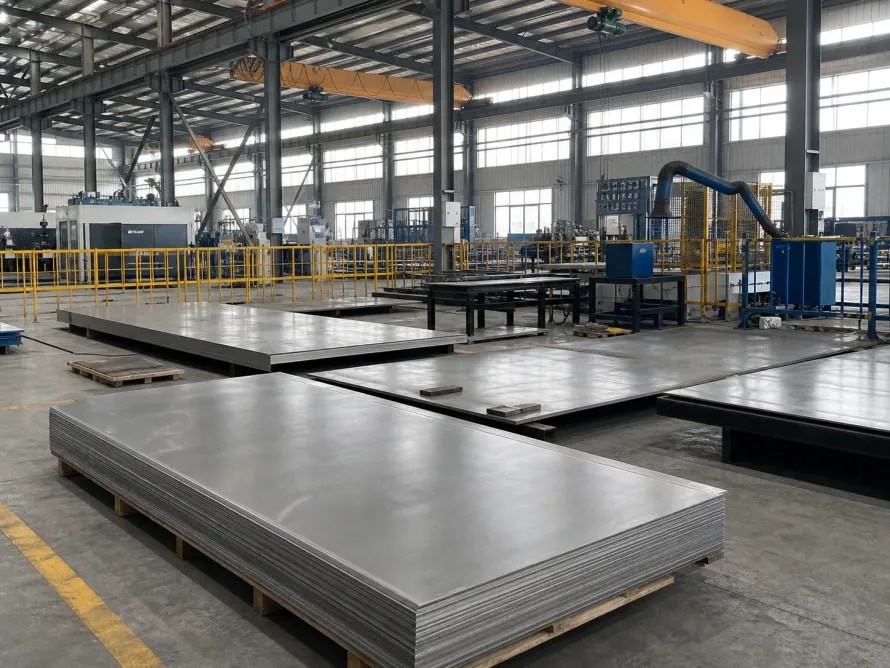
Stacks of titanium plate in a processing workshop illustrate why physical inventory is only one part of aerospace supply resilience.
By Jason/ On 18 Jul, 2026

Aerospace Titanium Diversification Needs a Qualification Budget, Not Just a Second Supplier

The aerospace industry is arriving at Farnborough with a familiar ambition and a less comfortable constraint. Manufacturers want more resilient supply networks, yet the cash, engineering time and approved capacity needed to create them remain scarce. That tension matters for titanium buyers because adding a supplier name to a sourcing plan is not the same as adding usable supply. A second source becomes operational only after the required alloy, product form, process route, inspection scope and customer approvals are aligned—and after someone funds the work while normal production continues.The 2026 global aerospace supply-chain survey, conducted by Roland Berger with the French, German and UK aerospace associations, makes the financing problem unusually clear. Among 95 participating companies, about 70% were small or medium-sized businesses with fewer than 1,000 employees, and almost one third reported EBIT margins below 5%. These are the firms often expected to invest in machines, people, qualification and buffer stock at the same time. The market is acting, but the measures consume the same scarce resources More than 80% of survey respondents saw a moderate or high risk of critical raw-material shortages; titanium was named alongside steel, copper, rare earths and magnets. The responses were active rather than passive: 64% were diversifying suppliers, 54% were using long-term contracts, 52% were building strategic partnerships and 51% were increasing inventory. In total, 92% had taken some pre-emptive action. Those percentages can look like a solved resilience problem. They are better read as a competition for working capital and qualification capacity. The survey found that 40% had raised inventory near the beginning of production and close to 30% had added stock within production. It also warned that inventory adds financial pressure and is not a sustainable substitute for ramp-up capability. One third of respondents still said they were short of money. For titanium, the distinction is sharper than for a generic catalogue item. Plate cannot automatically replace forged stock. Commercially pure tube is not a hedge for aerospace-grade Ti-6Al-4V bar. A mill or service centre with metal on the floor may still lack the approved conversion route, heat-treatment window, ultrasonic inspection scope, test records or customer-specific release authority required for a particular order. A diversified supplier list can still conceal a single point of failure The supply-chain question scheduled for discussion at the Farnborough International Airshow on July 21, 2026 is framed around digital twins, control towers and predictive visibility. Those tools can identify exposure earlier. They cannot, by themselves, turn an unqualified titanium route into approved production.This creates a common false positive in procurement dashboards: two suppliers appear against one material family, but only one can deliver the required form through the accepted route within the needed lead time. The nominal source count is two; the executable source count is one. The same problem appears inside a single supplier. A company may offer plate, bar and forgings, while only one site or subcontracted special process holds the applicable approval. A disruption at that furnace, testing laboratory or inspection line can defeat diversification that looked adequate at company level. The four-budget map for titanium resilience A buyer can test whether a diversification program is real by separating four budgets that are often compressed into one sourcing line. 1. Material-form budget Record the alloy, specification, dimensions, delivery condition and intermediary form that must be available. The useful hedge is not “titanium inventory”; it is inventory that can enter the required conversion route without excessive yield loss, rework or a specification exception. 2. Qualification budget Assign engineering hours, sample material, first-article work, process trials, testing and customer review to the second source. Qualification has a queue and a failure rate. Treating it as free administrative work makes the schedule optimistic before production begins. 3. Capacity and cash budget Identify who pays for minimum buys, reserved furnace or machining time, safety stock and duplicated tooling. Long-term agreements can support investment, but only if demand signals, price mechanisms and allocation rules are credible enough for suppliers to commit capital. 4. Evidence-continuity budget Define which records must travel with every lot: material identity, approved source and route, heat treatment, test and inspection results, nonconformance disposition, change control and final certificate language. A second source that produces acceptable metal but cannot deliver the agreed evidence remains a conditional source.The map should be completed by product family, not by supplier logo. Its purpose is to reveal which constraint will expire first: material availability, qualification progress, funded capacity or evidence readiness. Procurement should measure executable coverage The 2026 survey shows that aerospace companies understand the direction of travel. Supplier diversification, contracts, partnerships and inventory are all rational responses. The unresolved issue is whether those measures are funded and qualified deeply enough to survive the next disruption. For titanium buyers, the practical metric is executable coverage: the share of demand that can be moved to an alternate route without a new technical exception, an unfunded capital decision or a break in release evidence. That measure is harder to report than a supplier count, but it distinguishes resilience from a directory. As Aviation International News reported on July 14, strong defense demand is testing a supply chain that has little slack. The defensible response is not unlimited stock. It is a funded portfolio of material forms, qualified routes, capacity options and evidence continuity—built before a shortage turns every qualification task into an emergency.

Market and Supply Chain
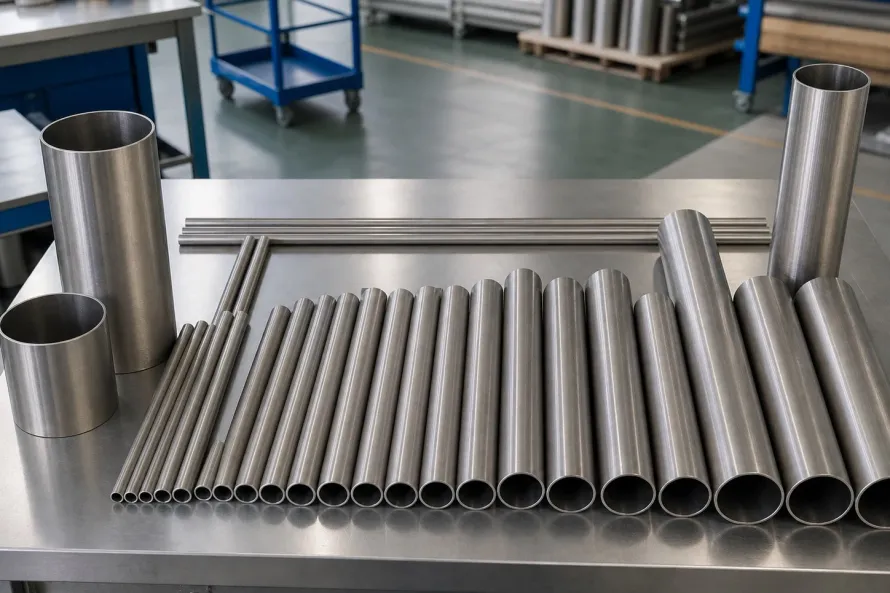
Titanium tubes and rods in multiple sizes show why mineral supply news still has to be connected to exact product forms before buyers trust availability.
By Jason/ On 13 Jun, 2026

IperionX's Titan DFS Shows Why Titanium Buyers Need a Feedstock-to-Product Boundary File

On June 4, 2026, IperionX announced a Definitive Feasibility Study for the Titan Critical Minerals Project near Camden, Tennessee. The company reported US$813 million in after-tax NPV8, 39% IRR and US$1.9 billion in after-tax free cash flow from an initial 14-year mine plan designed to produce heavy rare earth concentrate, titanium minerals and zircon. For titanium product buyers, the important point is not the investment case. It is the boundary. A mineral project can strengthen upstream optionality, but it does not automatically create released titanium bars, tubes, plates, forgings, powder, or machined components that a procurement team can place into an approved application.That distinction matters because "minerals-to-metals" is a useful strategic phrase and a risky purchasing shortcut. It compresses ore body, mineral separation, chemical conversion, sponge or powder production, melting or consolidation, mill processing, machining, inspection, certificate release and customer allocation into a single line. Buyers need those stages separated before a supply story becomes an order-ready product story. Mineral Supply Is Not Product Release The Titan DFS describes a multi-critical-mineral project producing titanium minerals, not a finished titanium product catalog. Its own metrics include ilmenite, rutile and other mineral outputs. Those are important feedstocks, but they sit upstream from the evidence that most titanium buyers actually need: grade, product form, process route, heat or lot identity, dimensional condition, inspection status, MTR or MTC scope, and approved delivery timing. Official market context reinforces the distinction. In its 2026 titanium summary, the U.S. Geological Survey reported that the United States did not produce titanium sponge metal in 2025 and listed net import reliance for titanium sponge metal at 100%. The same summary says most U.S. titanium metal use was in aerospace, with the remainder spread across armor, chemical processing, marine hardware, medical implants, power generation and other applications. That does not make every upstream titanium-mineral project immediately useful to every buyer. Aerospace, chemical, medical and energy customers do not buy "titanium minerals" as a substitute for released tubing, plate, billet, bar or machined parts. They buy a product form with a route, standard, certificate and acceptance boundary. Where The Boundary Can Break The strongest part of the IperionX announcement for buyers may be its cautionary language. The company says the DFS is a technical and economic assessment based on assumptions, and that project development requires financing, permits, procurement, construction, commissioning and operating performance consistent with those assumptions. That caution is not a footnote for investors only. It is also a procurement signal. Before a titanium product buyer treats a critical-minerals announcement as supply assurance, the buyer has to ask which boundary has actually been crossed. One boundary is resource confidence: whether the feedstock basis is defined and permitted. Another is mineral processing: whether the output is ilmenite, rutile, zircon, heavy rare earth concentrate, scrap-derived titanium powder, sponge, ingot, billet, or another intermediate. A third is product conversion: whether a supplier can turn that input into the exact product form, alloy, size range, surface condition and inspection route required by the application.The final boundary is release evidence. Even if feedstock is domestic, resilient or lower-carbon, the buyer still needs the certificate bridge: heat or lot traceability, processing history, test results, inspection records, dimensional evidence, packaging identity and change-control language that match the purchase order. The Feedstock-to-Product Boundary File A practical boundary file should not be long, but it should be explicit. The buyer is not trying to audit a mining company from scratch. The buyer is trying to prevent a strategic supply claim from being mistaken for released product evidence.Boundary layer Buyer question Evidence to requestResource and reserve basis What upstream material is being claimed, and what is still assumed? Source announcement, reserve basis, permit status and stated development conditions.Mineral product identity Is the output a mineral concentrate, titanium sponge, powder, ingot, billet or finished product? Product definitions, process flow and intermediate-output specifications.Conversion route Which process turns feedstock into usable titanium metal? Sponge, scrap, powder, melt, consolidation or mill-route evidence, plus route limits.Product form Which buyer product is actually available? Bar, tube, plate, sheet, forging, fitting, powder or machined-part scope by size and condition.Qualification scope Does the route match the application and customer approval basis? Applicable standards, customer approvals, first-article or process-qualification records.Certificate bridge Can the supplier connect feedstock identity to released goods? Heat, lot, MTR or MTC, inspection records, chemical and mechanical test data.Allocation and timing Is there committed capacity for this product form? Offtake, reservation, lead-time and shipment-window evidence, not only project economics.Change control What happens if route, feedstock, site or process assumptions change? Notification rules, requalification triggers and nonconformance handling.This framework is useful because it keeps a buyer from asking the wrong question. The issue is not whether a project is strategically interesting. The issue is whether the supplier can trace the claimed feedstock through every stage that affects the buyer's final product risk. How Buyers Should Read Minerals-to-Metals Claims IperionX's June 10, 2026 DFS presentation announcement frames Titan as part of a critical mineral-to-metals platform serving defense, aerospace, nuclear, semiconductors, robotics and advanced manufacturing supply chains. That is exactly the kind of phrase titanium buyers will see more often as critical-minerals policy, defense-industrial-base funding and low-carbon material claims move closer to purchasing conversations. The company also announced in 2025 that it had been awarded up to US$47.1 million in U.S. Department of Defense funding to accelerate a U.S. mineral-to-metal titanium supply chain. Such funding can be commercially meaningful. It still does not remove the buyer's responsibility to identify the exact product boundary. For a tube buyer, the relevant boundary may be the route from titanium metal into welded or seamless tube, surface condition, dimensional tolerance, NDT status and heat-exchanger or pressure-service documentation. For a plate buyer, it may be melting route, rolling route, flatness, ultrasonic testing, surface finish and heat identity. For a machined component buyer, it may be parent material traceability, machining route, dimensional report, special process status and final release record.Those questions are not bureaucratic. They are the difference between strategic supply-chain comfort and usable procurement evidence. The Procurement Takeaway Titanium buyers should welcome better upstream optionality, especially in a market where sponge, scrap, powder and downstream product routes are tightly connected. But a feedstock story becomes valuable to a product buyer only when it can be mapped to a specific purchase boundary. The cleanest way to read future critical-minerals announcements is to ask one disciplined question: where does the source evidence stop? If it stops at mineral concentrate, do not treat it as sponge. If it stops at sponge or powder, do not treat it as mill product. If it stops at mill product, do not treat it as a qualified machined component. If it stops at strategic capacity, do not treat it as allocated shipment capacity. IperionX's Titan DFS is a timely reminder that titanium supply resilience is built in layers. Procurement teams that keep those layers visible will be better prepared to separate credible upstream progress from the downstream product evidence needed to release real titanium orders.

Ready to Start Your Project?

Get factory-direct pricing on titanium products. No minimum order.

Get a Free Quote
Quick Inquiry