Type something to search...

Titanium wire

Manufacturing and Technology
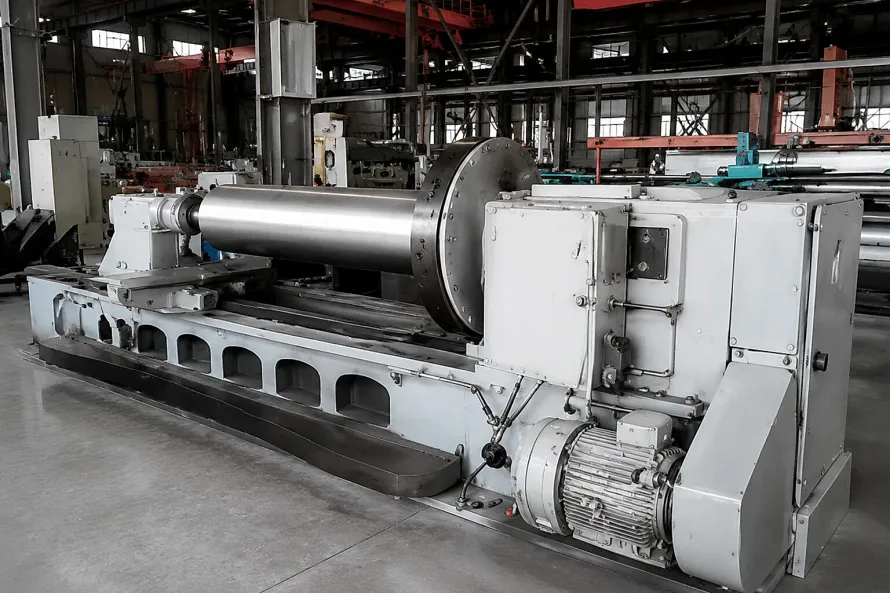
Large titanium machining and process equipment in a factory, used here to frame route-control and release planning for advanced metal parts.
By Jason/ On 29 Jun, 2026

Newport News' ARCEMY Fleet Turns Titanium WAAM Into a Wire-to-Release Question

AML3D's latest Newport News Shipbuilding update is easy to misread as another metal 3D printing capacity story. For titanium buyers, the more useful signal is narrower and more demanding: large-format wire additive manufacturing is moving closer to shipbuilding production, but a deposited titanium shape is still not a released titanium product. In a June 19, 2026 ASX release, AML3D said it had commissioned the first two custom, large-scale ARCEMY X systems for Newport News Shipbuilding, a division of HII. The company said that work completed an initial approximately AU$4.5 million order. It also said a second approximately AU$9.9 million order for four additional systems is tracking for delivery in early 2027, giving Newport News a planned fleet of six custom ARCEMY X systems. The detail that matters for product buyers is not only the system count. AML3D said the first two Newport News systems use a 10,886 kg positioner to create heavy-capacity build capability for shipbuilding applications. It also connected the fleet to lead-time reduction and alternatives to traditional manufacturing techniques. That is a real capacity signal. It is not, by itself, a titanium part approval. Why Titanium Buyers Should Watch the Signal AML3D separately lists titanium among the materials for its WAM and ARCEMY systems, including Ti-6Al-4V and CP-Ti. That makes the Newport News signal relevant to titanium product buyers, but only with a boundary: the public release does not say Newport News is producing titanium parts, naming titanium alloys for a specific ship component, or approving a released titanium route. That boundary is exactly why the news is useful. Wire arc additive manufacturing can change the economics and lead-time profile of large metallic parts, especially where casting, forging, billet machining or replacement-part sourcing is slow. Titanium raises the evidence bar because its value comes from the controlled relationship between alloy identity, oxygen exposure, thermal history, post-processing, inspection and application environment. For procurement teams, the question is no longer simply whether a supplier has a large metal AM machine. It is whether the supplier can produce a wire-to-release file that keeps material identity and process evidence connected from feedstock to final acceptance. The Capacity Story Is Becoming a Control Story Defense and maritime manufacturing are pushing additive systems closer to end-use workflows. A UK government update on additive manufacturing for submarine maintenance and support points in the same direction: production and repair capability are being pulled nearer to fleet support, maintenance and constrained supply chains. That shift can reduce waiting time for some part families, but it also moves more responsibility onto the digital and physical control system around the part. In titanium, the release question becomes sharper because the buyer must know what is being controlled and where the approval boundary sits. An ORNL technical paper on safety analysis for a titanium wire arc additive manufacturing system with an inert enclosure is a useful reminder that titanium WAAM is not only a robot path. Shielding, atmosphere, material handling and process safety are part of the operating envelope. The same discipline carries into buyer evidence: if the product depends on titanium's corrosion resistance, strength-to-weight ratio or service reliability, the build record must show how the process protected those properties.What a Wire-to-Release File Should Contain For titanium bars, plates, tubes, forgings, deposited preforms or machined components, a buyer should not treat wire AM as a shortcut around qualification. It is a different route that needs its own evidence chain.Evidence layer Buyer question Useful recordWire and chemistry Does the deposited material start from the specified titanium alloy and controlled lot? Wire certificate, chemistry record, supplier lot identity, incoming inspectionShielding and atmosphere Was titanium protected from the exposure risks that can change properties? Shielding plan, inert enclosure or local shielding record, oxygen monitoring where applicable, handling procedureMachine and software Is the build tied to a controlled machine, parameter set and program revision? Machine ID, software version, build file, parameter log, operator authorizationThermal and build history Does the heat input, interpass condition and deposition sequence match the accepted route? Build log, temperature or process-monitoring data, pause/restart records, nonconformance notesPost-processing How does the deposited shape become the released geometry? Heat treatment, stress relief, machining route, cutting plan, surface finish recordInspection and acceptance What proves the part is acceptable for the intended service? Dimensional report, NDT or CT where required, mechanical test plan, corrosion or pressure evidence if service demands itRelease authority Who has approved the route and what is the change boundary? Customer approval, qualified procedure, drawing revision, concession record, change-control ruleThis file matters even when the final product is not a fully printed part. Many titanium buyers will see hybrid routes: deposited preforms that are machined later, repaired or built-up features on traditionally made bodies, or large near-net shapes that replace heavy billet removal. In those cases, the weakest link is often the boundary between additive deposition and conventional finishing. How Buyers Can Use the News Now The Newport News/AML3D fleet should make buyers ask better questions, not rush to replace existing titanium supply routes. First, separate machine capacity from product release. A six-system fleet can improve optionality, but it does not tell a buyer whether a specific titanium alloy, geometry, wall condition, service environment or inspection route has been qualified. Second, identify the product form affected. A titanium pressure part, submarine-adjacent fitting, aerospace bracket, heat-exchanger component and machined ring do not share one evidence burden. The release file should follow the function and failure mode, not the marketing category "metal AM." Third, ask whether the AM route is substituting for forging, plate machining, tube fabrication, casting, repair or spare-part stocking. Each substitution changes the comparison baseline. If the legacy route had MTRs, NDT hold points and customer approval, the wire AM route needs equivalent or better evidence, not a thinner document packet.Supplier Implications Titanium suppliers that want to benefit from the wider move toward large-format metal AM should prepare evidence before buyers ask for it. The most useful supplier package will connect product form to route: wire source, alloy designation, build envelope, shielding method, heat treatment, machining recovery, inspection, release authority and change-control triggers. The package should also state what is not covered. If a route is proven for a demonstration geometry, it should not be presented as blanket approval for all titanium parts. If the process is approved for one alloy, that approval should not be stretched to another alloy or service environment. The site-original lesson is simple: as wire AM scales into shipbuilding and maintenance ecosystems, titanium buying becomes less about whether a machine exists and more about whether the route is auditable. A heavy-capacity system can make a large shape. A wire-to-release file is what makes that shape a buyer-ready titanium product.

Aerospace and Defense
Norsk Titanium's Double Win: Northrop Grumman Recurring Contract + NADCAP AM Certification Clear the Defense AM Buy-to-Fly Threshold
By Jason/ On 30 May, 2026

Norsk Titanium's Double Win: Northrop Grumman Recurring Contract + NADCAP AM Certification Clear the Defense AM Buy-to-Fly Threshold

Two Milestones in One Week: Recurring Production Contract + NADCAP AM On 2026-05-28 Norsk Titanium signed its first recurring production contract with Northrop Grumman, covering RPD (Rapid Plasma Deposition) titanium structural parts. The next day, 2026-05-29, Norsk announced NADCAP AM accreditation. Two events, one week. The narrative on defense titanium AM has shifted. Defense AM titanium has lived in "first-article qualification" purgatory for years. Norsk's RPD work with Airbus since 2024, the Lockheed and GE Additive trial parts on F-35 — all of it sat in the "made, validated, never serialized" bucket. Recurring production means buy-to-fly series procurement, not another round of one-off validation. NADCAP AM means Northrop no longer needs to run a standalone prime-direct process audit; mutual recognition kicks in. That is the gating condition for standardized Tier-1 procurement. Three thresholds — technical validation, customer lock-in, qualification chain — have cleared together on the DED titanium AM path for the first time. RPD / DED vs LPBF: Two Titanium AM Routes, Two Feedstock Markets Terminology first. RPD is Norsk's proprietary process, part of the wire-fed DED family. The feedstock is Gr.5 titanium wire (1.6–3.2 mm diameter dominates), deposited bead-by-bead under inert atmosphere via plasma arc into near-net titanium preforms, then machined to final dimensions. The other route, LPBF, is led by EOS, SLM Solutions and 3D Systems, running on Gr.23 ELI / Gr.5 spherical titanium powder at 15–45 μm, melted layer by layer by laser. The upstream feedstock markets are fully separated:RPD / DED pulls the wire market: Gr.5 titanium wire, VAR (vacuum arc remelt) plus drawing plus surface treatment plus spool packaging, ±0.02 mm diameter tolerance, Ra below 0.8 μm LPBF pulls the powder market: Gr.23 ELI / Gr.5 spherical, 15–45 μm mainstream, O ≤ 1300 ppm, sphericity ≥ 95%The diffusion effect of the Norsk recurring contract is a unilateral lift in the wire market. The powder side is not directly affected. This sits alongside, but separately from, the Amaero TN powder-source disruption story from 2026-05-28 — one is a cut on the powder side, the other is a structural lift on the wire side.What NADCAP AM Accreditation Actually Costs NADCAP (National Aerospace and Defense Contractors Accreditation Program) sits within SAE. The AM sub-program only went live in 2021 with the AC7110/13 checklist series. The global pass list is short. The audit spans five blocks:Block ScopeProcess control Machine parameter monitoring, deposition window, thermal history, chamber O2/H2OFirst-article qualification FAI plus build-to-build comparison plus process equivalenceMaterial traceability Wire lot → deposition layer → finished part, end-to-endPersonnel Operating engineer certification, inspector certification, technical manager reviewInternal + customer audits Annual internal audit, customer on-site audit, nonconformance closureEach block runs 3–6 months of audit cycle. The full package typically takes 18–24 months. Norsk landing NADCAP AM means the system runs end-to-end on RPD. Why does the pairing matter more than either event alone? Recurring contract plus process accreditation plus qualification chain — each one in isolation is "good news," but only the simultaneous trifecta lets Tier-1 procurement systems treat AM titanium parts as purchasable on equal footing with forged and machined parts. Until now, AM parts have lived in the "special pathway" bucket. View from Titanium Valley: The Real Posture on the Wire Side Looking out from Baoji, the Asian titanium valley, the Gr.5 wire market has had a flat 36 months. Demand came mainly from medical (bone screws, dental implants) and a thin stream of industrial R&D (lab-grade AM trials). Aerospace-grade DED wire orders were absorbed inside the North American chain — Norsk, IperionX, RTX and their suppliers. The Norsk recurring contract plus NADCAP AM is the first visible demand pull from aerospace Tier-1 series parts the wire market has seen. Three layers of real impact upstream: Layer one (immediate): Structural lift in North American demand for Gr.5 atomization-grade billet feeding wire drawing. Norsk and peer DED shops need high-purity VAR titanium bar at 70 mm diameter or less for the drawing line. Current supply runs through ATI / TIMET / Carpenter. Layer two (60–90 days): Civil and commercial Tier-2 AM service bureaus and medical OEMs, reading the Norsk signal, start booking DED wire qualification audits. This window is open to the Asia compliant channel — Baoji Gr.5 wire in the 1.6–3.2 mm range, with mature VAR plus vacuum anneal plus drawing, can plug into non-ITAR programs. Layer three (12–18 months): Wire-mill capacity concentrates on "aerospace-certified" grade. Low-end industrial wire loses pricing power; aerospace-certified wire gains it. The two ends pull apart. Our current spot position: Gr.5 titanium wire at 5 tonnes, Gr.5 titanium bar at 400 tonnes (near-full size range, 6–300 mm diameter). The bar acts as a two-way upstream — slice it for LPBF powder atomization, or draw it down for DED wire. Total mill spot resource library stands at 20,000 tonnes, the steady-state floor after the new plant and new equipment came fully online. Real Impact on Traditional Titanium Forging, Bar and Plate Buyers Do not overreact. AM titanium share in defense aerospace is rising structurally, not disruptively. Parts that suit AM titanium have boundary conditions:High buy-to-fly (traditional machining wastes material) — 8–12:1 range Complex geometry (long 5-axis cycle times, hard-to-reach features) Mid- to small-batch (50–500 units per year; large-batch still goes die or forge) Non-critical or secondary structure (primary load-path parts like wing spars and landing-gear struts stay on forging)Parts that do not suit AM titanium:Large primary structures (engine disks, wing main spars, landing-gear struts) — forgings are irreplaceable High-volume simple parts (titanium fasteners) — cold heading is more economical Ultra-precision thin-wall parts (electrodes, diaphragms) — sheet stamping is more reliableOver 2026–2030, titanium AM share of aerospace buy-to-fly series parts is likely to climb from below 5% today to 8–12%. Forge plus machine stays dominant at 85–90%. Buyer PlaybookBuyer type ActionITAR / DPAS defense AM programs Stay on Norsk + AP&C + Carpenter North American chain; Asia channel not openCivil and commercial Tier-2 AM service bureaus Start Asia compliant channel DED wire qualification audits, 6–10 weeksMedical and industrial AM R&D Engage Asia wire and powder for small batch and sample lots directlyTraditional forging and machining buyers Core market stable, no panic — but watch where AM might displace inside your own product mixUpstream atomization / wire-drawing mills Lock Gr.5 VAR billet LTAs; aerospace-grade feedstock demand is rising structurallyBottom Line: The Real Meaning of Three Thresholds Cleared at Once The thing worth remembering from 2026-05-28 and 05-29 is not either announcement on its own. It is that three thresholds — technical validation, customer lock-in, qualification chain — cleared in the same week. That is the inflection point where defense titanium AM moves from "special pathway" to "standardized procurement." Wire market: structural tailwind. Powder market: neutral. Traditional forgings: mild diversion. Over the medium term (2026–2030) the titanium product mix will reshuffle — but in the near term (2026–2027) forge plus machine still carries the load. Related Products & ServicesProduct → Gr.5 Titanium Wire (DED / Medical / R&D) — 5 tonnes spot, 1.6–3.2 mm mainstream Product → Gr.5 Titanium Bar (VAR atomization upstream) — 400 tonnes spot, near-full size range Service → Titanium Contract Machining + Drawing-to-Sample — AM post-processing / 5-axis CNC, 4–6 week lead timeRelated ArticlesAmaero TN Triple Incident — US AM Titanium Powder Source Cut in Q3 IperionX HAMR Titanium Powder — 4.2 Tonnes March Output Executed Titanium Wire in Additive Manufacturing — From Aerospace WAAM to Dental OrthodonticsAbout: Titanium Seller is a supply chain platform based in Baoji, China's Titanium Valley, serving aerospace, chemical, marine, medical and hydrogen-energy buyers worldwide.

Aerospace and Defense
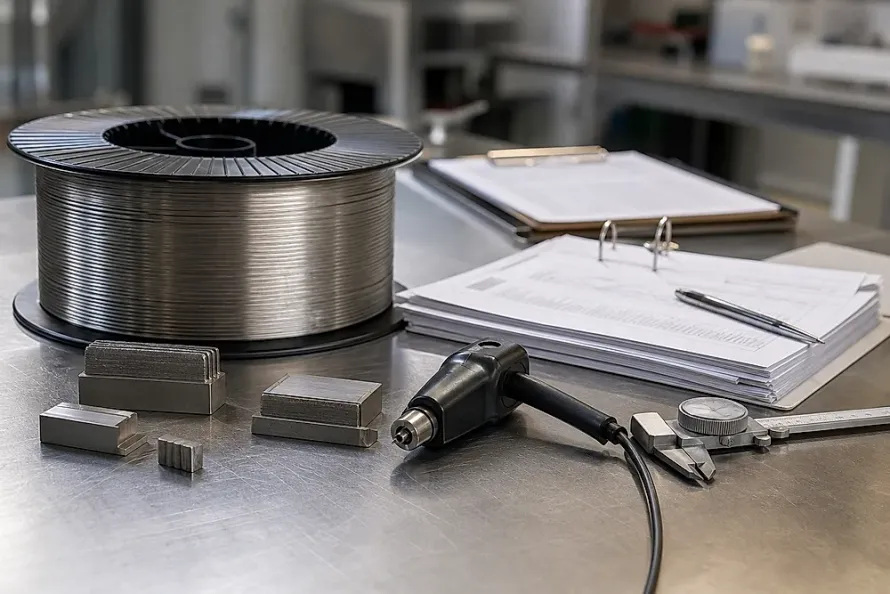
A quality-control bench with titanium wire spool, machined test coupons, and inspection tools, showing how aerospace LMD-w qualification depends on feedstock control and evidence records
By Jason/ On 05 May, 2026

TITAN-AM Shows Why Aerospace Titanium Supply Is Becoming an Evidence Chain

TITAN-AM Is Not Just Another 3D Printing Announcement GKN Aerospace's new TITAN-AM programme with the U.S. Air Force Research Laboratory, announced April 13, 2026, is a useful signal for titanium suppliers because it puts the emphasis on the hard part of aerospace manufacturing: proving that a process can make structural parts with repeatable material behavior, inspectable geometry, and a qualification path that buyers can trust. For titanium producers and processors, the message is direct. Aerospace buyers will not evaluate future wire-fed titanium routes by alloy name alone. They will ask whether the feedstock, process window, material data, inspection method, and finish-machining route can be tied together into one evidence chain.Why This Is More Than a 3D Printing Story The GKN/AFRL programme is built around five workstreams: large-scale titanium aerostructure components, robust titanium material datasets, simulation, nondestructive inspection techniques tailored to additive manufacturing, and demonstrations on selected aerospace structural components. Those are not marketing details. They describe the barriers that separate an impressive deposited shape from a flight-relevant structural part. Wire-fed directed energy deposition matters because it attacks a known weakness in conventional titanium manufacturing. Large aerospace parts are often forged or machined from heavy input stock, and the amount of metal bought can be far larger than the metal that finally flies. Airbus made the same point in its January 2026 explanation of titanium wire-DED, noting that the process can grow near-net-shape structural parts from titanium wire and reduce the waste associated with machining from plate or forgings. That does not mean plate, forgings, and machining suddenly become obsolete. It means their role becomes more selective. A deposited blank still needs finishing, datum control, surface verification, and inspection access. For critical components, buyers will also need comparison evidence against conventional routes, not just a cost-saving claim. The Demand Context Is Real, but Qualification Is the Bottleneck The aerospace market gives this development commercial weight. Airbus reported 114 commercial aircraft deliveries in Q1 2026 and kept guidance for around 870 deliveries for the full year. Boeing reported 143 commercial airplane deliveries for the same quarter and listed a total company backlog of $694.7 billion. These numbers do not prove a titanium shortage by themselves, but they explain why OEMs and tier suppliers keep looking for qualified ways to reduce lead time, material waste, and special-process bottlenecks. For titanium suppliers, that distinction matters. Demand pressure helps only when a supplier can enter a qualified production route. In aerospace, the limiting factor is often not whether titanium exists somewhere in the market; it is whether the specific grade, form, process record, inspection result, and certification package can survive an engineering and quality review. What Changes for Titanium Wire and Semi-Finished Product Suppliers LMD-w gives titanium wire a more strategic role, but not every wire product can serve that role. Aerospace deposition routes place pressure on chemistry consistency, diameter control, surface cleanliness, lot traceability, oxygen and hydrogen control, packaging, and documented process response. Wire becomes a manufacturing input whose behavior must be understood inside the melt pool, not just a material sold by nominal grade. The same shift affects producers of titanium plate, bar, forgings, and machined parts. Near-net additive routes may reduce bulk material removal, but they increase the need for controlled finishing and verification. Machining shops may be asked to finish deposited blanks with less excess material, more complex geometry, and tighter links between inspection results and final dimensional acceptance. That is why the buyer conversation should move from "Can you supply Ti-6Al-4V?" to "Can you support the evidence path for this process and application?"A Practical Qualification Chain for Buyers For aerospace-grade titanium additive manufacturing, a useful supplier review can be organized around seven links:Evidence link What buyers should ask Why it mattersFeedstock control How are chemistry, diameter, surface condition, cleanliness, and lot identity controlled? Wire behavior affects deposition stability and final material consistency.Process window What parameter ranges have been validated for the alloy, geometry, and equipment? Repeatability depends on more than the alloy designation.Material dataset What tensile, fatigue, fracture, microstructure, and heat-treatment evidence exists? Structural buyers need data that fits the application, not generic AM claims.NDI method Which inspection methods can detect relevant defects in deposited geometry? Additive parts may require inspection logic different from forged or machined stock.Machining allowance How much finish machining stock is needed, and where are datums created? Near-net parts still need a reliable path to final dimensions and surfaces.Certification evidence What records connect feedstock, build, inspection, machining, and final acceptance? Aerospace quality teams review the chain, not isolated certificates.Supplier capability Can the supplier repeat the route across batches and scale without losing control? Industrialisation fails if evidence collapses outside a demonstration run.This framework is useful because it keeps the discussion grounded. It avoids treating additive manufacturing as either a miracle replacement for forging or a laboratory novelty with no production relevance. The real question is narrower and more important: where can a wire-fed titanium route make a qualified part faster, with less waste, while preserving the evidence discipline aerospace buyers require? The Near-Term Impact Is Selective The TITAN-AM announcement should not be read as proof that large titanium aerostructures are about to shift wholesale into LMD-w production. The programme is explicitly about industrialisation and readiness. GKN's announcement points to material datasets, simulation, tailored NDI, and demonstrations precisely because those areas still need to be matured for broader structural use. Airbus' own w-DED activity shows the same step-by-step logic. Its January article described serial integration of large w-DED parts into the A350 cargo door surround area, with printing, ultrasonic inspection, machining, and installation all part of the route. That is a disciplined industrial pathway, not a blanket replacement of traditional titanium supply. For titanium processors, the opportunity is therefore not to claim that every buyer should switch forms. It is to understand which part families are most exposed to buy-to-fly waste, long tooling lead times, complex geometry, or supply-chain pressure, and then prepare evidence for the routes that can credibly help. What Titanium Suppliers Should Learn from TITAN-AM The most durable lesson is that aerospace titanium competition is moving toward documented process capability. Product form still matters: wire, plate, bar, tube, forgings, and machined components each serve different engineering needs. But the higher-value question is how each form enters a qualified manufacturing chain. Suppliers that can discuss titanium only as a grade list will struggle to participate in these conversations. Suppliers that can explain feedstock controls, machining allowances, NDI compatibility, traceability, and application-specific evidence will be more relevant as aerospace buyers test new routes. TITAN-AM is not a final verdict on LMD-w titanium aerostructures. It is a signpost. The next stage of aerospace titanium supply will be won less by broad claims about lightweight metal and more by the ability to connect material, process, inspection, machining, and certification into one defensible record.Related Products & ServicesTitanium wire (Gr.1/Gr.2/Gr.5) — chemistry, diameter, and surface controls relevant to wire-fed deposition feedstock Titanium forgings — large-section near-net stock for hybrid forge-plus-machine routes Titanium bar / rod — billet stock with ASTM B348 / B381 traceability Titanium sheet & plate — heavy-input stock for conventional machining baselines Special titanium alloys (Gr.5 / Gr.23 / Ti-6Al-4V ELI) — aerospace and medical grade reference Contract machining services — finish machining, datum control, dimensional verification for near-net blanks Titanium industry news — ongoing tracking of aerospace titanium qualification, AM, and supply-chain shifts

Ready to Start Your Project?

Get factory-direct pricing on titanium products. No minimum order.

Get a Free Quote
Quick Inquiry