Technical Explainer
Ti6242S–Ti4822 Study Separates Oxidation Screening From Surface-Phase Risk
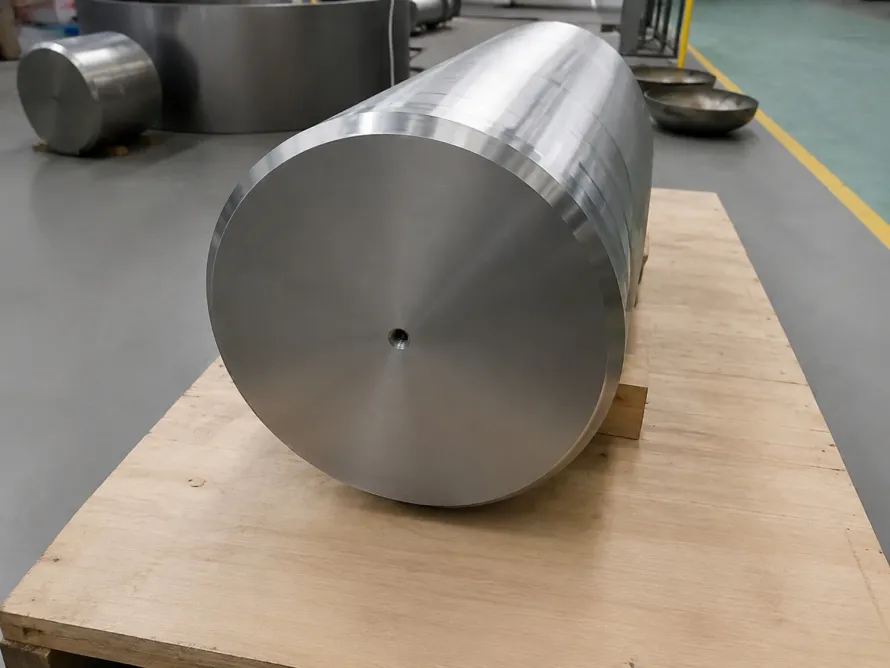
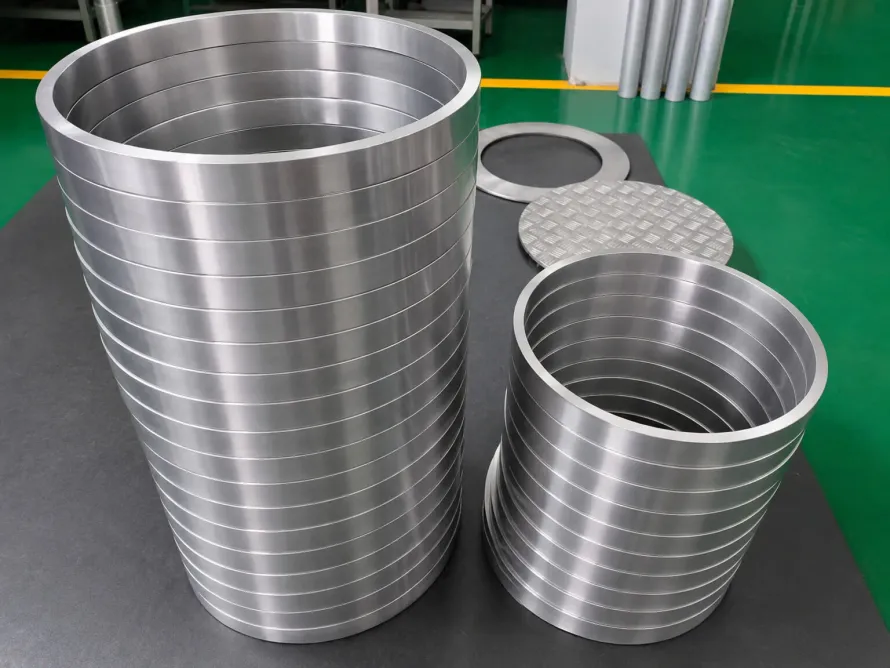
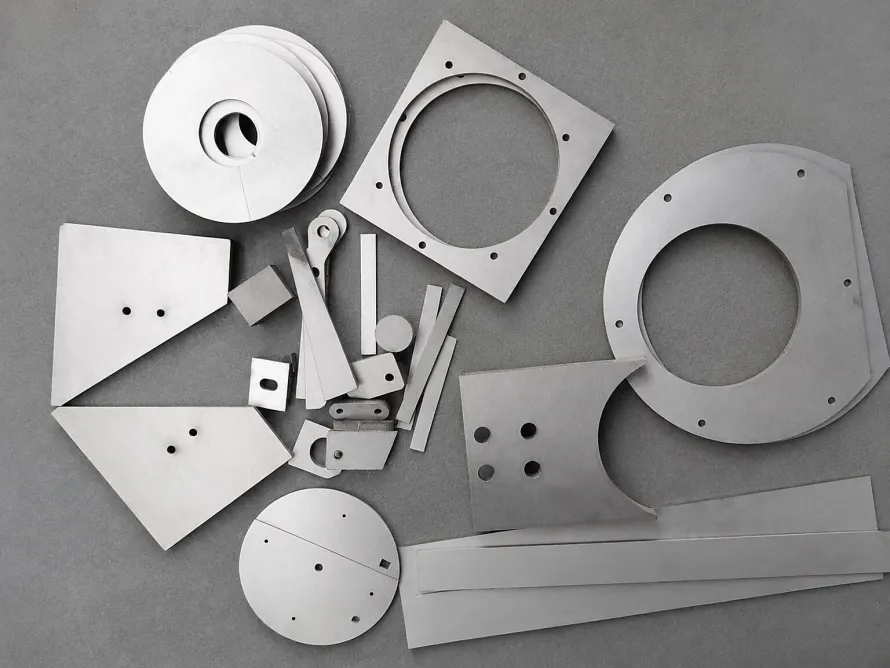
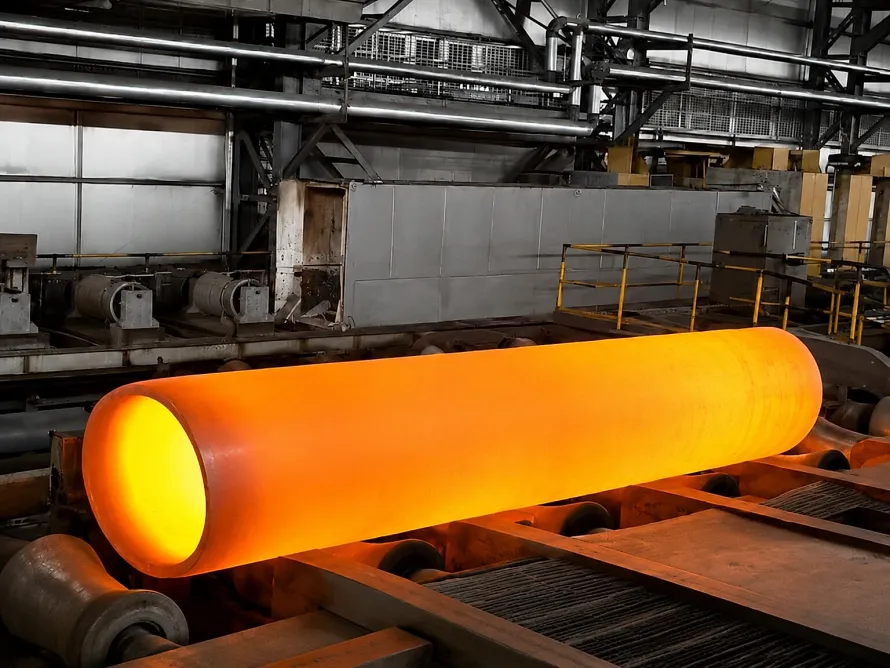
Generic metal product forms, not specimens, identified alloys, or a validated blisk from the Ti6242S–Ti4822 study.
A study published on 18 September 2026 found an overall modeled trend of greater bulk oxidation resistance with more Ti4822 in Ti6242S–Ti4822 composites, while local oxygen uptake still depended on which phase reached the surface. For a proposed multimaterial blisk, bulk composition and actual exposed phase are separate early-screening questions. The authors built a provisional design constraint from 53 laboratory tests; it is not a qualified service-temperature or component-release rule.
What the screen actually measures
The researchers consolidated seven compositions containing 0–100 wt% Ti4822 by three hot-isostatic-pressing or spark-plasma-sintering conditions. They exposed small ground specimens to laboratory air at 20 psi, 600–850 °C, for 12–96 hours. These are monotonic, isothermal tests, not engine duty cycles.
Mass gain per exposed area was fitted to a parabolic oxidation model. The paper reports that oxidation resistance rose as Ti4822 content increased; the logarithm of the fitted rate constant varied approximately linearly with that fraction. At 800 °C after 20 hours, for example, pure Ti6242S gained 1.25 mg/cm² against 0.5 mg/cm² for pure Ti4822. Those values compare the study’s specimens and conditions, not an acceptance limit for a purchased blisk.
The authors used the fitted relationship to set a provisional composition-versus-temperature constraint for surface material placement in topology optimization. Their example at a modeled 600 °C blade-tip condition points to at least 0.5 Ti4822 weight fraction. That threshold is a long-duration model projection under an assumed oxidation criterion, not a direct 600 °C experimental acceptance limit or an approved engine design. The paper notes that at lower test temperatures mass gains approached the equipment’s detection limit, obscuring the effect of added Ti4822.
Bulk mass gain can hide a local surface difference
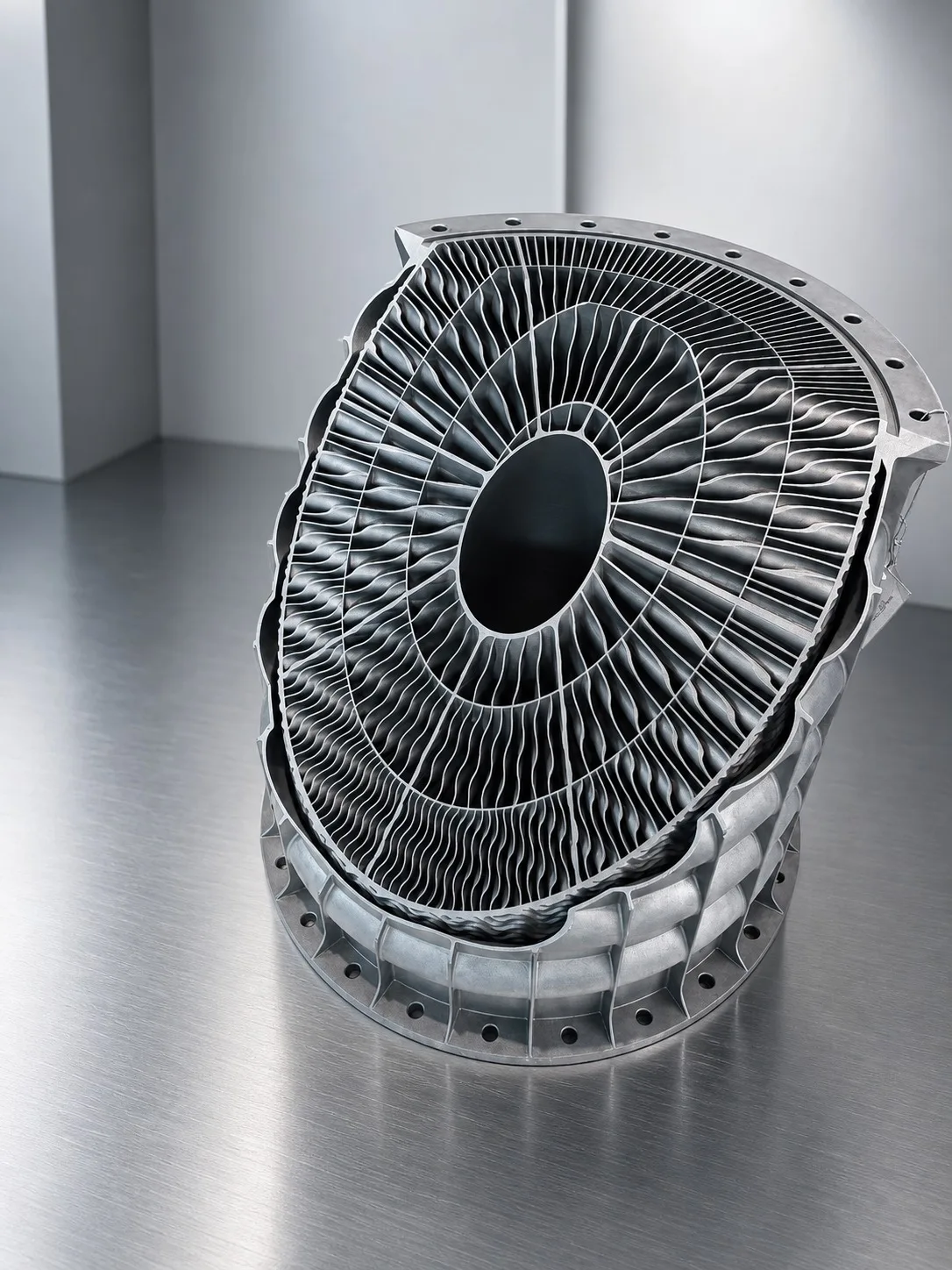
A conceptual cutaway helps locate different exposed surfaces; it is not a study micrograph or oxidation measurement.
A nominal blend fraction alone does not describe which phase is exposed at a particular surface. In the 10 wt% Ti4822 composite examined at 750 °C for 12 hours, the paper observed a larger oxygen-enriched zone where Ti6242S was at the surface and much less uptake where a Ti4822 particle was exposed. Interdiffusion and the consolidation route also changed the underlying microstructure.
This creates a useful two-level screening question for an engineering buyer: does the proposed composition pass the model’s bulk oxidation constraint, and does the actual local surface after processing expose the phase and oxygen profile assumed by that screen? A supplier’s composition certificate cannot answer the second question on its own. Representative-section microscopy and surface-location evidence would have to be specified for the intended geometry.
Where the model stops
The fitted rate law is supported by the study’s isothermal mass-gain measurements and comparisons with prior long-duration results for the end-member alloys. It does not reproduce repeated heating and cooling. The authors note that cycles may introduce oxide rumpling, cracking or spallation not captured by the monotonic test. Post-exposure mechanical testing and component-relevant validation remain outside this initial design criterion; manufacturing repeatability would also need program evidence. The underlying dataset is not currently shared for independent reanalysis.
The practical use is therefore an early reject-or-invest decision, not a release decision. If a candidate surface fails the model’s oxidation screen under the paper’s stated assumptions, engineering can avoid spending on a more elaborate design. If it passes, the next evidence should be matched to the actual surface distribution, thermal cycle, environment and mechanical duty of the proposed component. Passing the oxidation screen alone does not establish those other properties.
Sources
- Bhattacharyya, Ro, Agnew and Wadley, “The Oxidation Behavior of Ti6242S–Ti4822 Composites”, High Temperature Corrosion of Materials, published 18 September 2026; accessed 19 September 2026.
FAQ
# What can the Ti6242S–Ti4822 oxidation model decide?
# Which cyclic and retained-property tests are still needed?
# What evidence remains before component release?
Need this material? Get a factory-direct quote.