Type something to search...

News Posts

Chemical and Energy
New Stainless Steel Challenges PEM Titanium Bipolar Plates? The Real Moat on the Titanium Foil Side: 0.005–1.0 mm × 350–680 mm Full Spec Plus Coating Ecosystem
By Jason/ On 28 May, 2026

New Stainless Steel Challenges PEM Titanium Bipolar Plates? The Real Moat on the Titanium Foil Side: 0.005–1.0 mm × 350–680 mm Full Spec Plus Coating Ecosystem

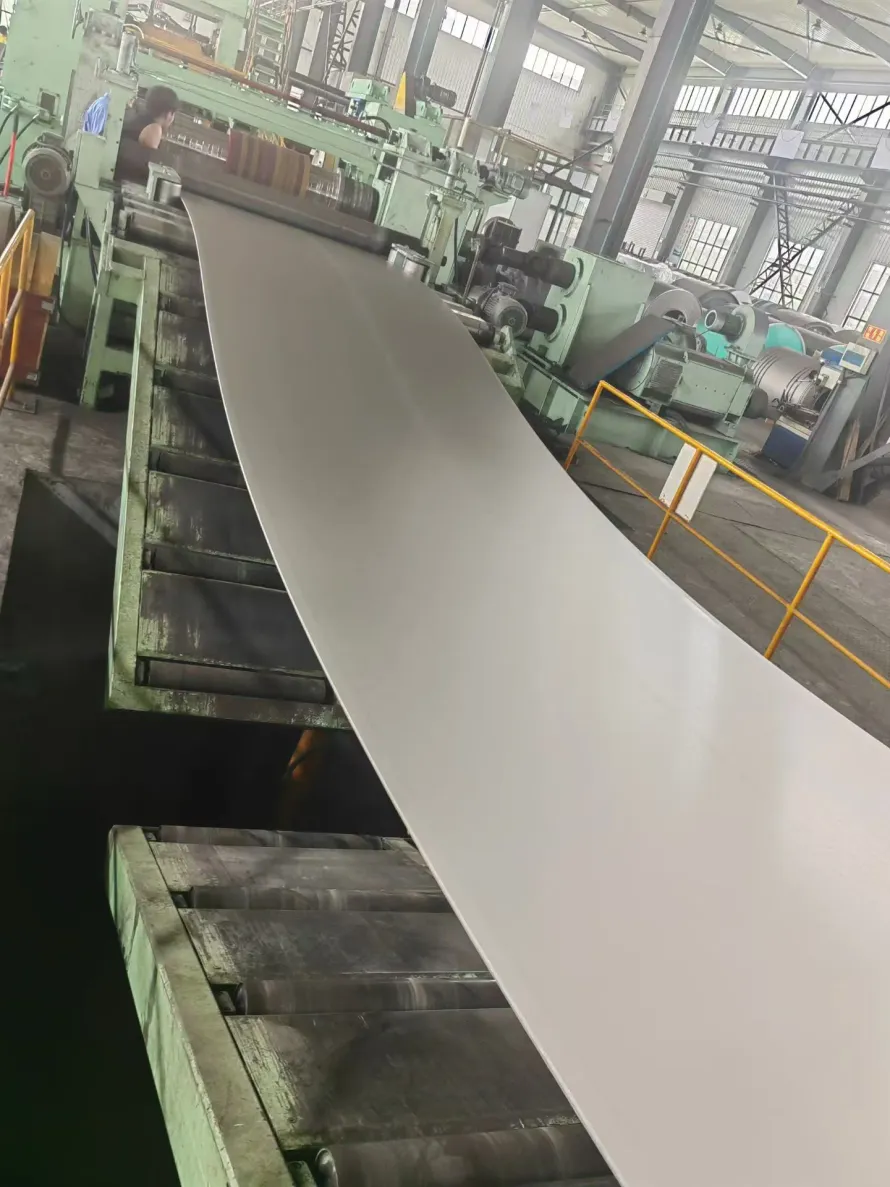
May ScienceDaily Paper: New Stainless Closes In on Titanium's Corrosion Performance On May 10, 2026, ScienceDaily picked up a research paper reporting that a new super-stainless steel (full alloy composition not fully disclosed; core formulation high Cr-Ni-Mo with micro-N strengthening) approaches titanium's corrosion performance under seawater electrolysis conditions. The structural cost comparison cited in the paper: for a 10 MW PEM stack at the current titanium route, this new stainless route comes in at roughly 53% of full-stack material cost. Discussion inside the hydrogen investment community and at PEM stack OEMs has already kicked off. The question is: is this a real threat to the titanium bipolar plate and titanium foil market? The answer comes in layers. Short term, no. Medium term, stay alert. Long term, suppliers need a clear defensive playbook. Lab to Production: A Real 5–7 Year Cycle From a materials paper to PEM stack commercialization, the typical cycle is 5–7 years. The pipeline runs through: (1) 1000-hour plus accelerated corrosion validation on the same alloy; (2) ASTM B117 salt spray plus actual-current-density durability for coating-substrate adhesion; (3) production-process freeze (cold-roll limits, annealing, surface treatment); (4) compatibility certification with the MEA; (5) PEM stack OEM design freeze rework (under the IEC 62282 fuel cell standard framework). The earliest commercial PEM stacks running the new stainless bipolar plate land in 2031–2033. Until then, every "replace titanium with stainless" project is at R&D and pilot-build stage. But timing isn't the whole story. The research conclusion's spread moves the negotiating position first. PEM stack OEM procurement will take this paper to titanium suppliers asking for price cuts, even when the OEM itself knows they won't actually switch in 2026–2027. That's market psychology, not technical substitution. Three Real Moats on the Titanium Side Defense doesn't run on slogans. It runs on spec sheets, process databases, and supply-chain structure. 1. Spec Depth: 0.005–1.0 mm × 350–680 mm Active PEM stack bipolar plate design is trending thinner and wider.Thinner: 1 MW single-stack mainstream at 0.1 mm → 5 MW designs evolving toward 0.05 mm → experimental 100 mW units pushing to 0.02 mm Wider: larger active area means more MEAs per plate and higher stack power densityStainless cold rolling is constrained by work hardening and precipitation on anneal, so yield drops noticeably below 0.08 mm. On the titanium side, the 750 mm twenty-high precision rolling mill is already stable at 0.02 mm, and the ultra-thin end reaches 0.005 mm × 320 mm wide-format. Our 2026 line project, total investment $30.5M USD, is built around this spec depth:Product Family Thickness Range Width RangePure titanium strip and foil (Gr.1 / Gr.2) 0.02 – 1.0 mm 350 – 680 mmTitanium alloy strip and foil (Gr.5 / Gr.23 etc.) 0.03 – 1.0 mm 350 – 680 mmZirconium strip and foil (R60702 etc.) 0.02 – 0.8 mm 350 – 680 mmNickel strip and foil (N02201 etc.) 0.03 – 0.8 mm 350 – 680 mmUltra-thin series (all metals) 0.005 – 0.03 mm ≤ 320 mmEquipment list: 750 mm twenty-high precision rolling mill + ultrasonic cleaning line + continuous annealing line + vacuum furnace + leveling line + slitting line + grinding line. This isn't single-spec capability — it's the capability to cover the entire design sheet.2. Coating Ecosystem: 15–20 Year Database For PEM bipolar plates, final performance has coating weight ≥ substrate weight. Pt / Au / PVD / sprayed (brush-sinter) processes carry 15–20 years of field data on titanium substrates:Shear strength of coating adhesion Coating spallation rate under repeated hydrogen sorption-desorption cycling Contact resistance evolution at the coating-substrate interface (the critical curve — it sets stack efficiency decay) Pitting and intergranular corrosion under long-running (>20,000 hours) operationThe coating database for a new stainless substrate sits at near-zero. Even if the new stainless body meets corrosion targets, the coating-and-interface layer needs another 3–5 years of accumulation before a PEM OEM dares to use it. Our network into Pt / Au / PVD coating partners means customers can receive substrate + coating combined pricing rather than buying in two segments and integrating themselves. 3. Compliance System: 18–36 Month Migration Cycle Active PEM stack OEMs' QA systems are built around Ti substrates: GB 5085 equivalent / ISO 11114-4 / six classes of electrochemical testing / IEC 62282 fuel cell standard. Every production line's control plan, PFMEA and SPC monitoring points map to the Ti substrate property window. Switching to stainless requires rebuilding that entire system. Typical migration cycle 18–36 months, and it must move in lockstep with the PEM OEM's customers (downstream stack integrators) — whoever moves first absorbs the risk. That inertia is something nobody is willing to break before 2027. The "Multi-Metal Co-Line" Economics of the Titanium Foil Market Looked at standalone, the PEM titanium foil market faces pressure — global PEM installation CAGR 2025–2030 runs around 25–30%, but titanium bipolar plate thickness moving from 0.1 → 0.05 mm cancels out half of the tonnage growth. The unlock is multi-metal co-line production. Our 750 mm twenty-high precision rolling line runs Ti / Zr / Ni / titanium alloy across four metal families simultaneously:Ti strip and foil: PEM bipolar plate + chemical heat exchanger + medical Zr strip and foil: nuclear fuel cladding + heavy-corrosion chemical service (hydrochloric / concentrated sulfuric) Ni strip and foil: battery tabs + electrochemical electrodes + superalloy precursors Ultra-thin series (0.005 mm): semiconductor sputter targets + vacuum electronics + high-end medicalOne line serving four high-end downstream markets — demand swings in any single market won't blow through line-level EBITDA. That's a fundamentally different risk posture than a single-product line (PEM titanium bipolar plate only). Five Defensive Plays for the Supplier Side 1. Push upstream into ultra-thin — drive 0.02 mm down to the 0.01–0.005 mm extreme band. Stainless cold rolling won't catch up inside 5 years. 2. Integrate downstream into coating — substrate + coating combined pricing. Customer switching cost moves from "change a mill" up to "change the full supply chain" — a wider defensive perimeter. 3. Multi-metal co-line — Ti / Zr / Ni on the same equipment and process. The customer closes a multi-metal BOM with one mill, cutting supplier integration cost. 4. Spec depth product map — upgrade the spec sheet from "quote document" to "design reference handbook". Lock the Ti route at the PEM stack designer's design stage rather than the procurement stage. 5. Powder to strip to part — link to titanium CNC machining services, offering Ti foil + bipolar plate stamping + welded assembly as second-tier products. Moving from raw-material mill up to component supplier raises substitution resistance. Three-Phase Balancing Playbook for Buyers Short term (2026–2027) — titanium is the only proven PEM bipolar plate route. Coating database, long-term corrosion data, and compliance system are all mature. Do not adjust running projects based on a lab paper. Medium term (2028–2030) — launch a stainless route R&D parallel validation as a hedge. Watch the coating corrosion database and long-term conductivity decay curve. R&D cost ≤ 5% of total PEM program budget. Long term (2031+) — dual route in parallel. High power density plus high-end medical and semiconductor PEM stays with titanium foil; bulk industrial-grade PEM can migrate toward stainless. View from Titanium Valley: Why the Stainless Threat Wins the News Cycle but Loses on the Production Line The news cycle and the production cycle are out of phase. Within a week of a research paper hitting the wire, the hydrogen investment community recirculates it heavily and buyer-side price-negotiation calls land immediately. But a PEM stack OEM's design freeze cycle is 18–24 months, and every freeze locks the supply chain for the next 5+ years. Lab papers don't enter design freeze. Commercial data does. The real risk on the titanium side isn't that stainless catches up — it's that titanium suppliers get distracted by negotiating-position pressure in the news cycle and stop pushing process forward into ultra-thin, multi-metal, and coating integration. If titanium suppliers sit on 0.1 mm mainstream spec, single-metal lines, and no coating integration, then yes, stainless will take the bulk industrial-grade PEM market after 2031. If titanium suppliers keep moving into ultra-thin, multi-metal and coating ecosystem, then after 2031 titanium's position in high-end PEM and multi-metal high-end thin-strip markets gets stronger, not weaker. Current Gr.1 / Gr.2 titanium foil combined spot inventory is roughly 8 tonnes, covering R&D validation, first-article inspection, and small-batch prototype across all three phases. The 750 mm twenty-high precision rolling line can support PEM stack OEMs running multi-spec parallel sourcing. Conclusion: The Threat Is Real, but the Clock Is in Titanium Suppliers' Hands Stainless steel challenging PEM titanium bipolar plates is a news story before 2027 and a market reality after 2031. The 5 years in between — titanium suppliers' fate hinges on a single thing: whether spec depth, coating ecosystem and multi-metal co-line all get built out. PEM customer-side buyers shouldn't get pulled off-line by the news cycle either — running projects stay on titanium, new projects can launch parallel R&D validation, and the main line doesn't need to move before 2028. Related Products & ServicesService → Titanium CNC machining + drawing-based sample parts — PEM bipolar plate stamping / welded assembly second-tier products, 5-axis CNC 4–6 week delivery Product → Gr.1 / Gr.2 ultra-thin titanium foil (0.02–1.0 mm × 350–680 mm) — 750 mm twenty-high precision rolling, combined spot inventory ~8 tonnes Product → Titanium CNC machining — no MOQ — R&D and first-article small batch, samples from one pieceRelated ArticlesPEM titanium bipolar plate brush-sinter vs PVD coating route split Fraunhofer FEP composite bipolar plate × titanium coating — 2026 spring route war Osaka Titanium Amagasaki expansion — titanium sponge tightness transition windowAbout: Titanium Seller is a supply chain platform based in Baoji, China's Titanium Valley, serving aerospace, chemical, marine, medical and hydrogen-energy buyers worldwide.

Market and Supply Chain
Amaero TN Plant's May Triple-Incident Shutdown: What a Real Q3 Cut to US-Domestic AM Titanium Powder Actually Means
By Jason/ On 28 May, 2026

Amaero TN Plant's May Triple-Incident Shutdown: What a Real Q3 Cut to US-Domestic AM Titanium Powder Actually Means

May 13 → 16 → 26: Three Events at Amaero's Tennessee Plant In May 2026, Amaero's Cleveland TN titanium and refractory powder plant logged three back-to-back incidents. May 13: a small deflagration, two employees with burn injuries, no equipment damage. May 16: a small fire alarm. May 26: during scheduled dust-hazard remediation, a small controlled fire in a PVC exhaust duct, no injuries and no equipment loss. On May 27, an Amaero investor notice made it explicit: the plant is paused and undergoing a third-party safety review, with the company stating customer-side inventory should absorb the in-quarter revenue impact. A single event can be written off as bad luck. Three events plus a voluntary stand-down plus third-party intervention is a different animal. This isn't the "plant can restart soon" story that followed May 13 — this is the "plant has called itself down" story. For B2B titanium powder buyers, the real question isn't what Amaero's safety review concludes. It's that the Q3 gap in US-domestic AM titanium powder supply is real, immediate, and calculable. The Q3 Gap: It's Not Tonnage, It's Requalification On the AM powder side, Amaero is one of the handful of US-based atomization and commercial powder sources, alongside Carpenter Powder Products, Praxair Surface Technologies and AP&C (a GE subsidiary). The mainstream product is Gr.5 and Gr.23 ELI spherical powder, 15–45 μm cut, serving LPBF (laser powder bed fusion) and DED (directed energy deposition) customers. Amaero hasn't disclosed annual capacity figures. Even at an industry-estimate range of 200–500 tpa, that's under 10–15% of US-domestic supply. The question isn't where the other 85–90% comes from — it's how long the customer-side switch takes. New-supplier lot qualification carries different requirements across AS9100, IATF 16949 and ISO 13485, typically 6–12 weeks. An LPBF service bureau running aerospace plus medical plus defense work has to run each line through each new powder source separately. The three audits can move in parallel, but first-article inspection, build-to-build comparison (same machine, same parameters, same build envelope, different powder source) and final part-performance testing cannot be skipped. The conclusion is clean. The Q3 bottleneck isn't Amaero's tonnage — it's the AS9100 requalification cycle stacking customers into a queue.Four Customer-Side Problem Buckets 1. Open PO, no delivery. Customers need a non-impact statement from Amaero defining the affected lot boundary, while simultaneously kicking off backup-source onboarding. Many supply contracts carry force-majeure clauses, but downstream delivery commitments don't move with them. 2. Q3 prototype or FAI programs. First-article inspection has to be rerun. An LPBF FAI typically covers X-Y-Z tensile coupons, microstructure, porosity by CT, plus O/N/H chemistry retesting. A complete FAI runs 4–6 weeks; including queue, an 8–12 week slip on Q3 programs is normal. 3. Serial-production customers. A short-term bridge supplier is required, but bridge powder versus original powder demands build-to-build comparison. Variables include sphericity, particle size distribution (PSD), flowability (Hall flow, Carney flow), apparent density, tap density, and oxygen/nitrogen/hydrogen content. Any variable drifting more than ±10% from the original powder can trigger as-built part-performance validation. This is the customer type least able to absorb the cost. 4. Defense, ITAR, DPAS customers. Tougher. The non-Amaero alternative still has to satisfy DFARS 252.225-7008 (specialty metals sourcing) and DPAS priority requirements. The candidate pool shrinks further to ATI Powder Metals, AP&C, Carpenter and a handful of others. Defense ITAR programs cannot route through the China compliance channel in Q3. View from Titanium Valley: Where the Asia-Compliant Channel Actually Stands Worth saying plainly: over the past 90 days, the Asia-compliant China channel has logged zero Western AM customer inquiries for non-US-domestic titanium powder. Not because the channel is closed. AS9100, ISO 13485 and ASTM F3001 (LPBF Ti-6Al-4V ELI standard) are all in place at certified plants in Baoji. Gr.23 ELI spherical powder (15–45 μm, O ≤ 1300 ppm) and Gr.5 AM powder via both PREP and EIGA routes are running. The behavioral reality is the constraint: over the past 12 months, Western AM inquiry flow has stayed concentrated in the AP&C / Carpenter / Praxair / Amaero / Tekna (Canada) North American and Canadian footprint. The Amaero TN shutdown is the possible starting point for that pattern to break. The next 60–90 days are the observation window:Whether non-ITAR commercial aerospace Tier-2, commercial AM service bureaus or medical implant OEMs initiate "Asia-compliant channel qualification audits" Whether inquiry volume stays at sample scale (<10 kg) or jumps to prototype scale (50–100 kg) Whether "permanent backup source" terms appear (dual-supplier strategy written into the PO)Current Gr.23 ELI / Gr.5 AM spherical powder spot inventory totals roughly 10 tonnes. That maps to roughly: 1–2 LPBF service bureaus' steady-state consumption for 3–6 months, or 5–10 medical OEM prototype programs' small-batch slices. Enough to bridge, not enough to anchor. Powder vs Bar: The Other Upstream Route Worth flagging that the AM powder bottleneck doesn't sit only at finished powder. Many atomization plants (PREP, EIGA, plasma atomization) rely on Ti-6Al-4V bar stock as feedstock (diameter ≤ 70 mm, VAR (vacuum arc remelt) grade, O ≤ 1500 ppm for ELI powder feed). During the Amaero TN shutdown, even if other North American atomization plants want to ramp, bar-side lead time is 12–16 weeks of queue (VAR furnace and downstream hot-working capacity is constrained). Chinese Gr.5 ELI bar has a compliance lane on the atomization upstream side: Gr.5 titanium bar spot inventory is roughly 5 tonnes, available as emergency upstream feed for non-ITAR atomization plants. Who the China Compliance Channel Fits, Who It Doesn't Fits (qualification can launch in the 60–90 day window):Commercial aerospace Tier-2 LPBF service bureaus (not direct Boeing / Airbus LTAs) Medical implant OEMs at R&D and prototype stages Industrial AM applications (chemical valve components, heat-exchanger prototypes, marine parts) University and research-institute AM labsDoesn't fit (cannot be solved inside Q3):ITAR / DFARS 252.225-7008 defense programs Tier-1 primary structure serial production Boeing / Airbus direct purchase lines already on five-year LTA (long-term agreement) contractsBuyer PlaybookCustomer Type Q3 Action TimelineCurrent Amaero customers (non-ITAR) Request switchover schedule; launch 1–2 backup-source audits in parallel 4–6 weeks to onboardQ3 FAI / prototype programs Backup-source qualification; accept 8–12 week FAI slip 8–12 weeksSerial production Bridge supplier + build-to-build comparison 6–10 weeksITAR / DFARS programs Wait for Amaero restart; strengthen AP&C / Carpenter ties 12–16 weeksR&D / small-volume medical Launch Asia-compliant channel audit; Chinese AM powder small-sample build 6–10 weeksConclusion: Three Signals Stacked > Any Single Event Taken alone, none of the May 13, 16 or 26 events is a heavyweight on its own. But back-to-back occurrence + voluntary shutdown + third-party intervention stacked together shift the "stable assumption" underneath the Western AM titanium powder supply chain. For B2B buyers, Q3 isn't about waiting for the Amaero restart announcement. Q3 is the window to move "dual-supplier strategy" off the slide deck and into the PO. The Asia-compliant channel is one of the optional paths — not the only one, and it won't solve ITAR — but for non-ITAR commercial AM, medical, and industrial R&D and prototype work, this is the first real demand opening in the past 12 months. Related Products & ServicesService → Titanium CNC machining + drawing-based sample parts — 5-axis CNC, 4–6 week delivery, pairs with AM service bureau post-processing Product → Gr.23 ELI / Gr.5 AM spherical titanium powder — combined spot inventory ~10 tonnes, 15–45 μm mainstream cut Product → Gr.5 titanium bar (VAR grade) — atomization upstream feedstock, spot inventory ~5 tonnesRelated ArticlesIperionX HAMR titanium powder 4.2-tonne March production execution Recycled titanium powder qualification chain — the other route for powder-source switchingAbout: Titanium Seller is a supply chain platform based in Baoji, China's Titanium Valley, serving aerospace, chemical, marine, medical and hydrogen-energy buyers worldwide.

Market and Supply Chain
Osaka Titanium Raises Amagasaki Expansion to ~$250M: The 2026-2027 Sponge Tightness Window Is Now Nailed Down
By Jason/ On 26 May, 2026

Osaka Titanium Raises Amagasaki Expansion to ~$250M: The 2026-2027 Sponge Tightness Window Is Now Nailed Down

Osaka Titanium Adds Another ~$40M to Its Expansion in May — 2028 Is the Year Western Sponge Actually Loosens In May 2026, Osaka Titanium Technologies (one of Japan's four titanium sponge producers) lifted its Amagasaki expansion budget from the original ~$210M to ~$250M — an 18% increase. The target hasn't changed: by 2028, lift titanium sponge capacity from 40,000 t/year to 50,000 t/year. On the numbers, it looks like a routine expansion. Read against the timeline, it's a schedule confirmation: the 2026-2027 Western titanium sponge transition window is now nailed down, and real new tonnage only arrives in 2028. The point isn't capacity insufficiency. It's cadence insufficiency. Osaka Titanium holds half of Japan's 80 kt sponge capacity, and pushing this decision out to 2028 effectively tells the market not to expect Western downstream sheet, bar or forging prices to loosen in 2026-2027. Why a +18% Capex Increase: the Kroll Process Cost Structure Is Shifting Kroll-process titanium sponge cost is dominated by electricity plus magnesium (Mg) recycling — together 55-65% of total. Both have moved up sharply over the last three years. Japanese industrial electricity has stepped higher in stages since the 2022 energy crisis; the 2025-2026 industrial rate is roughly 1.6x the 2020 baseline. Magnesium ingot has moved from $2.5/kg to $3.2-3.5/kg as electrolytic Mg power draw and carbon constraints tightened. The net result is that building the same 50 kt sponge plant in 2026 carries 30-40% higher capex intensity than in 2020. Osaka Titanium raised its budget specifically to hold Mg recycling efficiency and power utilization above the 2028 break-even line. Put plainly: the additional spend isn't to scale up — it's to avoid losing money. The signal to the market is that the cost center for sponge has shifted higher. New capacity won't release via price competition; it will release via long-term contracts locked to aerospace Tier-1. Boeing / Airbus / Safran / Lockheed LTA slots opening in 2028 will be filled first.Three-Segment Slice of Global Sponge Balance: Why 2026-2027 Is Locked Tight Lay out the global sponge capacity map and the picture is clean:Source 2025 capacity 2028 expected NotesChina (Baoji / Chaoyang / Shuangrui etc.) ~240 kt ~441 kt (by 2026) Domestically oversupplied, exports license-controlledJapan (Osaka / Toho / etc.) ~80 kt ~90 kt Osaka +10 kt; primarily supplies Western aerospaceKazakhstan (UKTMP) ~26 kt ~26 kt Geopolitical constraintsRussia (VSMPO) ~17 kt (post-collapse) uncertain Under US/EU sanctionsUS (IperionX HAMR) <5 kt ~200 t to 1,400 tpa Order-of-magnitude too small; meaningful supply post-2027Saudi Arabia (Toho JV) start-up start-up Post-2027Compliant Western sourcing comes primarily from Japan + Kazakhstan, total ~100 kt. That's the ceiling, and the most it can add before 2028 is 10 kt — exactly this Osaka expansion. Demand side: Boeing / Airbus civil aircraft production recovery + F-35 production acceleration + European next-gen engines + Middle East desalination + medical 3D printing. Aerospace, defense and industrial demand combined runs an estimated 5-7% CAGR through 2026-2028. The supply-demand gap cannot be closed by any 2026-2027 capacity addition. The conclusion is clean: this is structural tightness, not cyclical tightness. Why China's 441 kt Can't Close the Gap China's titanium sponge capacity is expected to reach 441 kt by 2026, severely oversupplied domestically — some Chinese sponge plants are running below break-even. But Western downstream mills can't access it. The bottleneck isn't capacity; it's license. Since 2024, China has tightened dual-use export licenses and end-user certificate requirements for aerospace-grade titanium sponge. Single-batch approvals take 3-6 months; with FX and freight layered in, compliant Chinese sponge landed at Western downstream mills runs 15-25% above US and Japanese sponge. Asian mill-delivered titanium sponge prices (mainline reference band):Grade 0 sponge: $7.4 – 7.6 / kg (aerospace and high-end medical, third-party chemistry re-test required) Grade 1 sponge: $7.1 – 7.4 / kg (premium chemical and medical) Grade 2 sponge: $6.7 – 6.9 / kg (industrial and general chemical)This is the Asian-delivered reference, not the Western landed price. The actual compliant Chinese sponge volume flowing to Western downstream mills in 2026 will not exceed 20-30 kt — 5-7% of total Chinese capacity. The remaining 410+ kt is absorbed domestically, with a smaller flow into Southeast Asia, India and Middle East industrial-grade downstream. That's why Osaka Titanium's +10 kt expansion looks small on paper but is actually 10/100 = 10% marginal supply on the compliant Western side. In a small compliant pool, that's real leverage. The catch: it only arrives in 2028. The Schedule Nailed Down: Capacity Curves All Aligned to 2028-2029 Stack the 2026 confirmed capacity moves on one timeline:May 2026: ATI South Carolina sheet mill starts up — but 18-24-month ramp, 2026 is small-batch FAI only. May 2026: Osaka Titanium raises Amagasaki expansion budget — but start-up is in 2028. 2026-2027: Airbus doubles ATI LTA — absorbs ATI's new capacity, Tier-1 locks position. Mid-2027: IperionX Virginia 1,400 tpa titanium sponge begins trial production — still small. 2028: Osaka Titanium Amagasaki +10 kt starts up, ATI South Carolina at full ramp. 2029: Safran Gennevilliers 30,000-tonne hydraulic press starts up.No segment of capacity actually loosens in 2026-2027. From sponge feedstock to ingot melting to plate rolling to large forgings, everything is queued into the same 2028-2029 window. This is what an industrial capital cycle and downstream order cycle look like when they're "dual-misaligned." View from Titanium Valley: Asian Feedstock Is Stable, the Bottleneck Is Western Midstream Looking out from Baoji, the Asian sponge feedstock side has stayed steady since spring 2026. Asian mill spot Grade 1-2 titanium sponge sits in the $6.7-7.4/kg band with no notable monthly swings. The 441 kt Chinese capacity overhang gives prices no upward pressure. But Western buyers can't get this price. What they see is ATI / TIMET sheet LTAs lifted from $35-42/kg to $45-52/kg, and forging lead times of 18-24 weeks pushed out to Q2 2027 and beyond. The problem isn't Asian feedstock — it's the Western midstream. Ingot melting, hot-rolled plate and large forgings: none of the three has spare capacity to add. Over the last 90 days another recurring inquiry pattern has shown up in Baoji — European Tier-2 buyers sending forging drawings over for drawing-based custom work. Safran and Airbus have absorbed ATI's and Ecotitanium's capacity; Tier-2 sub-contractors need a new channel. Compliant Chinese channels for chemical / marine / medical adjacencies and Tier-2 non-critical parts are being opened up by default as the market clears around them. Three Procurement Plays Inside the Transition Window 1. Western aerospace Tier-1 and engine OEMs: lock 2026-2028 LTAs. Sponge does not add before 2028 and price won't soften. Negotiate annual tonnage with ATI, TIMET and Howmet — and add 12 months on top. 2. Chemical, marine and medical buyers: this is your window. With aerospace tightening high-end sponge (Gr.0 / Gr.1), industrial-grade (Gr.2) supply has actually loosened. Spread spot purchasing across Gr.2/Gr.7 titanium plate, Gr.7/Gr.12 titanium pipe and Gr.5/Gr.23 titanium bar — bargaining position has shifted in your favor. 3. Tier-2 / MRO and R&D small-batch buyers: bring compliant Chinese channels into the mix. Finished parts inside the ASTM B265 / B348 / F136 framework flow through titanium CNC machining and the no-minimum-order-quantity channel. Consolidate prototypes, trial runs and small-batch orders into a single shipment and lock 2026-2027 pricing. Conclusion: Don't Bet on a Price Drop Before 2028 The real signal from this Osaka Titanium expansion isn't "+10 kt of capacity." It's the 2028 date being nailed down. Before 2028, no segment of Western sponge supply or rolling/forging capacity loosens. Buyers aren't facing cyclical volatility. They're facing a structural schedule. The two tools inside the transition window are long-term contract slots and compliant pooled channels — nothing else. Related Products & ServicesService → Titanium CNC Machining (Drawing-Based Prototypes + Small Batch) — the window tool for locking in 2026-2027 prices; 5-axis CNC, 4-6 week delivery. Product → Gr.5 Titanium Bar (AMS 4928) — standard aerospace and medical sizes, roughly 5 tonnes in stock. Product → Gr.2/Gr.7 Titanium Plate — steady supply for chemical and marine adjacencies, improved bargaining position.Related ArticlesATI South Carolina Mill + Airbus Contract Doubled — De-Russification Phase Two (US Capacity Side) Safran Completes Non-Russian Titanium Transition in April — De-Russification Phase One (EU Procurement Side) China's 440,000-Tonne Titanium Sponge Structural Oversupply — In-Depth AnalysisAbout: Titanium Seller is a supply chain platform based in Baoji, China's Titanium Valley, serving aerospace, chemical, marine and medical buyers worldwide.

Aerospace and Defense
ATI's South Carolina Mill Goes Live as Airbus Doubles Its Contract: Phase Two of Western Titanium De-Russification
By Jason/ On 26 May, 2026

ATI's South Carolina Mill Goes Live as Airbus Doubles Its Contract: Phase Two of Western Titanium De-Russification

ATI's South Carolina Mill Starts Up in May, Airbus Doubles the LTA — Phase Two of Western Titanium De-Russification Is On In May 2026, Allegheny Technologies Inc. (ATI) brought its new specialty titanium sheet mill in South Carolina into production. In the same week, Airbus disclosed that it had doubled its long-term agreement (LTA) volume with ATI, weighted toward Ti-6Al-4V aerospace sheet. This is not a coincidence. It is Phase Two of the Western titanium sheet supply chain's de-Russification. Phase One was the European procurement clear-out. On April 21, Safran announced it had completed its non-Russian titanium transition for forgings, moving billet and landing-gear forgings entirely from VSMPO-AVISMA to Ecotitanium plus its Japanese and US partners. Phase Two is the US capacity side filling in: ATI brings new aerospace sheet capacity online, and Airbus pins down the matching LTA share. Capacity-side moves are slow. Safran's transition was contract reshuffling and could close overnight. ATI's mill is a greenfield ramp — 18 to 24 months minimum. The interval between start-up and full rate is the tightest window the market will see. The US Capacity-Side Fill Is an 18-24-Month Ramp Curve The South Carolina mill is positioned for specialty titanium sheet — AMS 4911 (Gr.5 annealed sheet), AMS 4901 (Gr.2 CP sheet), AMS 4915 (Gr.5 STA sheet) and similar mainline aerospace grades. End uses are fuselage skin, firewalls, engine nacelles and center-wing-box skin parts. Aerospace sheet mill ramps have a rhythm. Year one runs small batches through first-article inspection (FAI) and customer system audits; year two is when steady tonnage starts. Boeing and Airbus supplier qualification runs through NADCAP AC7110/2 (chemical processing) plus AC7114 (NDT) plus AS9100D system audits, and every material grade has to run its own PPAP. The conclusion is clean. Through all of 2026 and the first half of 2027, Western sheet supply additions are limited. Real easing waits until 2028, when the new mill reaches steady tonnage, paired with Safran's €150M Gennevilliers press starting up in 2029. The two capacity curves only arrive together at that point.What Doubling ATI Really Means for Airbus: a Key Step in Replacing VSMPO Airbus did not disclose the doubled tonnage. The trade reading is that the new volume sits in the annual LTA framework for Ti-6Al-4V aerospace sheet and bar. Airbus has admitted in recent disclosures that Russian titanium still accounts for roughly 20% of its supply and is being drawn down. This is a different curve from Boeing's, which closed out Russian titanium back in 2022. Airbus's slower path comes down to one structural fact: Europe has no aerospace-grade titanium smelter of its own. Aubert & Duval's Ecotitanium handles titanium scrap recycling, but that is it. In the near term Airbus has to push VSMPO's vacated share onto the US (ATI/TIMET) and Japan (Toho Titanium, Osaka Titanium). Doubling the ATI book is the key step in that transfer. For Airbus, de-Russification isn't a PR exercise — it's capacity reservation. LTAs are multi-year contracts, and doubling them means Airbus has effectively locked in the matching ATI sheet tonnage for the 2027-2030 cycle. The takeaway for everyone else: through 2026-2028, Airbus sheet purchasing sits ahead of every non-aerospace buyer in the queue. ATI and TIMET spot allocations will not loosen. The Transition Window: Tier-2 and MRO Channels Open Up Primary-structure demand is locked into LTAs, but the wider market still has gaps. They sit with Tier-2/3 sub-contractors and MRO. Fuselage sub-assemblers, nacelle shops and auxiliary-system shops (APUs, hydraulic plumbing, firewall assemblies) form the Tier-2 layer. Line maintenance, module overhaul and modification-life extension (MLE) make up MRO. Both buy on spot orders and short-term contracts, not LTAs. When ATI and TIMET shift their sheet mix toward Boeing and Airbus LTAs, Tier-2 and MRO will see real spot shortages in Gr.5 titanium sheet, Gr.5 titanium bar and titanium forgings. Categories that compliant Chinese channels can carry through 2026-2028:Chemical and marine adjacencies (ASTM B265 Gr.2/Gr.7, B338 Gr.2 welded titanium tube): non-aerospace but consuming the same sheet and tube downstream. Medical implant adjacencies (ASTM F136 Gr.23 ELI): a separate certification path — Baoji and Western Titanium already hold ISO 13485. Tier-2 non-critical parts (engine bay interior trim, APU covers, outer firewall skins): secondary parts within an AS9100D system, with shorter audit cycles than primary structure. MRO overhaul parts (Gr.2 CP titanium and Gr.5 repair plate for line work): MRO shops typically self-qualify suppliers and accept mill cert plus lot traceability.View from Titanium Valley: Drawing-Based Forging RFQs from Europe Are Real Over the last 90 days, one new pattern has shown up in our Baoji inquiry queue: European buyers walking in with titanium forging drawings and asking about drawing-based custom forging. Nothing has closed yet — these are still in discussion. But the inquiry itself is the signal. Twelve months ago these RFQs did not exist. European Tier-2 buyers were still moving through VSMPO plus Aubert & Duval, asking supplier qualification questions, not channel questions. Now they ask "can the China channel make this forging to my drawing, and what's your lead time?" — a direct behavioral mapping of Phase Two de-Russification. On the supply side, the numbers are tightening too. Current AMS 4911 / 4928 / 4965 stock totals roughly 5 tonnes — enough for one or two MRO medium-batch orders. If the Airbus-doubles-ATI signal propagates through Tier-2, the next 60 days of Gr.5 titanium sheet spot may tighten further. Sponge Cost-Side Reference Asian mill spot prices on titanium sponge (current band):Grade Mainline mill-delivered range NotesGrade 0 $7.4 – 7.6 / kg Aerospace and high-end medicalGrade 1 $7.1 – 7.4 / kg Premium chemical and medicalGrade 2 $6.7 – 6.9 / kg Industrial and general chemicalThese are Asian mill-delivered prices, not Western landed. Their reference value: Asian-side raw-material cost is relatively stable. What's actually tight on the Western side is bottleneck capacity across melting, rolling and forging — not sponge feedstock. That means the 2026-2027 spread on Gr.5 titanium sheet and Gr.5 titanium forgings is set by Western midstream capacity, not by sponge volatility. What Buyers Should Actually Do Tier-1 and engine OEMs: lock in 2026-2027 annual LTAs. Do not bet on a price retreat. The ATI ramp plus the Airbus doubling will squeeze existing capacity at the same time. Western spot will not loosen. Tier-2/3 sub-contractors: bring compliant Chinese channels into the mix. Aerospace secondary parts go through compliant Chinese mills inside the AS9100D framework; chemical and marine adjacencies go via ASTM B265 / B348. Priority categories are Gr.5 titanium sheet and titanium bar. MRO: build overhaul-part inventory to 12 months. The MRO pain point is one delayed batch derailing an entire line-maintenance schedule. Through the transition window, 1.5x to 2x safety stock is cheaper than spot negotiation. Chemical, marine and medical buyers: this window is good news for you. With aerospace tightening Gr.5, Gr.2 / Gr.7 / Gr.23 ELI supply has actually loosened and bargaining position has improved. Consolidate R&D and small-batch orders through titanium CNC machining and the no-minimum-order-quantity channel. Conclusion: The Real Cadence of Phase Two De-Russification ATI starting up in May plus Airbus doubling its LTA equals Phase Two of Western titanium sheet de-Russification — under way now. But the 18-24-month ramp means the 2026-2027 transition window will stay tight. Real easing waits for ATI's full ramp in 2028, paired with Safran's Gennevilliers press in 2029. The opportunities inside that window belong to Tier-2/3 and MRO buyers — and to any supplier who can provide a compliant China channel to share the load. Related Products & ServicesService → Titanium CNC Machining — drawing-based forging inquiries from Europe are now arriving; 5-axis CNC and prototype-from-drawing in 4-6 weeks. Product → Gr.5 Titanium Sheet (AMS 4911 etc.) — roughly 5 tonnes in stock, covering Tier-2 and MRO short-term demand. Product → Gr.5 Titanium Bar (AMS 4928 etc.) — standard sizes for Tier-2 sub-contractors and MRO repair work, small-lot splits available.Related ArticlesSafran Completes Non-Russian Titanium Transition in April (De-Russification Phase One) F-35 Dual Contract Awards in April 2026 — Structural Upshift in US Military Titanium Forging Demand VSMPO Capacity Collapse from 32k to 17k Tonnes — Global Aerospace De-Russification RebalanceAbout: Titanium Seller is a supply chain platform based in Baoji, China's Titanium Valley, serving aerospace, chemical, marine and medical buyers worldwide.

Manufacturing and Technology
A clean titanium powder inspection bench with sealed powder jars, recycled titanium scrap, pressed coupons and test records, showing how recycled titanium routes need traceable powder-to-part evidence
By Jason/ On 08 May, 2026

IperionX's 24/7 Powder Ramp Shows Why Recycled Titanium Still Needs a Qualification Chain

IperionX's move to continuous titanium powder production is a real supply-chain signal, but not because output tonnage alone changes the market. For buyers of titanium powder, fasteners, brackets, plates, bars or custom components, the bigger question is whether a recycled titanium route can carry enough evidence from scrap feedstock to approved product form.Metal AM reported on May 6 that IperionX's Virginia Titanium Manufacturing Campus had moved to 24/7 production during the quarter ended March 31, 2026, with all HAMR powder production systems commissioned and in ramp-up. IperionX's March 2026 quarterly report said powder output reached about 4.2 metric tons in March, equal to roughly 50 tpa annualized at an early-stage ramp rate, and that the company was targeting about 200 tpa of titanium powder run-rate capacity by the end of 2026. The same report matters because it links powder to downstream products. IperionX said powder metallurgy scale-up continued during the quarter, including a 100-ton uniaxial press, a cold isostatic press for larger-format titanium components, a six-axis 300-ton SACMI powder metallurgy press, additional sintering furnaces and binder-jet additive manufacturing capability. The company framed these systems as part of the path from powder output toward higher-volume titanium powder-to-part manufacturing and customer qualification. That is where the industrial story sits. A powder plant can run around the clock and still be early in commercial qualification. Buyers do not only buy powder. They buy a route that must survive material review, process validation, inspection and application approval. Why Scrap-to-Powder Is a Supply-Chain Question The U.S. Geological Survey's 2026 titanium summary said the United States did not produce titanium sponge metal in 2025 and estimated net import reliance for titanium sponge at 100%. USGS also reported estimated 2025 sponge imports of 44,000 tons and noted that U.S. producers of ingot and downstream products remained reliant on imported sponge and scrap. In that context, a recycled titanium powder route is strategically interesting. It offers a way to convert scrap into powder and then into manufactured products without treating imported sponge as the only starting point. IperionX said in January that the U.S. Government had transferred about 290 metric tons of high-quality Ti64 scrap to the company and obligated the final US$4.6 million under a US$47.1 million award supporting titanium supply-chain scale-up. But scrap-to-powder is not automatically scrap-to-approved-part. The value is created only if the feedstock record, powder properties, forming route and final inspection package remain connected. The Buyer Framework: From Scrap to Approved Part For buyers evaluating recycled titanium powder or powder-derived products, the practical framework is:Evidence gate What buyers should verify Why it mattersFeedstock provenance Scrap source, alloy identity, contamination controls and segregation Recycled titanium only works when the starting material is traceablePowder specification Chemistry, oxygen level, particle size, morphology, flowability and lot consistency Powder behavior affects pressing, sintering, AM and final propertiesProcess route HAMR, powder metallurgy, press-sinter-forge, binder jet or other consolidation path Different routes produce different density, microstructure and geometry limitsDownstream capacity Presses, sintering furnaces, finishing, machining and inspection availability Powder output is not the same as finished-product readinessInspection evidence Mechanical testing, dimensional checks, density, surface condition and nonconformance records Customers qualify evidence, not production claimsCustomer approval path Prototype, low-rate production, market entry timing and application-specific validation Qualification cycles differ by aerospace, medical, automotive, consumer and industrial marketsThis framework is more useful than asking whether a powder plant has reached a headline capacity number. Capacity matters, but qualification determines whether the material can enter a buyer's real supply chain. The same buyer logic appears in our parallel reads — the aerospace titanium procurement chain (five gates) and the medical titanium regulatory chain (six gates around FDA 510(k) and design control). Recycled-powder buyers face the same template, with feedstock-provenance and oxygen-control as the front-loaded risks. What This Means for Titanium Product Buyers For powder buyers, the first issue is repeatability. A recycled route must prove that powder chemistry, oxygen control and lot-to-lot consistency can stay inside the buyer's window. For powder metallurgy and sintered products, the next issue is consolidation. Density, dimensional control, surface condition and downstream machining can decide whether a part is commercially usable. For mill-product and engineered-product buyers, the question is slightly different. IperionX's own investor materials describe a range of possible outputs from powder into mill products, engineered products, fasteners, enclosures, brackets, impellers, actuators, gears, plates, bars, sheets and wire. That breadth is valuable only if each product form has its own qualification logic. A fastener buyer will not approve a route the same way an aerospace mill-product buyer approves plate or bar. An automotive bracket program will not move at the same pace as a consumer-electronics enclosure. The company's quarterly report makes the timing issue visible. It says production remains in ramp-up, downstream capacity is being installed and customer qualification timelines are expected to accelerate as bottlenecks are removed. That language should be read carefully. It is positive for supply-chain development, but it is not the same as broad commercial approval across all titanium product categories. The same caution applies to the TITAN-AM aerospace additive evidence chain — programme announcements move faster than qualified-supply approvals. What Suppliers Should Learn Suppliers working with titanium powder, recycled feedstock or powder-derived components should prepare to sell evidence before volume. A useful buyer package may include feedstock traceability, powder lot data, oxygen and chemistry records, powder handling controls, process-route descriptions, sintering or forging parameters, mechanical test results, inspection records and application-specific validation notes. The same lesson applies to export suppliers outside the powder business. If recycled or powder-derived titanium becomes more common, buyers of bars, plates, tubes, forgings and machined parts will ask where the material came from and how the route was controlled. A lower-cost or lower-carbon titanium story will not be enough if the customer cannot qualify the part. The defensible conclusion is that IperionX's 24/7 ramp is not just a production milestone. It is a test of whether recycled titanium can move from strategic supply-chain promise into qualification-ready products. The winners in that shift will not be the suppliers that only report tonnage. They will be the suppliers that make the route auditable from scrap to powder to approved part.Related Products & ServicesTitanium forgings — Gr.1/Gr.2/Gr.5/Gr.7/Gr.12, AMS 4928 / ASTM B381 channels Titanium bar / rod — ASTM B348 machining stock with batch traceability Titanium sheet & plate — ASTM B265 plate stock for chemical, marine and structural blanks Titanium wire — feedstock-grade wire for AM and welding routes Special titanium alloys — Gr.5 / Ti-6Al-4V and Gr.23 / Ti-6Al-4V ELI reference Titanium nuts & bolts / fasteners — for engineered and bracket applications Contract machining services — finish machining, dimensional verification, inspection-ready delivery Titanium industry news — ongoing tracking of qualification chains across aerospace, medical, chemical and powder routes

Medical and Dental
Gloved hands inspect generic titanium implant plates and test samples on a clean quality-control bench, showing how medical titanium must remain traceable through device evidence records
By Jason/ On 07 May, 2026

FDA Clearances Show Medical Titanium Is Becoming a Regulatory Evidence Chain

Two recent FDA 510(k) clearances point to a practical shift for medical titanium suppliers: the market is not only asking whether titanium can be made into an implant. It is asking whether the titanium route can be documented through design control, manufacturing validation, inspection, sterilization and regulatory clearance.The first signal is CG Bio's EASYMADE-TI. FDA's 510(k) database lists the device as a preformed, non-alterable cranioplasty plate under K252251, with a substantially equivalent decision dated April 9, 2026 and a page update on May 4 (FDA). CGBIO said the patient-specific titanium implant is designed from individual CT data for cranial and non-load-bearing craniofacial reconstruction, manufactured from medical-grade titanium alloy by Laser Powder Bed Fusion, and delivered to U.S. hospitals after design work in Korea (CGBIO via PR Newswire). The second signal is Chest Wall Innovations' PC Fix System. FDA lists K260411 as a bone fixation plate from Chest Wall Innovations with a substantially equivalent decision dated April 24, 2026 (FDA). The company said the rib fixation system offers both PEEK and titanium implants and supports intrathoracic and extrathoracic surgical approaches (Chest Wall Innovations via PR Newswire). Neither clearance should be read as a broad forecast for titanium demand. Device clearances are product-specific, and company releases do not reveal material specifications, volumes or supplier chains. The useful industry lesson is narrower but stronger: medical titanium is being evaluated as part of a regulated evidence chain, not as a generic metal category. The same pattern is visible in adjacent segments — see our reads on the aerospace titanium qualification chain and the TITAN-AM additive-manufacturing evidence frame. Why 510(k) Clearance Matters to Material Suppliers FDA's 510(k) overview says manufacturers must submit a premarket notification before introducing certain devices into commercial distribution, and before making significant changes that can affect safety or effectiveness. FDA explicitly includes changes related to design, material, chemical composition, manufacturing process and indications for use in that discussion (FDA). That wording is important for titanium processors. A supplier may think in terms of grade, shape and price: bar, plate, sheet, machined blank, implant plate, powder or finished component. A device company thinks in terms of whether that material can be defended inside a regulated product file. The same alloy label can carry very different risk depending on powder history, melt route, oxygen control, machining contamination, surface condition, inspection record, cleaning process and packaging workflow. For conventional medical titanium, the evidence chain usually starts with chemical composition and mechanical properties. For additively manufactured titanium, it expands into powder quality, reuse controls, build parameters, post-processing, dimensional inspection, surface characteristics and validation records. For patient-specific implants, it also includes design data and case-specific workflow. A material that looks acceptable in inventory can still be unsuitable if the records cannot follow it into the device history. The New Medical Titanium Evidence Chain The clearest framework for buyers is:Evidence gate What must be traceable Why it mattersMaterial specification Alloy, grade, chemistry, mechanical data and batch identity The device file needs more than a commercial material labelManufacturing route Bar, plate, machining, LPBF, porous structure, heat treatment or finishing path The route affects repeatability, surface condition and validation burdenDesign-control record Patient-specific model, implant geometry, indication and predicate logic Device clearance depends on intended use and design comparisonInspection and validation Dimensional checks, mechanical testing, process validation and nonconformance control Medical buyers need records that can withstand audit and reviewSterilization or hospital-use workflow Cleanliness, packaging, sterilization responsibility and delivery timing A finished implant is not usable until the clinical workflow can accept itRegulatory fit 510(k), predicate device, product code and indications for use Regulatory clearance is tied to the specific device and use caseThis does not mean every titanium mill product supplier must become a finished-device manufacturer. It does mean suppliers serving medical customers should understand where their material evidence enters the customer's file. A titanium bar for machining spinal or trauma components, a plate blank for cranial reconstruction, and Ti-6Al-4V ELI powder for LPBF implants all face different documentation questions. LPBF Changes the Supplier Conversation EASYMADE-TI is especially useful because it shows how additive manufacturing changes the buyer conversation. The company describes a process in which patient CT data leads to a customized design, LPBF produces the titanium implant, and the product is delivered for hospital sterilization and use. In that workflow, the titanium supplier is no longer selling only a material input. The material route touches design, geometry, process repeatability, cleaning, inspection and logistics. For titanium powder suppliers, this raises the evidence bar. Buyers may ask about particle-size distribution, chemistry, flowability, oxygen pickup, powder handling and reuse policy. For machining suppliers, the equivalent questions may involve lot traceability, coolant control, burr removal, surface finish and inspection records. For plate or bar suppliers, the focus may be grade conformity, ultrasonic inspection, mechanical tests and clean packaging. The common thread is that medical titanium must be document-ready before it is product-ready. Titanium Also Competes by Use Case The PC Fix clearance adds a second lesson: titanium is not always the only material story. Chest Wall Innovations highlights a system that includes both PEEK and titanium implants. That matters because medical-device material choice is often a trade-off between strength, stiffness, imaging behavior, surgical approach and clinical use case. For titanium suppliers, the conclusion should not be that titanium automatically wins. The better conclusion is that titanium must be supported by the right evidence for the right indication. When rigid fixation, durability or established orthopedic use matters, Gr.5 / Gr.23 Ti-6Al-4V ELI can be attractive. When imaging visibility or elasticity is a stronger design requirement, alternative materials may be considered. The supplier that can explain titanium's role within the device's use case will be more credible than the supplier that treats biocompatibility as a complete sales argument. What Export Titanium Suppliers Should Prepare Export suppliers serving medical customers should build documentation around the customer's regulated workflow, not around a generic product catalog. The useful question is not "Do we have medical-grade titanium?" It is "Can our titanium record be inserted into a device manufacturer's design, validation and regulatory system without creating gaps?" That means clear batch traceability, stable material specifications, test reports that match the requested standard, documented processing history, controlled finishing via contract machining, inspection records, contamination controls and realistic lead times. For LPBF-related supply, powder handling evidence becomes central. For machined or plate-based implants, surface condition, dimensional control and cleaning routes matter more. The recent FDA clearances do not prove a sudden boom in every medical titanium product. They do show why the high-value part of the market is moving toward evidence-rich supply. In medical devices, titanium is not just a metal that performs well in the body. It is a material that must remain traceable through design, manufacturing, validation and regulatory review. Suppliers that can support that chain will be easier for serious medical-device buyers to qualify.Related Products & ServicesSpecial titanium alloys (Gr.5 / Gr.23 / Ti-6Al-4V ELI) — ASTM F136 / ISO 5832-3 medical-grade reference Titanium bar / rod — machining stock for spinal, trauma and cranial components, ASTM B348 traceability Titanium sheet & plate — plate blanks for cranioplasty and bone fixation Titanium forgings — near-net forge stock for orthopedic and trauma applications Titanium wire — feedstock for AM and surgical-wire applications Contract machining services — finish machining, dimensional verification, controlled-finish delivery for implant blanks Titanium industry news — ongoing tracking of medical, aerospace and chemical titanium qualification chains

Chemical and Energy
A clean chemical-process fabrication bench with titanium tube sections, plate coupons, weld samples and inspection tools, showing how welded titanium equipment needs documented fabrication evidence
By Jason/ On 07 May, 2026

Avantium's Titanium Weld Repairs Show Why Chemical Plants Need a Fabrication Evidence Chain

Avantium's update on titanium weld repairs at its FDCA Flagship Plant is a useful reminder for chemical process buyers: titanium's value does not end at corrosion resistance. In real plant equipment, titanium must also pass through fabrication, welding, inspection, repair documentation and commissioning checks before it becomes a reliable production asset.On April 30, Avantium said repair work on titanium weld issues at its FDCA Flagship Plant had been successfully completed. The company said final testing and safety checks were underway before commissioning could resume, and that it would provide a further update once those checks were completed (Avantium). Trade coverage described the repair completion as an important step toward bringing the plant closer to start-up after construction-related titanium weld issues delayed commissioning (ChemAnalyst). The public information does not identify the exact weld defect, the titanium grade, the affected equipment or the inspection method. That limitation matters. A serious article should not turn a short company update into a diagnosis. The stronger industry lesson is about buyer evidence: when titanium is used in chemical processing, the material certificate is only one part of the risk file. Why Titanium Welding Changes The Buyer Question Titanium is attractive in chemical service because it can resist aggressive corrosion environments that would quickly challenge many common alloys. That is why titanium tubes, plates, welded assemblies and heat-exchanger components appear in chemical, polymer, desalination, chlor-alkali and other process applications. ASTM's product category for seamless and welded titanium and titanium alloy tubes covers condensers and heat exchangers, showing how closely titanium tube supply is tied to process-equipment duty (ASTM B338) — see also our dedicated B338 spec page. But titanium's corrosion performance is not a free pass through fabrication. TWI's guidance on titanium and titanium alloy weldability emphasizes that titanium welds must be protected from atmospheric contamination, with shielding and cleanliness playing a central role in weld quality (TWI). For buyers, that turns a purchase order into more than a grade-and-size discussion. A titanium tube or plate — typically Gr.2 for general chemical service or Gr.7 (Ti-Pd) for hot reducing acids — can meet the requested chemistry and still create commissioning risk if the weld procedure, shielding practice, cleaning route or inspection record is weak. Conversely, a supplier that can document fabrication controls makes the material easier to trust in a process line where downtime, leakage, rework or delayed start-up can be expensive. The Evidence Chain Chemical Buyers Should Request The practical framework is simple:Evidence gate What buyers should verify Why it mattersService duty Process media, temperature, pressure, cleaning chemistry and corrosion assumptions Titanium grade selection depends on the actual operating environmentMaterial form and grade Tube, plate, sheet, fitting, spool, vessel part, grade and heat identity The form determines weld access, inspection method and mechanical riskWeld procedure and shielding Qualified procedure, filler route, shielding gas coverage and purge control Titanium weld quality is sensitive to contamination and heat-affected conditionsCleanliness control Surface preparation, handling, tool segregation and post-weld cleaning Contamination can undermine corrosion or weld performanceNDT and pressure testing Visual inspection, dye penetrant, radiography, ultrasonic checks, leak testing or hydrostatic testing when applicable Inspection evidence turns fabrication claims into auditable recordsRepair dossier and handoff Nonconformance record, repair method, retest results and commissioning acceptance Repairs must close the loop before equipment enters productionThis framework is not only for large chemical developers. It applies to export buyers sourcing titanium tube bundles, heat-exchanger tubes, welded pipe spools, reaction-vessel internals, pump components or machined corrosion-service parts. The more severe the service, the less useful it is to ask only whether the material is titanium. What The Avantium Case Does And Does Not Prove The Avantium update does not prove that titanium is unreliable in chemical plants. It also does not prove that a particular supplier, welder or material route failed. The source language is narrower: a construction-related titanium weld issue was repaired, and final testing and safety checks were needed before commissioning could resume. That is still enough to matter. Commissioning is where paperwork, fabrication and operating reality meet. A weld that requires repair may already have passed through procurement, workshop production and installation planning. When an issue is discovered late, the commercial problem is no longer only the cost of the weld. It can become schedule risk, retesting workload, safety review, documentation revision and trust in the handoff package. For titanium suppliers, the opportunity is to reduce that late-stage uncertainty. A supplier of titanium plate, tube or fabricated assemblies should be able to explain how material traceability flows into weld maps, procedure qualifications, inspection reports, repair controls and final acceptance records. That evidence will not make every project simple, but it gives the buyer a clearer way to separate a capable fabrication partner from a material-only seller. What Export Suppliers Should Prepare Export titanium suppliers serving chemical process equipment buyers should build documentation around fabrication risk, not only around inventory. A useful shipment package may include mill test certificates, heat and lot traceability, dimensional records, surface-condition notes, weld procedure references, inspection reports, repair history if any, pressure or leak-test evidence, and clear marking that links parts back to records — all aligned to the relevant ASTM specs (e.g. B338 for tube, B265 for plate, B348 for bar). For welded products, the documentation should also make responsibilities clear. Who controls purge shielding? Who verifies cleanliness before welding? Which NDT method is used, and at what acceptance level? Who signs off a repaired weld before commissioning? These questions may sound procedural, but they are exactly the questions that protect titanium's material value in a chemical plant. The defensible conclusion is that titanium process equipment is becoming an evidence business. Corrosion resistance may win the material selection, but fabrication evidence wins the commissioning argument. Buyers that ask for that evidence early will have fewer surprises later. Suppliers that can provide it will look more useful than suppliers that only sell titanium by grade, diameter and thickness. Related Products & ServicesTitanium Tubes — seamless and welded, certified to ASTM B338 Titanium Sheets & Plates — Gr.2/Gr.7 chemical-service forms to ASTM B265 Titanium Pipes — large-diameter pipe spools for process duty Titanium Fabrication — qualified weld procedures + NDT Titanium CNC Machining — corrosion-service machined components Titanium Standards & Specifications — full B265/B338/B348 documentation

Aerospace and Defense
A titanium quality-control bench with plates, machined coupons, calipers and gloved inspection hands, showing how aerospace procurement depends on traceable evidence
By Jason/ On 06 May, 2026

Aerospace Orders Are Turning Titanium Procurement Into a Qualification Chain

voestalpine's new aerospace order book is not only a contract story. It is a signal about how aircraft supply chains are valuing titanium products in 2026: not as isolated bars, sheets, tubes or forgings, but as qualified material packages tied to processing, inspection evidence, certification readiness and delivery control. The Austrian steel and technology group said on April 8 that its High Performance Metals Division had secured aerospace orders worth around EUR 1 billion over five years. The agreement includes Airbus-related business and covers high-performance materials, complex forged parts and global logistics. The company said its aerospace portfolio includes bars, sections, sheets, plates and special forged parts, with titanium alloy forgings produced at Kapfenberg and high-tech titanium sheets produced at Muerzzuschlag. It also described heat treatment, surface treatment, additive manufacturing processes and a global service network as part of the division's capability set (voestalpine).For titanium processors and export buyers, the important point is not that one European supplier won a large order. The more useful signal is that aerospace customers are buying a chain of assurance. A titanium plate, bar or forged billet has limited value in aircraft programs if it is separated from the route that proves chemistry, mechanical performance, heat history, inspection status, traceability and delivery reliability. Why the Order Matters Beyond One Supplier Aerospace demand remains strong enough to keep pressure on qualified material channels. Airbus reported 9,037 commercial aircraft in its order backlog at the end of March 2026, even as Q1 deliveries fell to 114 aircraft from 136 a year earlier. The company said it was continuing its ramp-up while navigating Pratt & Whitney engine shortages (Airbus). That pattern matters for titanium because aircraft production is constrained by qualified components and inputs, not only by final assembly demand. Reuters reported in February that aviation supply constraints had become a durable operating condition, with some component and material orders stretching toward a year. In the same report, a Future Metals executive said titanium and nickel tubing lead times were still 50 to 60 weeks, far above the pre-pandemic norm of about 20 weeks (Reuters via Investing.com). Even if some lead times have improved from 2025 extremes, the procurement lesson remains: qualified titanium availability is still a planning variable, especially for tubing, forgings and precision material forms that must enter certified assemblies. The raw-material side adds another layer. The U.S. Geological Survey's 2026 titanium summary said the United States did not produce titanium sponge metal in 2025 and estimated net import reliance for sponge at 100%. It also reported estimated 2025 sponge imports of 44,000 metric tons and noted that most titanium metal use was in aerospace applications, with the rest spread across armor, chemical processing, marine hardware, medical implants, power generation and other uses (USGS). That does not mean every titanium buyer faces an immediate shortage. It does mean downstream buyers should distinguish between feedstock exposure, mill product availability and qualified component readiness. These are related, but they are not the same risk. The New Buyer Framework: Five Gates, Not One Price For titanium bars, tubes, plates, sheets and forgings, aerospace procurement increasingly works through five gates:Gate What buyers need to verify Why it mattersMaterial form Bar, tube, plate, sheet, forging, billet, wire or powder route The form determines downstream machining, forming, inspection and qualification workProcess route Melting, rolling, forging, heat treatment, machining or additive manufacturing path Process history affects mechanical properties and repeatabilityInspection evidence Chemical tests, mechanical tests, ultrasonic or other non-destructive inspection, dimensional records Aerospace programs need proof, not only supplier claimsCertification package Standards, mill test certificates, traceability, conformity documents and customer-specific approvals Documentation failure can stop an otherwise usable materialDelivery resilience Lead time, logistics, inventory discipline and alternate qualified routes Aircraft programs need predictable flow, not spot availabilityThis framework is more practical than asking whether titanium prices are rising or falling. A lower raw-material price does not solve a missing NDI record. Available plate stock does not solve a forgings bottleneck. A fast quote does not replace customer-approved process history.Additive Manufacturing Reinforces the Same Lesson The same evidence-chain logic is visible in titanium additive manufacturing. On April 13, GKN Aerospace announced an $8.4 million TITAN-AM program with the U.S. Air Force Research Laboratory to industrialize Laser Metal Deposition with Wire for large titanium aerostructures. The program is not framed only around printing parts. It focuses on process industrialization, titanium material datasets, simulation, non-destructive inspection techniques and component demonstration (GKN Aerospace; see our earlier read on TITAN-AM and the aerospace titanium qualification picture). That detail is important for traditional titanium product suppliers. Wire-fed additive manufacturing does not simply replace forged or machined products overnight. It adds another qualified route that still depends on material data, inspection methods and customer confidence. For some structural components, additive routes may reduce waste or shorten specific process chains. For many other applications, forged billet, rolled plate, tube or machined bar stock will remain the practical route. In both cases, buyers are rewarding suppliers that can explain the process route and prove repeatability. What Export Titanium Suppliers Should Take From This For export suppliers of titanium bars, tubes, plates, sheets and forgings, the commercial opportunity is not to imitate the scale of voestalpine's aerospace business. Most suppliers will not compete directly for integrated aircraft-program packages. The useful takeaway is narrower and more actionable: serious buyers are screening for evidence maturity. A supplier that sells titanium tubes into heat exchangers, plates into chemical equipment, bars into machined parts or forgings into aerospace-adjacent applications can strengthen its position by making the evidence chain easier to inspect. That means clearer grade control across Gr.1/Gr.2/Gr.5/Gr.7/Gr.12 and Gr.23 grades, more disciplined heat and batch traceability, test records that match the buyer's standard, transparent processing limits, and realistic lead-time communication. The same applies outside aerospace. Medical, chemical processing and energy buyers may not have the same program structure as Airbus suppliers, but they often care about the same titanium properties: corrosion resistance, strength-to-weight ratio, fatigue behavior, cleanliness, dimensional stability and documented compliance. When raw material supply is globally concentrated and qualified processing capacity is uneven, documentation becomes part of the product. The defensible conclusion is simple: aerospace orders are not just pulling more titanium through the system. They are pulling titanium through a more demanding qualification chain. Suppliers that can connect product form, process route, inspection evidence, certification and delivery discipline will be easier for buyers to evaluate. Suppliers that only describe titanium as available stock will look less prepared for the procurement reality now shaping high-value titanium demand.Related Products & ServicesTitanium forgings — Gr.1/Gr.2/Gr.5/Gr.7/Gr.12, AMS 4928 / ASTM B381 channels Titanium tubes — heat exchanger and aerospace-adjacent tubing with traceable mill certs Titanium sheets & plates — chemical, marine and structural plate stock Titanium bar / rod — ASTM B348 / B381 with batch traceability Titanium wire — feedstock-grade wire for AM and welding routes Special titanium alloys (Gr.5 / Gr.23 / Ti-6Al-4V ELI) — aerospace and medical-grade reference Contract machining services — finish machining, dimensional verification and inspection-friendly delivery Titanium industry news — ongoing tracking of aerospace titanium qualification, procurement and supply-chain shifts

Ready to Start Your Project?

Get factory-direct pricing on titanium products. No minimum order.

Get a Free Quote
Quick Inquiry