Type something to search...

News Posts

Medical and Dental
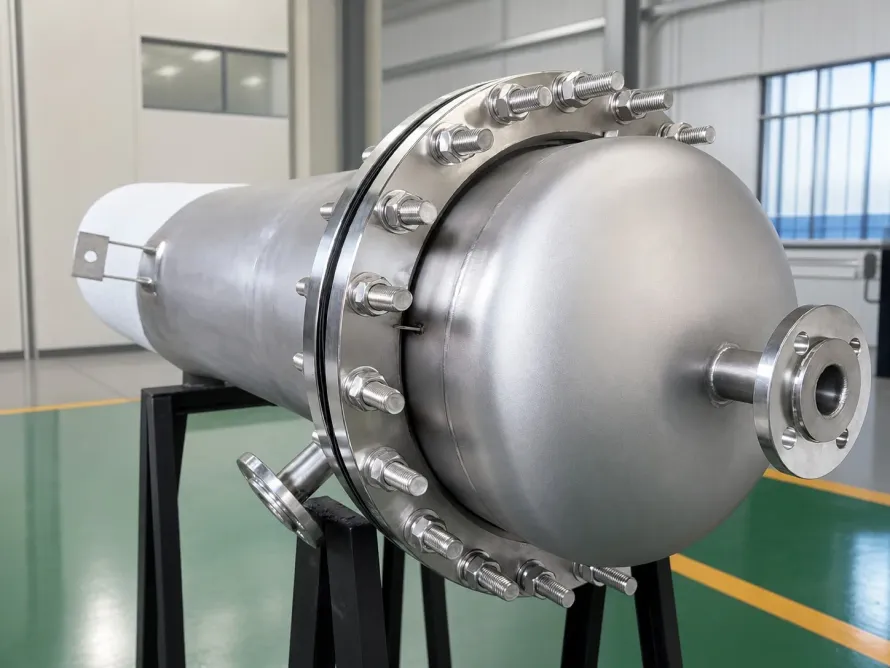
Machined titanium tubes, rings and sample blanks on an inspection bench show why coating clearance has to stay connected to substrate identity, geometry and release evidence.
By Jason/ On 14 Jun, 2026

Onkos' Titanium Implant Clearance Makes Coating Evidence Part of the Release File

On June 8, 2026, Onkos Surgical announced that the U.S. Food and Drug Administration had cleared application of its NanoCept Antibacterial Technology to titanium implants within the ELEOS Limb Salvage System. For titanium product suppliers and orthopedic component buyers, the important signal is not simply that another implant system received a regulatory update. It is that a functional surface can become part of the part boundary. Once a titanium implant carries an antibacterial surface, the release file can no longer stop at alloy grade, machining print and dimensional inspection. The substrate, surface preparation, coating route, handling condition, packaging path, labeling boundary and change-control record have to stay connected. That is the practical buyer issue behind the current news. The News Is About a Boundary, Not a Slogan Onkos said the new clearance enables NanoCept application to titanium implants across a wider portion of its ELEOS system. The company describes NanoCept-coated implants as intended to support oncology and revision patients, where procedural complexity can raise concern about bacterial contamination on implant surfaces before implantation. The wording matters. Onkos' NanoCept page states that the coating, where applied, is intended to reduce bacterial contamination on coated device surfaces prior to implantation, and that it is not intended to treat existing infections or prevent future infections in patients. The public FDA record for the earlier ELEOS Limb Salvage System with NanoCept Technology, K252920, also frames the device as a limb and joint salvage device with coating for bacteria reduction, not as a broad clinical infection claim. That distinction is useful for titanium buyers because it separates a surface function from an unsupported medical promise. A supplier can provide titanium alloy, a machined blank, a finished geometry or a treated component, but the buyer still has to ask whether the exact material route and surface state sit inside the cleared and documented use boundary. Why the Substrate Still Carries the Risk Titanium is not a passive background material once coating enters the specification. Surface roughness, oxide condition, cleaning residues, passivation history, machining marks and packaging contact can all affect whether a treated part remains within the intended release condition. Even if a titanium mill, forger or machine shop does not apply the final coating, its work can become part of the coating evidence chain. The FDA summary for K252920 is useful as a public example of how narrow these boundaries can be. It identifies the coating as MDPB, a covalently bound quaternary ammonium compound, and describes supporting evidence categories such as fretting and corrosion engineering analysis, coating integrity rationale and biocompatibility risk assessment. The point for buyers is not to copy that file. The point is to understand the shape of the file: surface claims need engineering, handling and risk evidence that match the device, material and geometry.For export suppliers of titanium bars, plates, forged blanks and machined components, this changes the way medical opportunities should be discussed. A quote that says "medical titanium" is too thin. A serious buyer will need the alloy and lot record, but also the machining and surface condition that would not conflict with downstream coating, cleaning, sterilization, packaging or labeling controls. A Coating-to-Substrate Release File The reusable framework is a coating-to-substrate release file. It does not replace regulatory review, and it does not turn a material supplier into the device manufacturer. It gives procurement and quality teams a way to ask better questions before a coated titanium component is treated as interchangeable.Release layer Evidence the buyer should connect Why it mattersSubstrate identity Titanium grade, melt or heat number, MTR or MTC, supplier route and lot split record The cleared surface condition has to sit on the same material family that the device file expects.Geometry and finish Drawing revision, machining route, surface roughness, cleaning state and burr control Coating behavior can change when geometry, finish or contamination changes.Coating process Approved coating route, process owner, handling rationale and coating integrity evidence The buyer needs proof that the coating is not a decorative add-on but a controlled release step.Mechanical and corrosion interface Fretting, corrosion, fit, fatigue or interface rationale when applicable A coating can affect the contact surface, even when the base alloy is familiar.Packaging and labeling boundary Sterilization path, packaging contact, IFU wording and claim limitation The release claim must match what the label and documented use actually allow.Change control Supplier change, machine change, surface-prep change, rework and exception handling A qualified route can drift when a small upstream change alters the surface state.This file is especially important when titanium component work moves across multiple suppliers. One shop may cut or turn the blank. Another may finish critical surfaces. A separate validated source may apply the coating. A device company may handle packaging, labeling and final release. If those handoffs are not documented, the buyer may have the right material but the wrong release story. What Buyers Should Not Infer The Onkos announcement does not mean every titanium implant should carry an antibacterial coating. It does not prove that the coating prevents infections in patients. It does not make any generic titanium product suitable for limb salvage applications. It also does not remove the need to check whether the exact device, substrate, geometry and surface route are inside the relevant clearance, quality-system record and labeling boundary. This restraint is commercially useful. It keeps titanium suppliers from overselling a medical-device headline, and it helps buyers avoid rejecting useful suppliers for the wrong reason. The practical question is not whether a factory can machine titanium. It is whether the supplier can protect the surface state and documentation chain that the downstream device file depends on.For titanium exporters, the near-term opportunity is therefore not a generic "antibacterial titanium" pitch. It is better evidence around clean machining, surface protection, traceable lots, packaging control and change notification for medical or high-reliability parts. Those capabilities are relevant even when the supplier is not responsible for the final regulated claim. The Buyer Takeaway The current clearance turns a narrow regulatory event into a broader procurement lesson: surface function pulls the release file upstream. A titanium component that may later receive a functional coating has to arrive with material identity, geometry, finish, cleanliness, packaging and change-control evidence that will survive the next step. For buyers, that means coating questions should start before coating. For suppliers, it means the valuable file is not only the mill certificate. It is the connected story from titanium substrate to released surface.

Market and Supply Chain
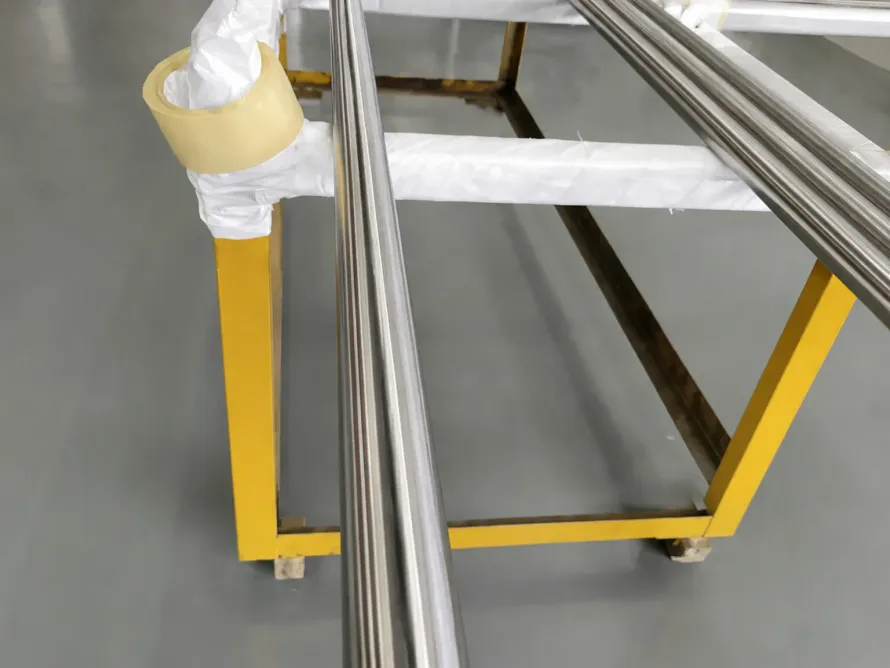
Titanium tubes and rods in multiple sizes show why mineral supply news still has to be connected to exact product forms before buyers trust availability.
By Jason/ On 13 Jun, 2026

IperionX's Titan DFS Shows Why Titanium Buyers Need a Feedstock-to-Product Boundary File

On June 4, 2026, IperionX announced a Definitive Feasibility Study for the Titan Critical Minerals Project near Camden, Tennessee. The company reported US$813 million in after-tax NPV8, 39% IRR and US$1.9 billion in after-tax free cash flow from an initial 14-year mine plan designed to produce heavy rare earth concentrate, titanium minerals and zircon. For titanium product buyers, the important point is not the investment case. It is the boundary. A mineral project can strengthen upstream optionality, but it does not automatically create released titanium bars, tubes, plates, forgings, powder, or machined components that a procurement team can place into an approved application.That distinction matters because "minerals-to-metals" is a useful strategic phrase and a risky purchasing shortcut. It compresses ore body, mineral separation, chemical conversion, sponge or powder production, melting or consolidation, mill processing, machining, inspection, certificate release and customer allocation into a single line. Buyers need those stages separated before a supply story becomes an order-ready product story. Mineral Supply Is Not Product Release The Titan DFS describes a multi-critical-mineral project producing titanium minerals, not a finished titanium product catalog. Its own metrics include ilmenite, rutile and other mineral outputs. Those are important feedstocks, but they sit upstream from the evidence that most titanium buyers actually need: grade, product form, process route, heat or lot identity, dimensional condition, inspection status, MTR or MTC scope, and approved delivery timing. Official market context reinforces the distinction. In its 2026 titanium summary, the U.S. Geological Survey reported that the United States did not produce titanium sponge metal in 2025 and listed net import reliance for titanium sponge metal at 100%. The same summary says most U.S. titanium metal use was in aerospace, with the remainder spread across armor, chemical processing, marine hardware, medical implants, power generation and other applications. That does not make every upstream titanium-mineral project immediately useful to every buyer. Aerospace, chemical, medical and energy customers do not buy "titanium minerals" as a substitute for released tubing, plate, billet, bar or machined parts. They buy a product form with a route, standard, certificate and acceptance boundary. Where The Boundary Can Break The strongest part of the IperionX announcement for buyers may be its cautionary language. The company says the DFS is a technical and economic assessment based on assumptions, and that project development requires financing, permits, procurement, construction, commissioning and operating performance consistent with those assumptions. That caution is not a footnote for investors only. It is also a procurement signal. Before a titanium product buyer treats a critical-minerals announcement as supply assurance, the buyer has to ask which boundary has actually been crossed. One boundary is resource confidence: whether the feedstock basis is defined and permitted. Another is mineral processing: whether the output is ilmenite, rutile, zircon, heavy rare earth concentrate, scrap-derived titanium powder, sponge, ingot, billet, or another intermediate. A third is product conversion: whether a supplier can turn that input into the exact product form, alloy, size range, surface condition and inspection route required by the application.The final boundary is release evidence. Even if feedstock is domestic, resilient or lower-carbon, the buyer still needs the certificate bridge: heat or lot traceability, processing history, test results, inspection records, dimensional evidence, packaging identity and change-control language that match the purchase order. The Feedstock-to-Product Boundary File A practical boundary file should not be long, but it should be explicit. The buyer is not trying to audit a mining company from scratch. The buyer is trying to prevent a strategic supply claim from being mistaken for released product evidence.Boundary layer Buyer question Evidence to requestResource and reserve basis What upstream material is being claimed, and what is still assumed? Source announcement, reserve basis, permit status and stated development conditions.Mineral product identity Is the output a mineral concentrate, titanium sponge, powder, ingot, billet or finished product? Product definitions, process flow and intermediate-output specifications.Conversion route Which process turns feedstock into usable titanium metal? Sponge, scrap, powder, melt, consolidation or mill-route evidence, plus route limits.Product form Which buyer product is actually available? Bar, tube, plate, sheet, forging, fitting, powder or machined-part scope by size and condition.Qualification scope Does the route match the application and customer approval basis? Applicable standards, customer approvals, first-article or process-qualification records.Certificate bridge Can the supplier connect feedstock identity to released goods? Heat, lot, MTR or MTC, inspection records, chemical and mechanical test data.Allocation and timing Is there committed capacity for this product form? Offtake, reservation, lead-time and shipment-window evidence, not only project economics.Change control What happens if route, feedstock, site or process assumptions change? Notification rules, requalification triggers and nonconformance handling.This framework is useful because it keeps a buyer from asking the wrong question. The issue is not whether a project is strategically interesting. The issue is whether the supplier can trace the claimed feedstock through every stage that affects the buyer's final product risk. How Buyers Should Read Minerals-to-Metals Claims IperionX's June 10, 2026 DFS presentation announcement frames Titan as part of a critical mineral-to-metals platform serving defense, aerospace, nuclear, semiconductors, robotics and advanced manufacturing supply chains. That is exactly the kind of phrase titanium buyers will see more often as critical-minerals policy, defense-industrial-base funding and low-carbon material claims move closer to purchasing conversations. The company also announced in 2025 that it had been awarded up to US$47.1 million in U.S. Department of Defense funding to accelerate a U.S. mineral-to-metal titanium supply chain. Such funding can be commercially meaningful. It still does not remove the buyer's responsibility to identify the exact product boundary. For a tube buyer, the relevant boundary may be the route from titanium metal into welded or seamless tube, surface condition, dimensional tolerance, NDT status and heat-exchanger or pressure-service documentation. For a plate buyer, it may be melting route, rolling route, flatness, ultrasonic testing, surface finish and heat identity. For a machined component buyer, it may be parent material traceability, machining route, dimensional report, special process status and final release record.Those questions are not bureaucratic. They are the difference between strategic supply-chain comfort and usable procurement evidence. The Procurement Takeaway Titanium buyers should welcome better upstream optionality, especially in a market where sponge, scrap, powder and downstream product routes are tightly connected. But a feedstock story becomes valuable to a product buyer only when it can be mapped to a specific purchase boundary. The cleanest way to read future critical-minerals announcements is to ask one disciplined question: where does the source evidence stop? If it stops at mineral concentrate, do not treat it as sponge. If it stops at sponge or powder, do not treat it as mill product. If it stops at mill product, do not treat it as a qualified machined component. If it stops at strategic capacity, do not treat it as allocated shipment capacity. IperionX's Titan DFS is a timely reminder that titanium supply resilience is built in layers. Procurement teams that keep those layers visible will be better prepared to separate credible upstream progress from the downstream product evidence needed to release real titanium orders.

Aerospace and Defense
Large machined titanium component on a lathe, illustrating why submarine-adjacent parts need mission-envelope qualification evidence.
By Jason/ On 13 Jun, 2026

Norsk's Submarine Contract Shows Why Titanium Buyers Need a Mission-Envelope File

The latest titanium additive-manufacturing contract is not only a supplier-development story. It is a reminder that submarine-adjacent titanium parts cannot be judged by alloy grade, production route or supplier credential alone. They need evidence that the part fits the mission environment it is expected to survive.On June 11, 2026, Norsk Titanium announced that it had received nearly $4.2 million in a contract investment from the Office of the Assistant Secretary of War for Industrial Base Policy in support of the Defense Industrial Base Expansion, Development, and Growth Enterprise, known as DIB-EDGE. The announcement says DIB-EDGE is focused on next-generation manufacturing capabilities for U.S. maritime and submarine industrial capacity, and that the investment funds Rapid Plasma Deposition, or RPD, development over the 18-month term of the contract. That is a strong signal for titanium buyers, but it is also easy to read too broadly. The announcement does not identify the exact submarine components, alloy grades, acceptance standards or production volumes. The useful buyer conclusion is narrower: when titanium moves toward submarine and maritime work, the evidence file must expand from "qualified process" to "qualified mission envelope." Submarine Work Changes The Qualification Question Titanium is attractive in marine and defense applications because it can combine strength, corrosion resistance and weight reduction. But a submarine environment changes the approval question. A part may need to survive seawater exposure, pressure-related loading, vibration, fatigue, shock, galvanic interfaces, restricted inspection access, long maintenance intervals and strict configuration control. For a buyer, that means the first question is not simply whether the supplier can make a titanium part. It is whether the product form and process route have been qualified for the specific duty that the part will see. A machined titanium fitting, a forged or near-net-shape preform, a tube assembly and a structural bracket do not carry the same evidence burden. One part may be judged by dimensional repeatability and fatigue behavior. Another may need corrosion exposure data, weld or joining evidence, pressure-boundary review, non-destructive examination and installation-interface control. A third may be acceptable in one location but not in a more critical area of the vessel. This is why the phrase "highly critical applications" matters. It does not remove the need for proof. It raises the standard for proof. Qualification Is Not One Credential Norsk's recent announcements show how layered qualification has become. On May 29, 2026, the company announced Nadcap accreditation for additive manufacturing at its Plattsburgh operations. That matters because Nadcap is a special-process accreditation path used by aerospace and defense supply chains to evaluate process control, repeatability and traceability. But Nadcap is not the same as part release. It can reduce the audit burden and improve confidence in the manufacturing system, but the buyer still has to connect the credential to the part number, product form, route, drawing, inspection plan, environmental exposure and approval authority. The same lesson appears in a different market. On June 2, 2026, Norsk and Airbus announced a cooperation and research agreement to industrialize and qualify RPD for high-criticality structural titanium parts. That work includes titanium wire qualification, process validation and standardization. The details are aerospace-specific, but the discipline is transferable: a route becomes useful to buyers only when material input, process controls, inspection basis and application boundary are tied together. Norsk also states that it has 700 MT of production capacity and that RPD printed parts are already flying on commercial aircraft. Those facts show industrial maturity. They do not, by themselves, answer whether a specific titanium part is ready for a submarine mission envelope. The Mission-Envelope File The practical response is a mission-envelope qualification file. This is not a replacement for drawings, purchase orders, material certificates or customer approval. It is the bridge that shows why those records are valid for the operating environment.Evidence layer Buyer question Records to requestMission boundary Where will the titanium part operate? Vessel area, criticality level, pressure or load role, exposure condition, maintenance interval and approval authorityMaterial form What physical form is being qualified? Wire-fed preform, billet, forging, plate, tube, fitting or machined component; alloy grade; heat or lot identityRoute lock Which route is allowed for this part? RPD route, forging route, machining route, heat treatment, surface treatment, joining route and subcontractor boundaryEnvironment evidence What proves the part fits the service condition? Corrosion, fatigue, vibration, shock, pressure, temperature, galvanic or fluid-compatibility evidence as applicableInspection release What inspection proves the part can ship? Dimensional report, NDT, surface inspection, material testing, defect acceptance criteria and nonconformance closureInterface control What must match the surrounding system? Drawing revision, mating geometry, bolt pattern, tube or pipe interface, sealing face, assembly clearance and installation torque where relevantSustainment path How will the part be repaired or replaced? Spare route, approved local manufacturing rules, technical-data transfer, maintenance release and change historyChange trigger What forces re-review? New lot, feedstock change, machine change, parameter change, route substitution, inspection method change or design revisionThe file forces a disciplined distinction. A supplier may have process capability. A part may have material traceability. A buyer may have a delivery schedule. None of those alone proves that the product fits the mission envelope. What Titanium Buyers Should Ask Now For titanium buyers outside prime defense programs, the lesson is still useful. Export distributors, marine-equipment buyers, energy-equipment purchasers and precision-machining customers often receive broad claims about aerospace or defense readiness. Those claims may be relevant, but they need to be translated into part-level evidence. For a machined titanium component, ask whether the input form, machining allowance, heat treatment, surface condition, dimensional tolerances, NDT and certificate wording are linked to the actual application. For a titanium tube or fitting, ask whether the wall, bend, end connection, weld or joining boundary, surface finish, pressure role and corrosion exposure are all inside the approved route. For a near-net-shape preform, ask whether the buyer is approving the preform route, the finished geometry, or both.The question becomes sharper when a supplier proposes an alternative route. If a part was historically forged and machined, a wire-fed preform may reduce waste or lead time. But the buyer still needs a bridge between the legacy route and the new route: material input, process envelope, heat treatment response, inspection method, defect population, machining stock, surface condition and approval boundary. That bridge should be written before the purchase order becomes a schedule problem. Maritime AM Context Is Moving, But It Does Not Remove The Gate The maritime context around this story is also moving. In the June 2026 Australia-UK Ministerial Consultations statement, ministers said the UK submarine HMS Anson completed a scheduled maintenance period in Western Australia, the first such maintenance period by a UK nuclear-powered submarine in Australia. The statement said 17 Australian businesses supported the activity, 34 locally manufactured components were produced, more than 2,500 person hours of Australian industry work were completed, and 620 hours of trilateral uniformed work supported the maintenance period. USNI News also reported that QinetiQ supported the HMS Anson maintenance period with additive-manufactured replacement parts delivered in 4 weeks after approval by the UK Submarine Delivery Group Additive Manufacturing Team. That is not a titanium-specific case, and it should not be read as one. Its value is in the workflow: reverse engineering, secure technical-data transfer, local manufacturing, approval by the responsible authority and installation during a controlled maintenance event. For titanium products, that workflow points to the same conclusion as the Norsk contract. Speed is useful only when it remains inside the approval chain. Local manufacturing is useful only when the technical data, route, inspection and configuration records remain intact. Additive manufacturing is useful only when the mission envelope is proven, not assumed. The Buyer Takeaway The June 11 contract is a strong signal that titanium AM is moving deeper into maritime and submarine industrial-base conversations. But the buyer value is not a headline about "submarine titanium." The buyer value is a better question: what evidence proves this titanium part fits its mission envelope? The answer should connect material form, route lock, environmental evidence, inspection release, interface control, sustainment path and change triggers. Without that file, a supplier credential can be mistaken for part approval. With it, the buyer can separate manufacturing capability from mission-ready release. That distinction is where professional titanium procurement now has to live.

Aerospace and Defense
Stacked titanium plates in a workshop, illustrating why aerospace-linked buyers need product-form capacity reserved before release dates are trusted.
By Jason/ On 12 Jun, 2026

Aircraft Backlogs Show Why Titanium Buyers Need a Capacity-Reservation File

The latest aircraft backlog data is not just an airline or airframer story. It is a schedule-risk signal for buyers of aerospace-linked titanium bars, plates, sheets, forgings, billets, tubes and machined components.On June 3, 2026, Aerospace Global News reported that Airbus and Boeing had 16,683 commercial aircraft on backlog at the end of April, citing ADS commercial aerospace market information. ADS estimated that this represented about 12 years of work for the global aerospace industry at current projected production rates. A week later, Forecast International reported that Airbus delivered 81 aircraft during May and Boeing delivered 60, leaving both manufacturers with more than a decade of production coverage. For titanium buyers, the useful conclusion is not that every titanium product is suddenly short. The better conclusion is narrower: when aircraft demand runs far ahead of near-term production, approved titanium capacity becomes a schedule asset. A quote for material is no longer enough. Buyers need evidence that the specific product form, process route, inspection path and release date have been reserved. Backlog Is Not The Same As Released Titanium Capacity Aircraft backlog creates long visibility, but it does not automatically create released titanium parts. Aerospace programs consume titanium through controlled product forms and approved routes. The order book must move through mill products, forgings, machining, special processes, inspection, customer approval, documentation and logistics before it becomes deliverable hardware. That distinction matters because titanium is not a single interchangeable input. ATI's long-term Boeing titanium agreement, announced in 2025, named long products such as ingots, billets, rectangles and bars, as well as flat-rolled products including plate, sheet and coil. Those are different capacity lanes. A buyer waiting for sheet cannot automatically use bar stock. A machined part that requires a forged input cannot be covered by available plate. A near-net-shape preform cannot replace a legacy route unless the application and approval basis allow it. The same discipline applies at the market level. The USGS 2026 titanium summary reported that the majority of U.S. titanium metal use was in aerospace, with other uses including armor, chemical processing, marine hardware, medical implants and power generation. It also reported no U.S. titanium sponge metal production in 2025 and 100% net import reliance for titanium sponge metal. Those facts make titanium structurally important to aerospace supply chains, but they still do not convert aircraft backlog into a product-form guarantee. The buyer risk sits between those two facts: strong aircraft demand on one side, and product-specific release capacity on the other. What Changes For Titanium Procurement When an order book stretches across many years, titanium buyers should stop treating delivery dates as simple calendar promises. A delivery date is only credible if it is backed by a reserved path through the supplier's actual constraint points. For titanium plate, that path may include rolling capacity, thickness range, surface condition, ultrasonic inspection, flatness control, cutting and packaging. For bar and billet, it may include melt history, heat treatment, straightness, diameter tolerance, machining allowance, testing and certificate wording. For forgings and machined components, it may include input material identity, die or route availability, rough machining, final machining, NDT, dimensional evidence, first article status and customer-specific release rules.The most common procurement mistake is to ask only whether the supplier has material. In a tight aerospace cycle, the sharper question is whether the supplier has reserved the right combination of material, process capacity, inspection capacity and documentation capacity for the buyer's part. That is especially important for distributors and export buyers. A distributor may show available titanium stock, but the buyer still needs to know whether the stock is eligible for the required specification, whether it can be cut or machined in time, whether third-party testing is available, whether certificates match the program's wording, and whether the route can survive customer review. A processor may quote a forged blank, but the buyer still needs to know whether heat treatment and ultrasonic inspection are reserved, not merely available in theory. The Capacity-Reservation File The practical response is a capacity-reservation file. It should sit beside the purchase order, drawing package and material certificate. Its purpose is to connect the commercial promise to the operational path that makes the titanium product releasable.Evidence layer Buyer question Records to requestProduct form What exact titanium form is being reserved? Bar, billet, plate, sheet, tube, forging, preform or machined component description; grade; size range; specification basisApproved route Which route is allowed for this application? Melt or mill route, forging or machining route, customer approval boundary, substitute-route limitsCapacity owner Who controls the constrained step? Mill, forge, processor, heat treater, machining shop, NDT provider, packer or exporterSchedule hold Which dates are actually reserved? Production slot, heat treatment date, inspection window, document review, packing date and shipment handoffInspection release What proves the product can leave the supplier? Mechanical test, chemistry, UT or other NDT, dimensional report, surface inspection and nonconformance closureDocumentation package What will the buyer receive with the shipment? MTR, certificate of conformity, traceability record, packing list, export documents and customer-specific wordingChange trigger What forces re-approval or schedule reset? New input lot, route change, subcontractor change, inspection method change, drawing revision or late split shipmentFallback boundary What is the approved alternative if capacity slips? Alternate size, alternate source, partial release, substitute product form or requalification requirementThis file is not bureaucracy for its own sake. It prevents a visible stock photo, a broad aerospace claim or a generic certificate from being mistaken for a controlled delivery path. Available Stock Can Still Miss The Aircraft Clock The June data shows why this matters. Airbus' own orders and deliveries page listed 81 May deliveries, 379 May gross orders and 262 deliveries for 2026 to date. Forecast International's May analysis put Airbus backlog at 9,247 aircraft and Boeing backlog at 6,758 aircraft as of May 31. Those figures point to demand visibility, but also to a production system where monthly execution still matters. For titanium suppliers, that means capacity credibility is becoming a sales and quality issue at the same time. A supplier that can show reserved process slots, clear inspection ownership and stable certificate wording may be easier for a buyer to trust than a supplier with larger generic inventory but vague release control. For buyers, the opposite is also true. A low price or quick verbal promise can become expensive if the order waits behind heat treatment, NDT, machining, customer review or export documentation. The risk is not always that titanium is unavailable. The risk is that releasable titanium is not available in the required form, route and window. Alternative Routes Need The Same Discipline Aircraft backlog also encourages buyers to consider alternative sourcing routes: near-net-shape preforms, additive manufacturing, different mill sources, distributor stock, split shipments or partial machining before final approval. Some of these routes can reduce waste or shorten one step. None should be treated as a shortcut around evidence. If a forged block is replaced by a near-net-shape preform, the buyer needs to know the approved baseline, material data, inspection method, machining allowance and customer acceptance boundary. If distributor stock is substituted for planned mill material, the buyer needs traceability, age, surface condition, test coverage and certificate wording. If a supplier proposes a different approved source, the buyer needs to know whether the source is approved for the exact product family and application, not only for titanium in general. Backlog pressure rewards flexibility, but only controlled flexibility. The Buyer Takeaway The aircraft market is sending a clear signal: demand visibility is strong, but delivery execution remains the hard part. For titanium products, that shifts the buyer's best question from "Do you have material?" to "What capacity has been reserved for my approved route?" A professional answer should connect the product form, route, capacity owner, schedule hold, inspection release, document package, change trigger and fallback boundary. Without that file, the buyer has a quote. With it, the buyer has a verifiable delivery path. That is the practical meaning of the current backlog for titanium procurement. The aircraft order book is long. The titanium evidence file has to be specific.

Manufacturing and Technology
Clean batch of titanium cylindrical parts staged on pallets, showing why powder-route evidence must transfer from development quantities to release-ready production lots.
By Jason/ On 11 Jun, 2026

Continuum's CFR Shows Why Titanium Powder Buyers Need a Pilot-Batch Transfer File

Continuum Powders' current launch of Custom Foundry Runtime is not only a service announcement for specialty alloy developers. For titanium powder buyers, it points to a practical procurement problem: a promising pilot batch is not yet the same thing as a repeatable production supply.Continuum announced the CFR service in Houston on June 3, 2026, describing flexible access to its plasma-gas atomization platform for specialty alloy development, small-batch production and high-value material processing. Metal AM reported the development on June 10, noting that the program can process specialty metal runs as low as 40-50 kg while supporting R&D, qualification programs and later commercial scale-up. That is useful because titanium powder qualification often starts small. A buyer may approve a development lot, print coupons, adjust parameters, review chemistry and run fatigue or density checks before production demand exists. The hard question comes later: what evidence proves that the next powder batch is still equivalent when the order grows, the atomization campaign changes or the powder moves from test builds into released parts? Why Small-Batch Access Changes The Buyer Question Small-batch atomization helps advanced manufacturers move faster. Aerospace, medical, energy and defense programs often need proprietary chemistries, sensitive feedstocks or narrow development quantities that do not fit traditional large-volume production economics. CFR speaks directly to that gap. But titanium buyers should not read small-batch access as automatic production readiness. A 40-50 kg powder run may be enough for parameter development, coupon builds, sample components or early customer evaluation. It may not be enough to prove long-term lot stability, multi-machine behavior, powder reuse limits, packaging consistency or production release. The buyer question therefore shifts from "Can this powder be made?" to "Can the evidence from this batch survive the transfer into the next batch?" The Titanium Mechanism Behind The News Titanium powder is unforgiving because small chemistry and handling differences can change downstream performance. Oxygen, hydrogen, nitrogen, particle-size distribution, morphology, satellite particles, flowability, apparent density, reuse history and contamination control all matter before the first part is printed. Continuum's Ti64 product page describes Ti6Al4V, UNS R56400, as available in Grade 5 and Grade 23 and suited to additive manufacturing routes including LPBF, EBM and binder jetting. It also lists powder checks tied to ASTM B213, ASTM B964 and ASTM B212. Those details are useful reminders: titanium powder buying is not just a material name. It is a chain of measurable powder behavior.When the powder is made in a development-scale campaign, the buyer needs to know what is fixed and what may change. Was the feedstock route the same? Was the atomization equipment the same? Was the inert-gas environment controlled in the same way? Were samples pulled from the full powder lot or only from a convenient container? Were fine and coarse fractions handled consistently? Did the certificate describe the pilot batch only, or the process that can be repeated? Without those answers, a clean pilot result can become a false sense of security. The Pilot-Batch Transfer File A useful response is a pilot-batch transfer file. It is not a replacement for a certificate of analysis. It is the bridge between a successful development lot and a production lot that a buyer can release into real parts.Evidence layer Buyer question Titanium powder records to requestFeedstock identity What entered the atomization run? Virgin or reclaimed feedstock route, melt identity, chemistry target, interstitial limits and contamination controlsAtomization route What process made the powder? Atomizer, campaign boundary, gas environment, melt history, process controls and deviation logPowder lot definition What exactly is the approved lot? Lot size, container count, sampling plan, retained sample, PSD split and sieve historyPowder properties Does the powder behave the same way? Chemistry, oxygen and hydrogen, particle-size distribution, morphology, flow, apparent density and tap density where applicableBuild evidence What did the pilot powder actually prove? Machine, process route, coupon plan, density, tensile or fatigue data, heat treatment and inspection recordsScale-up bridge What changes when volume grows? Batch-size change, equipment change, site change, feedstock change, PSD cut change and required requalification triggerRelease rule When can the buyer use the next batch? Acceptance criteria, certificate wording, nonconformance rule, powder reuse policy and customer approval boundaryThis file matters most when a program moves from samples to recurring supply. The first batch may prove that a material concept is possible. The transfer file proves whether the next batch can be trusted. What Buyers Should Ask Before Scaling For aerospace buyers, the first question is whether the pilot powder is connected to a frozen material-process combination. If the future production route changes atomizer, PSD cut, feedstock class or post-processing path, the buyer should treat it as a change-control event, not a routine reorder. For medical titanium buyers, the transfer file should protect biocompatibility and cleanliness assumptions. Grade 23 language is not enough if oxygen limits, handling, sampling, cleaning, packaging or retained-sample rules change between pilot and production lots.For industrial or energy buyers, the practical issue is often repeatability. A one-time development powder can support a trial, but production purchasing needs stable acceptance criteria, documented nonconformance handling and a clear rule for when a new batch requires fresh printing, testing or customer review. Distributors should also pay attention. If they sell titanium powder or powder-derived products, they need to preserve the link between the supplier certificate, the actual powder lot, any repacking or splitting and the customer's approved use case. What Not To Overread CFR is not proof that every small titanium powder run is qualified for aerospace, medical or pressure-service use. Continuum's announcement also states that its first 2026 CFR project involved a precious metal-based alloy, not titanium. The titanium relevance comes from the service model and from Continuum's existing production-scale titanium powder position, not from a disclosed titanium CFR qualification case. That distinction matters. The news is not "small-batch powder is automatically production-ready." The more useful lesson is that the market is building more flexible paths between alloy development and production. Titanium buyers should make sure the evidence path is as flexible as the manufacturing path. Buyer Takeaway Small-batch atomization can accelerate titanium powder development, but it also creates a new evidence gap. Buyers may see excellent data from one pilot lot, then assume the next batch is interchangeable. In titanium, that assumption can be expensive. The practical safeguard is a pilot-batch transfer file. It should connect feedstock identity, atomization route, powder lot definition, powder properties, build evidence, scale-up bridge and release rule before the buyer treats a development batch as a production supply. For titanium powder, the story does not end when a batch can be made. It ends when the next batch can be proven.

Aerospace and Defense
Large titanium forging ring on a clean factory pallet, showing why high-value titanium parts need item-level identity from parent material through release.
By Jason/ On 11 Jun, 2026

Theseus Shows Why Titanium Buyers Need a Material-to-Part Identity File

DUST Identity's 2026 launch of the Theseus aerospace authentication platform is not only a counterfeiting story. For titanium buyers, it is a clear signal that the industry is moving beyond paper-only traceability toward evidence that binds the physical material, the processing record and the release document to the same part identity.AIN reported that Theseus was introduced at Titanium Europe 2026 in Toulouse and combines physical diamond-particle markers with AI-assisted verification of airworthiness documents. The reported pilot tracked titanium bar stock from French specialty metals mill Aubert & Duval through distribution and machining to delivery at Airbus, with certificates of conformity and test data attached to the same digital record. That matters because titanium supply risk is no longer only about whether the alloy is available. The harder question is whether the same piece of material can be followed through cutting, machining, inspection, subcontract processing, document handoff and receiving inspection without the record becoming detached from the metal. Why Paper Alone Is No Longer Enough Titanium already carries a document burden. A buyer may request a mill test report, certificate of conformity, heat number, purchase order, packing list, inspection report and customer-specific release document. In aerospace and high-value industrial work, the packet may also include FAA 8130-3, EASA Form 1, first-article records, nonconformance closure and repair history. The weakness is not that documents are useless. The weakness is that documents can be separated from the product they describe. The 2024 FAA investigation into titanium parts with falsified quality documentation on Boeing and Airbus aircraft showed the commercial problem plainly: even when testing later indicated that the alloy itself was correct, the missing trust in the paperwork forced quarantine, removals, airworthiness review and costly supplier investigation. Theseus does not solve every case. AIN noted that the platform can authenticate enrolled parts, not components that were never marked and registered. But the direction is important. The industry's trust model is shifting from "the paper says this part is traceable" to "the part itself can prove which record belongs to it." The Titanium Mechanism Behind The News Titanium products are exposed to identity drift because one starting form can become many downstream items. A bar may be cut into blanks. A billet may be machined into rings, bushings or fastener bodies. Plate may become cut blocks, brackets, fixtures or pressure-boundary parts. Tube may be cut, bent, welded or assembled into a heat-exchanger or chemical-service component.At each split, the buyer needs more than a copied certificate. The identity chain should show which heat or lot entered the route, which piece was created, what processing occurred, which inspection records belong to that piece and what final release document follows it into the next organization. This is where Theseus is commercially useful even for buyers that do not adopt that specific platform. It names the missing layer: physical product identity must survive the handoff from raw stock to finished part. For titanium exporters, processors and distributors, that makes traceability a product feature, not an administrative afterthought. The Material-to-Part Identity File A practical buyer response is a material-to-part identity file. It is not a replacement for an MTR or a certificate of conformity. It is the bridge that proves the MTR, traveler, inspection record and shipment document still describe the exact item being released.Evidence layer Buyer question Titanium records to requestMaterial entry Which heat, lot, grade and product form started the route? MTR, heat number, alloy grade, product form, dimensions and incoming inspection statusPhysical identity How is the material or part identified after receipt? Permanent mark, tag, barcode, photo record, sealed package ID or digital identity referenceSplit record What happens when bar, billet, plate or tube is cut into multiple items? Cut plan, traveler, piece count, remnant control, new IDs and link back to the parent heatProcess route Which operations changed the material state? Machining, heat treatment, forming, welding, NDT, surface treatment and subcontractor recordsDocument link Which documents belong to this exact item? MTR, certificate of conformity, inspection report, FAA 8130-3, EASA Form 1 or customer release packet when applicableReceiving check Can the buyer verify the identity at the dock? Packing list match, label check, visual record, dimensional spot check and document cross-checkException control What happens when a mark, tag or document does not match? Quarantine rule, nonconformance report, deviation approval, replacement record and customer noticeThe file should follow the product, not only the supplier. A supplier name can stay the same while a lot changes, a subcontractor changes, a drawing revision changes or a shipment is split. The buyer's risk sits at the item level. What Buyers Should Ask Now For titanium bar, billet and forging buyers, the first question is how parent material becomes piece-level identity. If one lot becomes twenty blanks, each blank needs a visible link back to the parent material and to its own processing record. For plate, sheet and tube buyers, the risk is often in cutting, packing and document handoff. A clean package should show which sheet, cut block or tube bundle belongs to which certificate and whether any remnant or substitute material entered the shipment.For machined titanium component buyers, the strongest request is a route-level packet: material identity, drawing revision, machining traveler, special-process records, inspection evidence, release status and packaging record. If the part is aerospace, medical, pressure-service or semiconductor-related, the purchase order should state which release documents must be available before shipment. For distributors, the file is a way to avoid becoming the weak link. When material moves through storage, cutting, repacking and export documentation, the distributor should preserve the link between the physical item and the original certificate instead of relying on a generic stock label. What Not To Overread Theseus is a technology signal, not a universal mandate. Many industrial titanium orders will not need diamond-particle markers, AI document review or aerospace-grade digital thread systems. A chemical plant buyer ordering Grade 2 plate for non-flight use may need disciplined lot traceability, but not the same authentication stack as an MRO receiving flight-critical parts. The lesson is more durable than the tool. Titanium buyers should define where identity can break: at receipt, at cutting, at subcontract processing, at inspection, at packing or at final certificate issue. Then they should decide how much proof the application requires. That keeps the article away from hype. The right question is not whether every titanium part needs a new tag. The right question is whether the buyer can prove, at release time, that the part in the crate is the part described by the records. Buyer Takeaway Theseus matters because it makes a hidden titanium procurement problem visible. The alloy grade can be right while the identity system is weak. A certificate can be real while it is attached to the wrong item. A supplier can be approved while a split lot, outsourced step or repacked shipment creates a new traceability gap. For titanium product buyers, the next level of due diligence is a material-to-part identity file. It should connect material entry, physical identity, split history, process route, document link, receiving check and exception control before the product leaves the supplier. In high-value titanium work, trust is no longer only written on paper. It has to stay attached to the part.

Manufacturing and Technology
Titanium bar stock in a factory setting, representing the material baseline that buyers must connect to process data, inspection records and release evidence.
By Jason/ On 10 Jun, 2026

AIM-4AM Shows Why Titanium AM Buyers Need a Data-to-Allowables Evidence File

Dyndrite's June 4, 2026 announcement that its team was selected for the America Makes and NCDMM Artificial Intelligence for Material Allowables in Additive Manufacturing project is not a titanium product approval. That boundary matters. The current AIM-4AM demonstrator is 17-4PH stainless steel in the H1025 condition, produced by Laser Powder Bed Fusion, or LPBF. For titanium buyers, the value of the news is more indirect and more useful. AIM-4AM points to the kind of evidence file that any high-performance AM material route will need before procurement teams can trust claims about faster qualification, lower testing burden, or production-ready process control.TCT Magazine reported on June 8, 2026 that AIM-4AM is a $2 million initiative to develop an AI-driven framework for identifying and quantifying risk inside the material-allowables approach for LPBF. Dyndrite will lead the team, Mimo Technik will execute controlled LPBF builds and testing coordination, and RTX will act as the technology transition partner for aerospace and defense relevance. That combination is the story. The industry is not only asking whether AM can make a metal part. It is asking whether the data behind the process can support an allowable, survive customer review, and define what physical testing can safely be reduced without hiding risk. Why A Steel Project Matters To Titanium Buyers The first buyer discipline is to avoid overreach. AIM-4AM does not validate titanium powder, titanium wire, Ti-6Al-4V, titanium near-net-shape preforms, or any delivered titanium component. It does not mean a titanium AM part can skip qualification. It does not turn a machine-learning model into a material certificate. But titanium buyers should still pay attention because the qualification problem is shared. Aerospace, defense, medical, space and energy buyers do not accept AM parts simply because the alloy name is familiar. They ask whether the route is stable enough to produce repeatable material properties, whether the process data is trustworthy, whether inspection can catch meaningful variation, and whether the release record matches the actual application boundary. That is where AIM-4AM becomes relevant. The Manufacturing USA opportunity page says the project aims to develop an AI-driven framework that identifies and quantifies risk in material allowables for 17-4PH H1025 stainless steel made by LPBF. The America Makes RFP describes a program intended to link reduced physical testing to quantified risk categories, support pedigreed AM materials data, and validate AI-driven predictions through acceptance-ready testing protocols. For titanium AM, the lesson is not "AI will qualify the material." The lesson is that buyers should make every reduced-testing claim show its evidence chain. The Evidence Burden Moves Upstream Traditional buyer review often starts late: a material test report, a dimensional report, a certificate, a first article package, or a supplier quality document. AM pushes the evidence burden upstream because many sources of variation are created before final inspection. Powder or wire feedstock, machine configuration, scan strategy, build orientation, atmosphere control, thermal history, post-processing, surface condition and inspection method can all affect the final release decision. That does not make AM unmanageable. It means the buyer file has to connect more layers. A supplier claiming faster qualification through AI-assisted allowables should be able to show what the model is trained on, what variance it is trying to reduce, which process signals are controlled, what physical tests remain, and where the proposed allowable is not valid. Without that chain, "reduced testing" is only a cost-saving phrase. The AIM-4AM announcement is useful because it names the missing middle. Dyndrite said the team will develop machine-learning-driven methods to assess qualification risk, generate preliminary qualification datasets, validate predictions against experimental tensile and fatigue data, support statistically informed reduced-testing protocols, and align production-oriented approaches with material allowables development and qualification requirements. Those are not marketing decorations. They are the categories titanium buyers should ask suppliers to document. The Data-To-Allowables Evidence File For titanium products, a practical response is a data-to-allowables evidence file. It is not a substitute for customer approval, drawing control, material specifications, inspection plans, or application-specific testing. It is the bridge that keeps digital qualification claims auditable.Evidence layer Buyer question Records to requestMaterial boundary What alloy, feedstock form and condition are actually covered? Ti-6Al-4V, CP titanium or other grade identity; powder, wire, billet or preform source; chemistry; lot handling and reuse rulesProcess window What process state is allowed? LPBF, DED, WAAM, HIP, machining or post-processing route; parameter set; machine configuration; atmosphere and thermal controlsData pedigree What data feeds the model or qualification argument? Build logs, sensor data, traveler records, calibration files, inspection data, lab test records and excluded data notesPhysical validation What testing still proves the route? Tensile, fatigue, chemistry, density, surface, microstructure, NDT, CT, dimensional and application-specific testsStatistical confidence How is reduced testing linked to risk? Sampling plan, confidence basis, risk categories, model validation, repeatability evidence and failure-mode reviewApplication boundary Where can the allowable or evidence be used? Part family, load case, service environment, customer program, geometry limits and excluded applicationsRelease and change control What forces re-approval? Feedstock change, machine change, parameter change, site change, post-process change, inspection-method change or drawing revisionThis structure keeps the buyer from making two common errors. The first is treating a model result as if it were a finished material approval. The second is treating a successful coupon program as if it automatically covers every production geometry. Titanium buyers need the opposite habit. They should ask which facts are general, which are machine- or site-specific, which are part-family-specific, and which require customer approval before shipment. What AI Does Not Remove AI can help identify high-value tests, model process-structure-property relationships, and focus engineering attention on the variables that matter. It cannot remove the need for traceable input material, controlled process parameters, qualified inspection, physical validation, and a release record that says exactly what the shipment proves. The America Makes RFP reinforces that point. It set out a maximum period of performance of 21 months, including 18 months of technical effort and 3 months for report finalization, and emphasized traceability, data management, reproducibility, calibration, specifications, certifications, material sources, post-processes, inspection, testing and quality control protocols. Those requirements are not signs of a shortcut. They are signs that the shortcut must be earned. That is especially important for titanium because AM is often compared against forged, rolled, bar-stock, tube-stock, plate-stock or machined routes. A proposed AM route may reduce buy-to-fly waste or improve geometry freedom, but the buyer still has to approve the route against the part's service duty. A titanium bracket, fastener, pressure part, implant blank, heat-exchanger component or aerospace preform does not become acceptable because its data package is modern. It becomes acceptable when the data package matches the risk. Lessons For Titanium Suppliers The strongest commercial lesson is not limited to AM specialists. Conventional titanium suppliers can use the same evidence logic.A titanium bar supplier can document heat identity, chemistry, ultrasonic inspection, straightness, surface condition and shipment release. A tube supplier can connect grade, OD and wall tolerance, production route, surface condition, pressure or leak evidence, cleanliness and packaging. A machined titanium component supplier can connect input stock, machining route, dimensional inspection, special processes, certificate wording and change control. The common thread is not AI. It is auditability. A buyer who sees a clean evidence path can separate real readiness from vague process claims. A supplier who keeps that path clean becomes easier to evaluate, easier to approve and easier to trust when the part family changes. That is the useful titanium reading of AIM-4AM. The project may begin with 17-4PH H1025 stainless steel, but the buyer question it raises is broader: when a supplier says data can reduce testing, can the supplier show exactly which risk has been measured, which tests remain, and where the evidence stops? For titanium products, that question is becoming part of the purchase decision.

Chemical and Energy
Titanium dished heads staged in a factory, illustrating why pressure-boundary parts need material, forming and pressure-retention evidence.
By Jason/ On 09 Jun, 2026

Momentus' On-Orbit Titanium Tank: Why Pressure Parts Need a Retention Evidence File

Momentus' latest mission update is not a titanium supply announcement. It is not a price signal, and it does not prove that every additively manufactured pressure tank is ready for every buyer. But it does make one point useful for titanium product procurement: pressure-boundary parts should not be judged only by alloy name, drawing shape or manufacturing route. They need a pressure-retention evidence file. On June 8, 2026, Momentus said its Vigoride 7 Orbital Service Vehicle had transitioned into hosted payload mission operations after launching on SpaceX Transporter-16. In the same update, the company said a titanium pressure tank designed by Momentus and manufactured using Velo3D's advanced 3D metal printing technology was meeting current mission objectives and demonstrating stable pressure retention throughout on-orbit operations. Momentus also said the tank is designed to carry propellant for satellite propulsion systems. An earlier Momentus release on January 5, 2026 said the tank was scheduled for flight testing aboard the Vigoride-7 mission and was produced in collaboration with Velo3D.For titanium buyers, the important word is not "space." It is "retention." A tank, tube assembly, welded shell, forged ring, flange, fitting or custom pressure component can look correct and still fail the buyer's real requirement if the pressure boundary, inspection route and release record are incomplete. The harder the application, the less useful a generic material statement becomes. A pressure part is not just a shape Titanium pressure parts carry several identities at the same time. They are material objects, usually defined by grade, chemistry, heat, batch and certificate. They are also formed or machined objects, defined by wall thickness, radius, weld edge, port geometry, surface finish and tolerance. Finally, they are service objects, defined by medium, pressure cycle, cleanliness, leakage limit, temperature, installation load and inspection acceptance. The Momentus update matters because it points to the third identity. The company did not merely say a titanium tank existed. It said the pressure tank was demonstrating stable pressure retention during on-orbit operations. That shifts the buyer question from "what is the alloy?" to "what evidence proves the pressure boundary will hold under the intended use?" That question applies well beyond spacecraft. Chemical processing vessels, heat-exchanger headers, marine systems, energy equipment, vacuum chambers, titanium pipe spools and specialty cylinders all create the same evidence problem. A buyer may order a product form, but the application buys a retained boundary.What a pressure-retention evidence file should include The useful file is not a marketing brochure and not a pile of unrelated certificates. It is a compact record that ties the part's material route to its pressure boundary and release condition.Evidence item What the buyer is trying to verifyMaterial identity Grade, heat number, chemistry, mechanical properties and certificate traceability match the order.Pressure-boundary definition Drawing, wall thickness, radius, ports, weld edges, sealing faces and allowed deviations are clear.Manufacturing route The file states whether the part is formed, welded, machined, forged, additively manufactured or built through a mixed route.Heat treatment or post-processing Stress relief, HIP, annealing, machining allowance, surface finishing or cleaning steps are recorded when relevant.Dimensional inspection Critical geometry that affects sealing, fit-up, wall margin or assembly load is measured and documented.NDE and leak evidence Ultrasonic, radiographic, dye penetrant, pressure, helium leak or other acceptance tests are aligned with the real service risk.Cleanliness and surface condition The surface and internal cleanliness are suitable for the medium, welding, assembly and downstream use.Interface control Flanges, fittings, threads, ports, gaskets, weld necks and mating parts are tied to the actual assembly boundary.Release and change control The supplier defines what changes require re-approval, including route, material source, heat treatment, pressure test or inspection plan.The key is connection. A certificate without geometry is incomplete. A pressure test without material traceability is incomplete. A drawing without inspection evidence is incomplete. For titanium pressure parts, the file should show how the material became the pressure boundary and how that boundary was released.Route claims need release evidence The Momentus example is also a useful reminder about manufacturing-route language. Buyers often hear route claims such as "printed," "forged," "welded," "seamless," "machined from billet" or "formed from plate." Those words matter, but none of them replaces release evidence. An additively manufactured tank may need build record, powder or wire traceability, post-processing, HIP status, surface controls, dimensional inspection and pressure testing. A formed titanium head may need plate heat traceability, forming route, thinning check, heat treatment and dimensional review. A welded shell may need weld procedure, welder qualification, weld map, NDE and pressure-test record. A machined fitting may need thread or sealing-face inspection and material certificate linkage. In other words, the buyer should not treat one route as automatically superior. The buyer should ask whether the chosen route has enough evidence for the actual service boundary. A simple, low-risk industrial cover does not need the same file as a flight pressure tank. But the file still needs to match the risk. What buyers should not overread There are limits to the Momentus signal. The update is a company statement about a specific hosted payload on a specific mission. It is not a general approval of all titanium 3D-printed tanks, not a standard for pressure vessels, and not a recommendation for any particular supplier. It also does not replace the buyer's own engineering review, pressure-code obligations, qualification plan or acceptance criteria. The practical lesson is narrower. When a current aerospace mission update highlights stable pressure retention, titanium buyers should translate that phrase into their own procurement checklist. What is the pressure boundary? What evidence proves it? Which route changes would reopen approval? Which inspection records must travel with the shipment? For suppliers of titanium heads, shells, tubes, fittings, flanges and custom pressure components, that is also a content opportunity. A buyer-friendly website should explain quote inputs, pressure-boundary documentation, certificate traceability, inspection options and release records before the RFQ becomes a guessing exercise. The supplier that makes the evidence easy to inspect will look more credible than the supplier that only says "Grade 2" or "Ti 6-4" and waits for the buyer to ask the hard questions. Public sources checked: Momentus June 8, 2026 mission update; Momentus January 5, 2026 Vigoride-7 tank release

Ready to Start Your Project?

Get factory-direct pricing on titanium products. No minimum order.

Get a Free Quote
Quick Inquiry