Type something to search...

News Posts

Market and Supply Chain
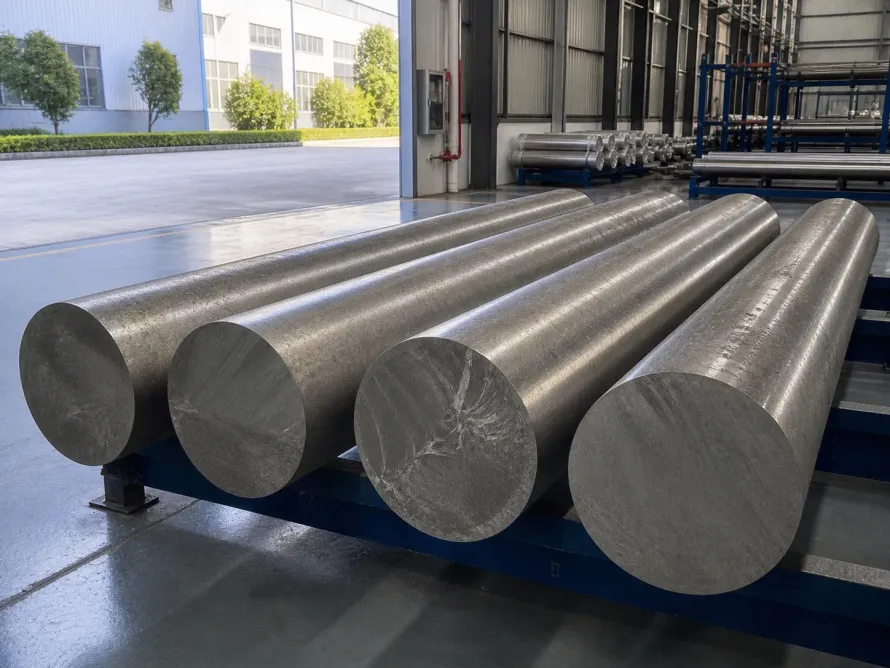
Large titanium billets in a mill-products warehouse illustrate why origin evidence must remain attached to a defined heat, form and production route.
By Jason/ On 22 Jul, 2026

New U.S. Defense Order Raises Titanium Traceability Without Creating a New Titanium Ban

The U.S. executive order issued on July 20, 2026 tightens waivers for certain defense materials and directs the government to build a much deeper view of critical supply chains. For titanium buyers and suppliers, the most important point is also the easiest to miss: the order does not place titanium inside one new blanket prohibition. Titanium and titanium alloys already sit within the U.S. defense specialty metals regime. The order's waiver restrictions, by contrast, point to the separate list of covered materials in 10 U.S.C. 4872. Its broader supply-chain mapping provisions may still pull titanium heats, product forms, processors and finished components into a more demanding origin record. The practical change is therefore less about a new titanium ban than about proving which rule applies at each tier. One headline, three compliance layers The July 20 executive order sets January 1, 2027 as the point when waivers under 10 U.S.C. 4872 are to stop except through specified routes. A continuing waiver would require an accepted mitigation plan identifying the non-compliant source, documenting exhaustive efforts to obtain compliant material, explaining how the material will be removed from the supply chain and setting a strict timeline. Failure to qualify a domestic source does not by itself establish non-availability unless the contractor can show active, adequately funded and ongoing qualification work. That is a material change for the substances within 4872. It should not be read as a direct rewrite of the titanium rule. The statutory covered-material list, current through July 19, 2026, names samarium-cobalt magnets, neodymium-iron-boron magnets, tungsten metal powder, tungsten heavy alloy and relevant components, tantalum metals and alloys, and molybdenum. It does not name titanium. Titanium appears in a different compliance bucket. Current DFARS specialty-metals restrictions implement 10 U.S.C. 4863 for specified aircraft, missile and space systems, ships, tank and automotive items, weapon systems and ammunition. They also address specialty metal delivered as an end item, including raw stock such as bar, billet, slab, wire, plate and sheet, plus castings and forgings. The associated clause expressly defines titanium and titanium alloys as specialty metals and sets out its own qualifying-country, commercial-item, non-availability and other exceptions.Compliance layer Immediate subject Titanium meaning10 U.S.C. 4872 waiver restriction Listed sensitive materials from covered nations Titanium is not on the current covered-material list; do not relabel the order as a universal titanium ban.10 U.S.C. 4863 and DFARS specialty-metals rules Titanium and other specialty metals in defined defense acquisitions Existing melting or production and flow-down requirements remain a contract-level question, with defined exceptions.New critical-supply-chain mapping Acquisitions selected as supporting or relating to national security Titanium may be captured as a raw material, mill product, component or processing input even when 4872 is not its governing prohibition.This separation matters because a correct material statement can still be attached to the wrong legal conclusion. “Titanium is a critical material” does not identify the applicable contract clause. “Made in” does not establish where a specialty metal was melted or produced. And a country shown on a packing list may identify the shipping point rather than the origin event the contract asks the supplier to prove. The wider change is an origin-data architecture Section 3 of the order reaches beyond the waiver provision. Within 180 days, the department is directed to develop policy and guidance for mapping critical supply chains across prime contractors and subcontractors at any tier for acquisitions it determines support or relate to national security. Within 90 days after that work, implementing regulations are to follow. The proposed rules are to require a complete indentured bill of materials tracing components, parts, equipment, software and materials back to raw-material origin. They also contemplate written supplier-vetting procedures, risk mitigation, corrective-action records and closeout reporting. That language is broader than the list in 4872, but it is not yet a finished contract clause for every titanium order. Scope, format, data protection, flow-down and implementation details will depend on the regulations and the contracts that adopt them. For titanium supply chains, the likely burden is not simply one more certificate. A billet may become bar, a bar may be cut across orders, a forging may move through heat treatment and machining, and a finished assembly may combine titanium with fasteners, coatings or other controlled materials. A usable origin record has to preserve identity through those transformations instead of stopping at the first mill certificate.A five-layer titanium origin file Suppliers can prepare for the new direction without pretending that draft regulations already exist. The useful control is a five-layer origin file tied to the specific purchase order. 1. Applicability record Record the prime contract or program, the flowed-down clause, the covered end item and the supplier tier. Identify whether the question is a 4872 covered material, a 4863 specialty metal, an emerging supply-chain-mapping requirement, or more than one of these. This first decision prevents the rest of the file from proving the wrong thing. 2. Material identity record Connect alloy grade, specification, product form, heat or melt identity, dimensions and ordered quantity. For powder routes, keep the feedstock lot and applicable production definition. For wrought products, distinguish billet, bar, plate, sheet, wire, tube, casting and forging rather than treating “titanium” as one interchangeable form. 3. Origin and production-event record Identify the facility and country associated with the origin event required by the applicable clause: melting, production, atomization, sputtering or final consolidation of non-melt-derived powder, as relevant. Keep this separate from the seller's address, port of export and final machining location. Those locations may all be legitimate, but they answer different questions. 4. Conversion and custody record Map each transformation and custody handoff: remelting, forging, rolling, drawing, heat treatment, cutting, machining, welding, surface treatment, inspection and assembly. Record lot splits and merges. The objective is not to create an ornamental process chart; it is to show why the finished serial number or shipment lot still points back to the claimed material and origin evidence. 5. Exception, qualification and change record If compliance depends on an exception, non-availability determination, qualifying-country route or other authorized basis, retain the clause, decision authority, scope and expiration or review point. Where an alternate source must be qualified, show funded actions, technical milestones, responsible owners and change-control approval. A commercial promise to “switch sources” is not the same as an executable qualification plan. What the order does not prove The order does not prove that every non-U.S. titanium product becomes prohibited on January 1, 2027. It does not make all qualifying countries, exceptions or contract clauses interchangeable. It does not convert a material test report into complete origin evidence, and it does not establish that every supplier must immediately disclose its entire proprietary supply chain in a self-selected format. It does signal that origin and supplier-risk data are moving closer to the bill of materials and farther upstream. A titanium supplier that can show chemistry and mechanical properties but cannot connect the delivered lot to its production event, conversion chain and contractual basis may face an evidence gap even when the metal itself is technically correct.The buying question changes from country to chain The defensible buyer question is no longer “Is this titanium domestic?” in isolation. It is: which rule governs this item, which production event establishes compliance, how did identity survive each conversion step, and what approved basis supports any exception or alternate source? That framework is more precise than a country-of-origin slogan and more useful than collecting certificates without a supply-chain map. The July 20 order's direct waiver restriction is not a new titanium rule. Its deeper operational effect may be to make clause-aware, tier-aware and lot-aware origin evidence a normal part of defense titanium supply.

Medical and Dental
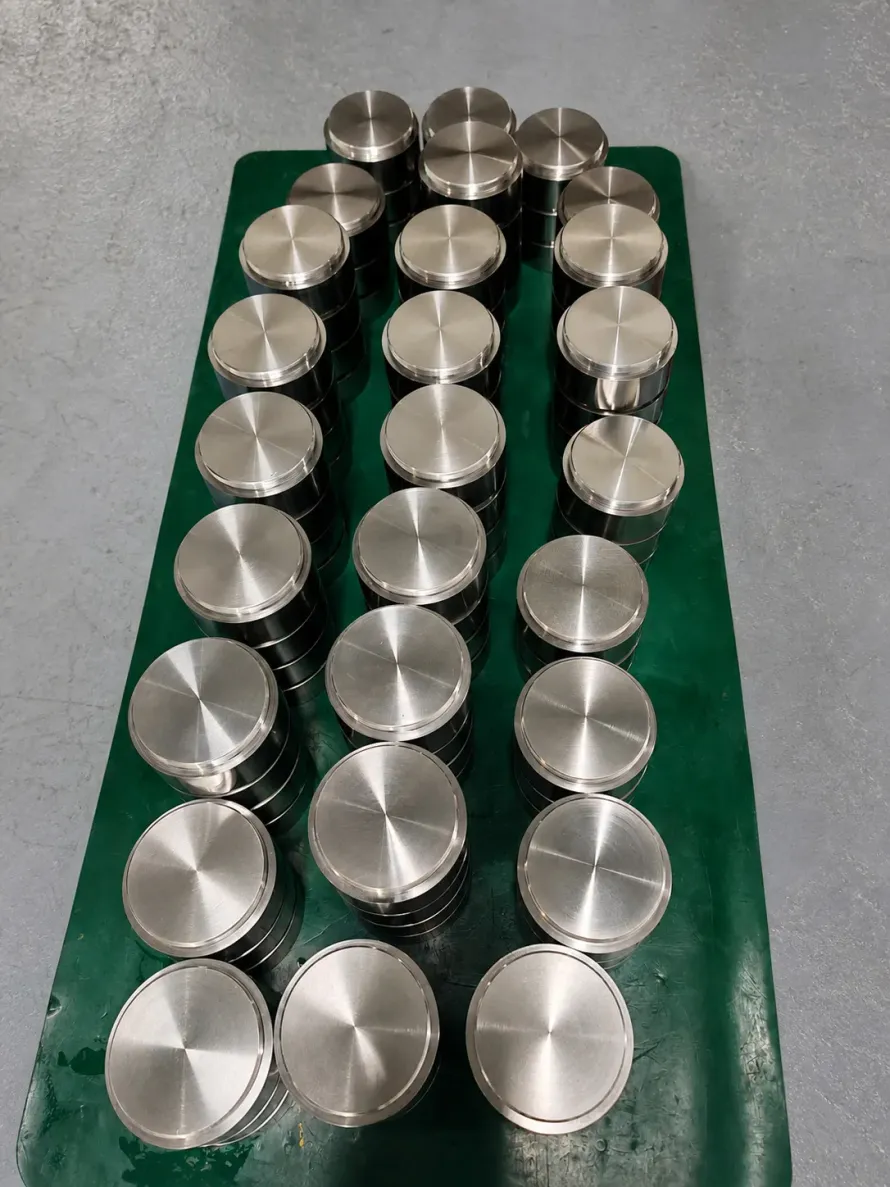
Separated crates of machined titanium products illustrate why representative device groups still need clear batch and configuration boundaries.
By Jason/ On 21 Jul, 2026

EU Implant Relief Changes the Review Sample, Not the Titanium Evidence

Two European Union medical-device rules that took effect on July 19 change how certain established implant categories can move through conformity assessment. Commission Delegated Regulation (EU) 2026/1359 expands the class IIb implantable devices exempt from technical-documentation assessment for every device. Commission Delegated Regulation (EU) 2026/1451 expands the list of implantable and class III devices that may avoid a new clinical investigation when the regulation's conditions are met. The change is regulatory relief, not an evidence waiver. For manufacturers using titanium in medical implants, including nails, anchors, spinal posterior fixations and dental implants, the practical question is no longer simply whether a device type is familiar. It is whether the reviewed representative device genuinely covers the alloy, route, geometry, surface and supplier changes present across the family. What changed on July 19 The two delegated regulations address different burdens and preserve different obligations.Regulatory change What the relief permits What it does not removeRegulation (EU) 2026/1359 For newly listed class IIb implantable device types, technical-documentation assessment no longer has to apply to every device. The wider Article 52(4) route uses at least one representative device per generic device group. The manufacturer's technical documentation, quality system, conformity assessment and evidence for the devices covered by the group.Regulation (EU) 2026/1451 Listed implantable and class III device types may be exempt from the obligation to perform a clinical investigation when the clinical evaluation is based on sufficient clinical data and complies with any relevant product-specific common specification. The obligation to plan, conduct and document a clinical evaluation.This distinction matters because an exemption changes the unit of regulatory review. It does not automatically change the controlled unit of manufacturing evidence. A device category is not a titanium material family The regulations are written around device types, not around titanium grades or production routes. A nail or dental implant may use titanium, but the category name does not establish that commercially pure titanium and a titanium alloy are equivalent. Nor does it show that wrought, machined and powder-bed-fused routes share the same material state, surface condition or validation history. The risk is a family-definition shortcut: a manufacturer may have a familiar device category while introducing a new alloy, heat-treatment route, additive process, machining site, coating, cleaning sequence or critical dimension. Regulatory sampling can still be appropriate, but only if the representative-device rationale captures the differences that could affect safety or performance.The representative-device gap The Commission's MDCG 2019-13 rev.1 sampling guidance predates the new list, but it shows the mechanics of a defensible sampling plan. The plan should identify the devices covered, their Basic UDI-DI, the generic device group, the relevant technical-documentation identifier, planned assessment dates and assessment status. That structure makes the titanium supplier's role clearer. The device manufacturer and notified body own the conformity-assessment and representative-device decisions. A titanium supplier does not provide the clinical evaluation. It can, however, make the selected family defensible by keeping material heats, specifications, conversion routes, process records, inspection results and change notices traceable to affected component batches. When those records are disconnected, the representative device becomes a label rather than a reliable proxy. A six-field evidence boundary for titanium devices The following map turns the regulatory change into a practical review for manufacturers, quality teams and suppliers.Evidence field Boundary question Typical controlled recordsDevice family Which intended use, device type, Basic UDI-DI and generic device group does the representative device cover? Family rationale, configuration list, intended-use record, technical-documentation indexTitanium identity Which material specification, grade, chemistry limit, heat or powder lot and material condition are included? Material certificate, chemistry and mechanical results, heat or lot genealogyManufacturing route Which melt, wrought, additive, heat-treatment, machining and supplier-site routes are inside the assessed family? Approved route, validated process record, equipment and site identity, subcontractor controlsGeometry and surface Which sizes, load-bearing sections, porosity, finish, coating, cleaning state and tissue-contact surfaces are represented? Drawings, inspection plan, surface and dimensional results, worst-case rationaleVerification and clinical bridge Which technical, biological and clinical characteristics support similarity, and who owns each part of the evidence? Verification reports, risk-management links, biocompatibility inputs, clinical-evaluation cross-referencesChange control and release Which changes trigger reassessment, and how is each shipped lot connected to the approved boundary? Change notification, deviation approval, release certificate, lot traceability and retained recordsThis map aligns with the MDR's requirement for a clear medical titanium regulatory evidence chain and with MDCG 2020-5, which treats equivalence as a comparison of technical, biological and clinical characteristics. It also keeps responsibility visible: the material supplier supports the technical evidence chain; the manufacturer integrates that evidence into device risk management, verification and clinical evaluation.Relief is not a novelty waiver The new rules describe listed devices as well-established technologies. That description should not be extended automatically to every material-process combination used inside them. ASTM WK84537, for example, is developing a specification for PBF-LB Titanium-27Niobium-21Zirconium medical parts and states that no such standard presently exists. The work item is not a regulatory decision, but the contrast is useful: a device category can be established while a particular alloy and manufacturing route still need their own process, property and acceptance framework. The same logic applies to a supplier-site transfer, a new heat-treatment subcontractor, a changed surface treatment or a geometry that moves outside the tested range. None necessarily defeats representative sampling. Each must be tested against the boundary that made the representative device representative. The procurement consequence The strongest use of the July 19 relief is not to reduce the titanium dossier indiscriminately. It is to remove duplicative review while making the family map more precise. Before accepting a quotation or approving a source change, buyers should ask for the device-family boundary, the material and route matrix, the worst-case or representative configuration logic, the change triggers and the lot-level release link. A supplier that cannot connect those elements may still deliver metal meeting a purchase specification, but it has not demonstrated that the metal belongs inside the manufacturer's assessed device family. The defensible conclusion is simple: the EU rules can reduce file-by-file regulatory review for well-established devices. They do not make titanium grades, processes, surfaces or suppliers interchangeable. Review sampling is regulatory efficiency; evidence continuity remains product control.

Aerospace and Defense
Machined titanium forms show how geometry and material distribution can become functional variables when a space structure must survive service but demise during re-entry.
By Jason/ On 20 Jul, 2026

Titanium’s Space Advantage Now Depends on How Predictably It Fails

Titanium has long won spacecraft work by surviving conditions that defeat lighter or less stable materials. A recent European research presentation turns that advantage upside down: for some satellite structures, the material must remain dependable through launch and orbital service, then degrade predictably during atmospheric re-entry. That is more than a design curiosity. It changes what a buyer would need to specify, validate and control when procuring titanium for a “design for demise” application. Strength, stiffness and dimensional accuracy remain necessary, but they no longer describe the complete product function. End-of-life destruction becomes a second performance envelope.At ESA’s Clean Space Days 2026, researchers from the German Aerospace Center (DLR) presented two routes intended to make titanium more demisable: additively manufactured material with controlled, adjustable porosity, and functional coatings applied to solid titanium to promote degradation under re-entry heating. The work was presented on June 30, after manufacturing trials, mechanical characterization and plasma wind-tunnel testing. The result is still research evidence, not a broadly qualified titanium product class. Its procurement value lies in showing how a property usually treated as a defect, weakness or surface modification can become a controlled system function. Space-debris rules create a reverse materials problem Most material selection asks whether a component will survive its operating environment. Design for demise adds the opposite question: if a spacecraft re-enters without a tightly controlled impact corridor, will its hardware ablate sufficiently to avoid dangerous surviving fragments? ESA explains that its updated debris-mitigation policy and guidelines require safe disposal planning, shorten the maximum time for new missions in protected low-Earth orbits after end of life from 25 years to five, and call for standardized assessment of casualty risk from re-entering objects. ESA also identifies high-melting-point materials such as titanium among those whose fragments can survive re-entry. That creates a genuine material trade-off. Titanium can offer specific strength, stiffness and high-temperature capability during the mission. The same thermal stability can make uncontrolled re-entry harder to render harmless. Replacing titanium with aluminum may improve demisability but can surrender performance elsewhere. The DLR work asks whether the conflict can be engineered rather than accepted. Porosity and coatings become performance-bearing specifications The DLR team reported stable manufacture of porous titanium geometries and reliable application of the coating route. Plasma wind-tunnel campaigns at the von Karman Institute compared porous and coated specimens with conventionally manufactured and fully dense additively manufactured titanium; both approaches showed enhanced demisability. The porous route is especially relevant to titanium-product definition. Mechanical properties decreased predictably as porosity increased, while low-porosity samples remained comparable to conventional titanium, according to the presentation abstract. That creates a design variable—but not a free one. A buyer cannot order “porous titanium” as if porosity were a single catalogue grade.The controlled state would need to identify porosity fraction, distribution, topology, local density and build orientation, plus the additive process window and post-processing route that create them. If a coating supplies the demise function, the relevant definition shifts to coating chemistry, thickness, coverage, adhesion, substrate condition and the thermal mechanism by which degradation is initiated. In both cases, conventional conformance remains only one half of the evidence. A part can meet its delivery inspection and still lack proof that its end-of-life behavior matches the system model. A five-stage lifecycle envelope for titanium space parts Procurement teams can translate the research into a lifecycle envelope with five linked stages. 1. Launch survival Define static, vibration, shock and interface loads for the exact component. Porosity or a demise-promoting coating cannot be accepted independently of the margins needed during launch. 2. Orbital service Control the effects of thermal cycling, vacuum, radiation, atomic oxygen, contamination and long-duration loading where applicable. The demise feature must not become a premature service-life degradation path. 3. Break-up and heat exposure Identify when the structure is expected to separate, what orientations and heating histories are credible, and which geometry or coating features initiate the intended response. A material coupon cannot represent this stage without a system-level boundary. 4. Fragment demise Connect plasma-test or model outputs to fragment mass, shape and casualty-risk calculations. “Improved demisability” is comparative evidence; procurement needs an acceptance definition tied to the mission assessment. 5. Manufacturing reproducibility Freeze and monitor the parameters that carry both structural and demise performance. Supplier, machine, powder, build layout, heat treatment, machining allowance, porosity map or coating route changes may require re-analysis even when conventional dimensions and tensile results remain acceptable.The five stages prevent a common error: validating the space hardware and its re-entry behavior as two unrelated projects. The same controlled material state has to satisfy both. The qualification unit is no longer just the alloy and drawing ESA’s Design for Demise Guidelines and its current debris-mitigation framework place end-of-life behavior inside spacecraft engineering. The recent titanium work suggests a matching change upstream. For these applications, the qualification unit becomes the alloy, manufacturing route, spatial material architecture, component geometry and mission-specific re-entry model together. That has practical consequences for supplier changes. An alternate additive machine that produces the same nominal porosity may distribute it differently. A machining change may remove a designed thin section. A coating supplier may meet thickness limits while changing the thermal response or coverage at edges. Standard incoming inspection will not necessarily detect a broken demise function. The correct conclusion is not that porous or coated titanium is ready to replace aluminum across satellite structures. The cited work demonstrates feasibility and comparative improvement on specimens and a representative bracket; it does not establish universal flight qualification, production scale or mission-independent acceptance limits. It does establish a new buying logic. When controlled degradation is part of the product function, durability and failure cannot be specified separately. Titanium’s future advantage in demisable spacecraft will depend on whether suppliers and design authorities can reproduce both sides of the lifecycle envelope—and prove that the transition between them occurs only when intended.

Aerospace and Defense
A hot-worked titanium billet illustrates how thermomechanical history begins before a finished rotor forging exists.
By Jason/ On 19 Jul, 2026

EASA’s Cold Dwell Fatigue Proposal Changes the Buying Logic for Titanium Rotor Forgings

A titanium forging can match the drawing, alloy designation and room-temperature test values and still carry a risk that those purchase-order fields do not describe. That is the procurement implication of a proposed European aviation certification memorandum on cold dwell fatigue (CDF) in titanium rotor critical parts. The proposal does not create a general restriction on titanium products. It applies to turbine-engine critical parts for new type certification and major changes that affect CDF susceptibility. Yet its logic reaches upstream: material suitability depends on the interaction among duty cycle, part location, residual stress, microstructure and manufacturing history—not on chemistry alone.The EASA proposal CM-PROP-003, issued June 10, 2026, remains open for consultation until July 31. It supplements the safe-life process under CS-E 515 and says that, at the current level of understanding, no titanium alloy should be exempt from a CDF assessment. The certification question is a combined-condition question Cold dwell fatigue is a reduction in fatigue life associated with a hold at high stress at relatively low temperature. EASA proposes a default screening threshold that combines stress, temperature and time: a region becomes an area of interest when combined applied and residual stress exceeds 50% of typical 0.2% proof strength, temperature is below 200°C, and the condition lasts at least two seconds. Those numbers are not a material purchasing specification. They show why a certificate value cannot answer the certification question by itself. The same heat of titanium may encounter different stressed volumes, residual-stress states and dwell histories in different component locations. The proposal also identifies microtextured regions (MTRs, often called macrozones), colonies and microporosity as relevant features. Crack origins can be subsurface and need not occur at the nominal highest-stress location. Coupon results therefore remain useful, but EASA says specimen testing generally needs augmentation because component scale introduces volume, loading and processing effects. “Same alloy” is not the same manufacturing state The strongest sourcing signal sits in the proposal’s manufacturing discussion. EASA lists melt method, feedstock input, billet or forging supplier, billet diameter, forging method and heat treatment as examples of variables that can affect CDF susceptibility. It also notes that microstructural characteristics can vary radially and circumferentially because thermomechanical history changes by location.This turns supplier substitution into a configuration question. Moving a rotor forging to another source is not demonstrated by matching Ti-6Al-4V chemistry and tensile properties alone. The buyer and design authority need to know whether the alternate route preserves the material state on which the life assessment depends. The FAA’s active AC 33.15-1A, issued in September 2025, already provides manufacturing guidance for premium-quality titanium alloy high-energy rotating engine parts. EASA’s proposal connects that manufacturing discipline more explicitly to a CDF assessment and, for non-default compliance approaches, to continuing monitoring of material structure in the manufacturing plan. A five-coordinate map for rotor-forging procurement For affected programs, a useful sourcing record should join five coordinates instead of treating the material certificate as the whole file. 1. Component location and stressed volume Identify the region of the forging represented by each test or characterization result. Record radial, axial and circumferential extraction positions, especially where the component assessment depends on local MTR or colony behavior. 2. Flight-cycle exposure Link the applicable stress, temperature and dwell-time envelope to the component region. This belongs to the design authority, but suppliers need controlled requirements that reflect it. 3. Manufacturing-route identity Lock the approved melt route, feedstock boundary, billet size, conversion path, forging sequence and heat-treatment condition. Define which changes require notification, technical review or revalidation. 4. Material-state evidence Specify how microtexture or colony characteristics, microporosity and residual stress are characterized or controlled. Avoid implying that ordinary chemistry, tensile and ultrasonic records automatically prove CDF suitability. 5. Validation and monitoring boundary State which conclusions come from coupons, representative components, spin rigs or fleet experience, and show why the data apply to the supplied route. Where an OEM-specific threshold or assessment method is used, keep ongoing manufacturing monitoring aligned with the approved engineering plan.The practical buyer test is change equivalence The FAA industry report DOT/FAA/TC-23/40 describes CDF as a mechanism capable of leading to uncontained rotating-component failure and reviews processing, microstructure, inspection and mitigation. The earlier BEA investigation of the 2017 Air France A380 engine failure identified limited knowledge of CDF in Ti-6-4, the absence of certification instructions addressing macrozones and CDF, and the lack of nondestructive means to detect unusual macrozones among contributing factors. The current proposal is important because it converts that history into a structured compliance discussion. For procurement teams, the decisive question is no longer merely whether an alternate forging meets the same alloy specification. It is whether the proposed change is equivalent across the five coordinates that support the approved life assessment. That is a narrower claim than saying every titanium product needs aerospace rotor controls. It is also a more useful one. When the application is a titanium engine critical part, manufacturing history is part of the product definition—and a supplier change is safe only when the evidence moves with it.

Aerospace and Defense
Stacks of titanium plate in a processing workshop illustrate why physical inventory is only one part of aerospace supply resilience.
By Jason/ On 18 Jul, 2026

Aerospace Titanium Diversification Needs a Qualification Budget, Not Just a Second Supplier

The aerospace industry is arriving at Farnborough with a familiar ambition and a less comfortable constraint. Manufacturers want more resilient supply networks, yet the cash, engineering time and approved capacity needed to create them remain scarce. That tension matters for titanium buyers because adding a supplier name to a sourcing plan is not the same as adding usable supply. A second source becomes operational only after the required alloy, product form, process route, inspection scope and customer approvals are aligned—and after someone funds the work while normal production continues.The 2026 global aerospace supply-chain survey, conducted by Roland Berger with the French, German and UK aerospace associations, makes the financing problem unusually clear. Among 95 participating companies, about 70% were small or medium-sized businesses with fewer than 1,000 employees, and almost one third reported EBIT margins below 5%. These are the firms often expected to invest in machines, people, qualification and buffer stock at the same time. The market is acting, but the measures consume the same scarce resources More than 80% of survey respondents saw a moderate or high risk of critical raw-material shortages; titanium was named alongside steel, copper, rare earths and magnets. The responses were active rather than passive: 64% were diversifying suppliers, 54% were using long-term contracts, 52% were building strategic partnerships and 51% were increasing inventory. In total, 92% had taken some pre-emptive action. Those percentages can look like a solved resilience problem. They are better read as a competition for working capital and qualification capacity. The survey found that 40% had raised inventory near the beginning of production and close to 30% had added stock within production. It also warned that inventory adds financial pressure and is not a sustainable substitute for ramp-up capability. One third of respondents still said they were short of money. For titanium, the distinction is sharper than for a generic catalogue item. Plate cannot automatically replace forged stock. Commercially pure tube is not a hedge for aerospace-grade Ti-6Al-4V bar. A mill or service centre with metal on the floor may still lack the approved conversion route, heat-treatment window, ultrasonic inspection scope, test records or customer-specific release authority required for a particular order. A diversified supplier list can still conceal a single point of failure The supply-chain question scheduled for discussion at the Farnborough International Airshow on July 21, 2026 is framed around digital twins, control towers and predictive visibility. Those tools can identify exposure earlier. They cannot, by themselves, turn an unqualified titanium route into approved production.This creates a common false positive in procurement dashboards: two suppliers appear against one material family, but only one can deliver the required form through the accepted route within the needed lead time. The nominal source count is two; the executable source count is one. The same problem appears inside a single supplier. A company may offer plate, bar and forgings, while only one site or subcontracted special process holds the applicable approval. A disruption at that furnace, testing laboratory or inspection line can defeat diversification that looked adequate at company level. The four-budget map for titanium resilience A buyer can test whether a diversification program is real by separating four budgets that are often compressed into one sourcing line. 1. Material-form budget Record the alloy, specification, dimensions, delivery condition and intermediary form that must be available. The useful hedge is not “titanium inventory”; it is inventory that can enter the required conversion route without excessive yield loss, rework or a specification exception. 2. Qualification budget Assign engineering hours, sample material, first-article work, process trials, testing and customer review to the second source. Qualification has a queue and a failure rate. Treating it as free administrative work makes the schedule optimistic before production begins. 3. Capacity and cash budget Identify who pays for minimum buys, reserved furnace or machining time, safety stock and duplicated tooling. Long-term agreements can support investment, but only if demand signals, price mechanisms and allocation rules are credible enough for suppliers to commit capital. 4. Evidence-continuity budget Define which records must travel with every lot: material identity, approved source and route, heat treatment, test and inspection results, nonconformance disposition, change control and final certificate language. A second source that produces acceptable metal but cannot deliver the agreed evidence remains a conditional source.The map should be completed by product family, not by supplier logo. Its purpose is to reveal which constraint will expire first: material availability, qualification progress, funded capacity or evidence readiness. Procurement should measure executable coverage The 2026 survey shows that aerospace companies understand the direction of travel. Supplier diversification, contracts, partnerships and inventory are all rational responses. The unresolved issue is whether those measures are funded and qualified deeply enough to survive the next disruption. For titanium buyers, the practical metric is executable coverage: the share of demand that can be moved to an alternate route without a new technical exception, an unfunded capital decision or a break in release evidence. That measure is harder to report than a supplier count, but it distinguishes resilience from a directory. As Aviation International News reported on July 14, strong defense demand is testing a supply chain that has little slack. The defensible response is not unlimited stock. It is a funded portfolio of material forms, qualified routes, capacity options and evidence continuity—built before a shortage turns every qualification task into an emergency.

Market and Supply Chain
Large-diameter titanium tubes arranged by product form for surge-buffer planning.
By Jason/ On 16 Jul, 2026

DLA Titanium RFI: Building a Surge Buffer Map

The Defense Logistics Agency’s current Titanium Warstopper Request for Information is more useful to titanium buyers than a broad critical-minerals announcement because it asks where a buffer would actually sit. The notice, identified as SP8000_Titanium_RFI, was active on SAM.gov after a July 14, 2026 posting update and requests responses by August 31, 2026. It is market research, not a purchase commitment. The questions are unusually concrete. DLA asks companies supporting Defense Priorities and Allocations System (DPAS)-rated orders to identify titanium grades and specifications, annual needs, commonly purchased intermediaries such as bar, plate, rounds and sheet, current lead times, five-year demand, internal buffers, manufacturing waste, minimum-buy constraints and products with known surge requirements. That list reveals the mechanism behind industrial readiness: a useful titanium buffer is not a pile of generic metal. It is a map connecting specification, form, time and demand shock. For suppliers and procurement teams outside U.S. defense, the lesson travels well. Aerospace, energy, medical and chemical-equipment buyers also lose time when inventory exists at the wrong point in the conversion chain. A mill may have ingot while the order needs thin sheet. A distributor may have Grade 5 bar while the drawing requires a different specification, diameter, heat-treatment condition or approval route. A buyer may count finished stock that cannot be reassigned because the certificate, customer approval or dimensional envelope is too narrow. The RFI Changes the Meaning of “Available” DLA’s own description of the Warstopper Program says it supports consumable surge and sustainment needs where peacetime demand differs sharply from wartime demand and industrial lead times are long. An earlier DLA explanation of the program describes raw-material buffers as a way to preserve flexible upstream material rather than pre-positioning only one finished item, a logic close to a stockpile-to-release evidence view of inventory. The logic is important: moving a buffer farther upstream can serve more end items, but every upstream step adds conversion time and qualification risk. That creates a three-part availability test. First, material availability asks whether the alloy and specification are physically present. Second, conversion availability asks whether rolling, forging, tube making, heat treatment, machining and inspection capacity can turn that material into the required form within the surge window. Third, release availability asks whether the resulting lot can carry the test records, material-to-part traceability, certificate language and customer approvals needed for acceptance.A buffer fails if any one layer is missing. Stocking sponge or ingot does not solve a tube-mill bottleneck. Stocking plate does not solve an unavailable heat-treatment route. Holding finished components does not create flexibility if demand shifts to another drawing or platform. The RFI’s questions about intermediaries, lead times and minimum buys show that buffer design must capture these boundaries before a disruption occurs. A Demand-to-Buffer Map for Titanium Products The reusable buyer framework is a demand-to-buffer map. It should be maintained by product family and reviewed whenever demand, route approval or lead time changes.Map layer Evidence to maintain Decision it supportsDemand signal Normal annual use, surge quantity, required response time and priority status Separates routine inventory from true contingency exposureSpecification boundary Alloy, governing standard, customer specification, delivery condition and approved sources Prevents a broad grade label from masking a non-interchangeable requirementIntermediary form Sponge, ingot, billet, slab, bar, round, plate, sheet, coil, tube hollow or near-net preform Identifies the earliest practical point where flexible stock can be heldConversion path Melt/remelt, rolling, extrusion, forging, tube making, heat treatment, machining and NDT Shows which capacity must remain available after the material is released from the bufferTime profile Replenishment lead time, queue time, test turnaround, transport time and release time Tests whether the buffer can meet the actual response windowCommercial constraint Minimum buy, economic batch, scrap yield, shelf or condition limit and ownership of excess Exposes inventory that looks available but cannot be replenished economicallyRelease packet Heat/lot identity, chemistry, mechanical results, NDT, dimensions, MTR/MTC or CoA and deviations Confirms that buffered material can become an acceptable shipmentThis is different from a stock count. It tells the buyer which form absorbs the most lead time without destroying flexibility. For a family of machined parts, billet or forged blanks may be the right buffer if machining and inspection can surge, provided downstream titanium capacity reservation holds. For thin sheet parts, coil or sheet may be safer if rolling capacity is the long pole. For tubing, hollow, mother tube or finished tube may each produce a different response time and qualification burden. Minimum Buys and Scrap Are Readiness Variables The RFI also asks about minimum-buy quantities and manufacturing waste. Those details are often treated as commercial housekeeping, but they affect whether a buffer can be maintained. A minimum melt, rolling lot or mill order may exceed normal annual demand. If no party owns the excess or agrees how it can be reassigned, the buffer will decay into stranded inventory. Titanium yield also changes by route: heavy machining, forging flash, trimming and offcuts may create recoverable scrap, but the return path depends on segregation, contamination control, chemistry and approved remelt arrangements. Scrap value does not automatically replace certified input at the required time. Suppliers therefore need two linked records: a material balance showing input, usable output, recoverable scrap and losses; and a replenishment rule showing who triggers the next buy, at what threshold, under which specification and with what lead time. Without those records, a surge buffer can look healthy immediately after purchase and become unusable after the first large release.What Procurement Teams Should Ask Now The RFI does not prove that DLA will buy a new quantity of titanium, select a particular buffer location or award a future contract. It does, however, provide a precise checklist for any buyer reviewing resilience claims. Ask suppliers which specifications and forms they actually buffer; whether that stock is dedicated, shared or subject to another customer’s priority; what downstream processes become the next bottleneck; how quickly certificates and inspection results can be produced; how minimum buys are financed; how scrap is segregated and returned; and what event triggers replenishment. For international purchases, add origin, export-control, tariff-classification and customer-approval boundaries. The defensible conclusion is narrow. Titanium resilience cannot be measured only in tonnes. It has to be measured in releasable product-form coverage over time. DLA’s RFI makes that logic visible by asking the industrial base to connect grades, specifications, forms, lead times and surge requirements. Buyers who build the same demand-to-buffer map will be better able to distinguish inventory that merely exists from inventory that can still reach an approved product before the required date.

Manufacturing and Technology
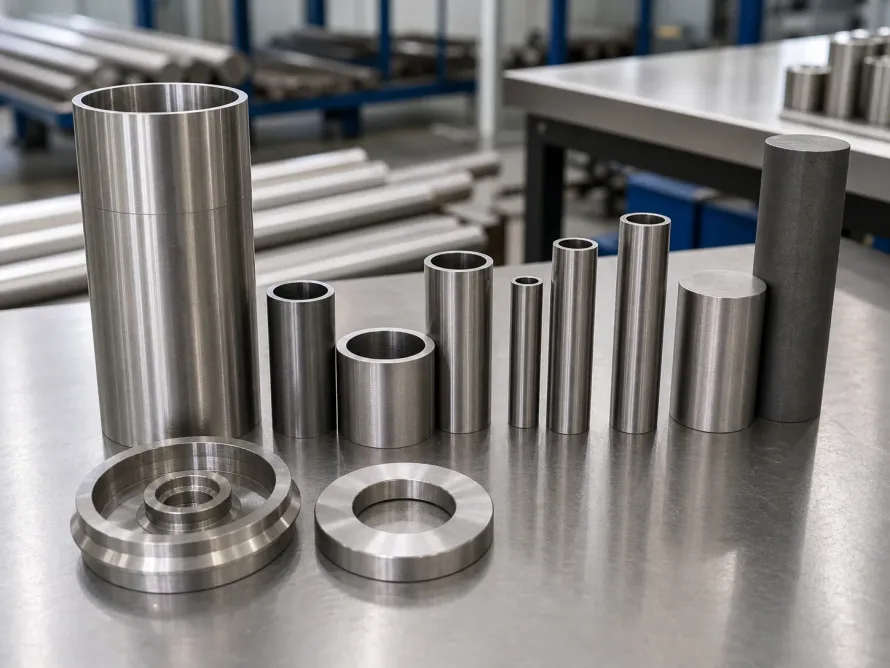
Titanium-like cylindrical workpiece on a machining line, illustrating why capacity expansion still has to preserve route and release evidence.
By Jason/ On 15 Jul, 2026

Titanium EBM Ownership-to-Release Evidence for Buyers

Zenith Tecnica's new ownership announcement is a useful current signal for titanium buyers, but it is not a shortcut around release evidence. In its official announcement, which uses 2026-07-08 in the article body, Zenith described itself as a New Zealand contract manufacturer specializing in Electron Beam Melting, or EBM, titanium additive manufacturing. A current 3D Printing Industry article accessed on 2026-07-15 also reported the ownership change and capacity plan. The factual spine is specific. Zenith said the acquisition was completed on 2026-06-18. The company was founded in 2014, recently moved from five to six EBM machines, and is expanding toward eight EBM systems. Zenith also said annual revenue has increased by 490% since FY2020, that Heather Grace remains Interim General Manager through 2026-08, and that the company holds AS 9100 and ISO 13485 certifications. Its public material links EBM with Ti-6Al-4V and describes work for patient-matched orthopaedic implants, aerospace and satellite structural components, and high-performance industrial parts. For buyers of titanium products, the interesting question is not whether a supplier adds machines or changes owners. The useful question is whether the transaction, the fleet expansion and the planned move to larger premises preserve the evidence chain behind each released part. In other words: does the buyer receive an ownership-to-release file, or only a capacity story? Capacity Is Not ContinuityCapacity news can be good news. Titanium EBM capacity is difficult to replace quickly because the release path often depends on machine history, process windows, powder handling, post-processing, inspection and customer approvals. When a supplier with certified quality systems plans to add machines and move into larger premises, buyers may reasonably see a chance to improve lead-time access. But continuity is the harder problem. A new owner can keep the same name while changing decision rights. A larger EBM fleet can add throughput while creating a new machine boundary. A facility move can improve space while requiring evidence that powder handling, build setup, calibration, environmental control, post-processing flow and inspection routing still match the qualified route, the same concern behind a site-transfer release file. That distinction matters for titanium bars, tubes, plates, forgings and machined components as much as it matters for additively manufactured parts. A finished buyer packet often has to connect alloy, route, heat treatment, machining, surface condition, inspection and release authority. If an upstream EBM supplier is part of the route, ownership and capacity changes become part of the evidence question. The Ownership-to-Release File A practical buyer response is to ask for an ownership-to-release file. This is not a request for confidential corporate information. It is a structured way to confirm that a part, build or component lot remains controlled after ownership, fleet or facility changes.Evidence layer Buyer question Why it mattersOwnership transition Who has quality authority, release authority and customer-notification responsibility after the acquisition? The company may be continuous, but buyer approval depends on who controls change decisions and release signatures.QMS continuity Do AS 9100 and ISO 13485 certificates, scopes and surveillance obligations still cover the work being quoted? Certification names are useful only when the scope covers the actual process, site and product family.Machine boundary Which EBM machines are approved for the quoted part, and which machines are new, relocated or awaiting internal release? A move from six toward eight EBM systems does not automatically make every system equivalent for every part.Facility transfer What has to be rechecked when work shifts into larger premises? Powder storage, machine installation, calibration, atmosphere control, routing and inspection flow can affect release evidence.Program allocation Which customer programs stay on existing machines, and which move to new capacity? Lead-time improvement is meaningful only if the buyer knows whether its part family is being reallocated.Material and build window Which Ti-6Al-4V powder controls, reuse rules, EBM parameters, build orientation and nesting rules apply? The alloy name does not define the finished component unless it is tied to a stable route.Post-processing path Which heat treatment, machining, surface finishing and partner steps are locked for the part? Many titanium failures or delays appear after the build, not during the capacity announcement.Inspection and release packet Which dimensional records, NDT/NDI, CT, CoA, MTR/MTC, deviations and concessions will ship with the lot? The final buyer decision is made from records, not from a supplier-growth headline.This file should be proportionate. A low-risk industrial bracket may not need the same depth as a patient-specific implant or satellite structural component. It uses the same evidence discipline as a criticality-to-release file and a benchmark-to-release file. The principle is the same: define the change boundary, define the approved route, and define what evidence travels with the shipment. Where the RFQ Should Go Next The next RFQ should avoid broad language such as "Can you support more EBM titanium capacity?" A stronger RFQ asks which machines are included, whether the quoted part is tied to an existing qualified route, what changes if the job moves to a new machine, and how the supplier will notify the buyer if the facility, machine, powder control, post-processing partner or inspection route changes. Buyers should also separate commercial capacity from release capacity. Commercial capacity is the ability to accept an order. Release capacity is the ability to deliver a part with the same route control, document language and quality authority the buyer needs. A supplier can have one before it has the other for a specific part family. For exporters and downstream titanium product suppliers, this is also a useful sales framework. If a customer asks about a machined titanium component that includes AM input, the answer should not stop at "the upstream supplier has more machines." It should connect ownership continuity, machine qualification, material controls, post-processing, inspection, retained records, CoA, MTR/MTC wording and change control. What Buyers Should Not Overread The public sources do not disclose machine serial numbers, full certificate scopes, customer approvals, medical regulatory approvals, EBM parameter sets, powder specifications, part-level lead times, relocation validation records or released customer lots. They also do not prove that any specific aerospace, medical or industrial titanium component has been released from the expanded fleet. That limitation is normal. Ownership and capacity announcements explain direction; they rarely publish the release file. The buyer's job is to turn the announcement into precise evidence requests before a purchase order depends on the new capacity. The restrained conclusion is the useful one. Zenith Tecnica's ownership change and planned EBM expansion may strengthen titanium additive manufacturing supply options. For procurement and quality teams, however, the real buying question is whether every affected part can be tied to an ownership-to-release file that survives the change in owners, machines, premises and release authority.

Aerospace and Defense
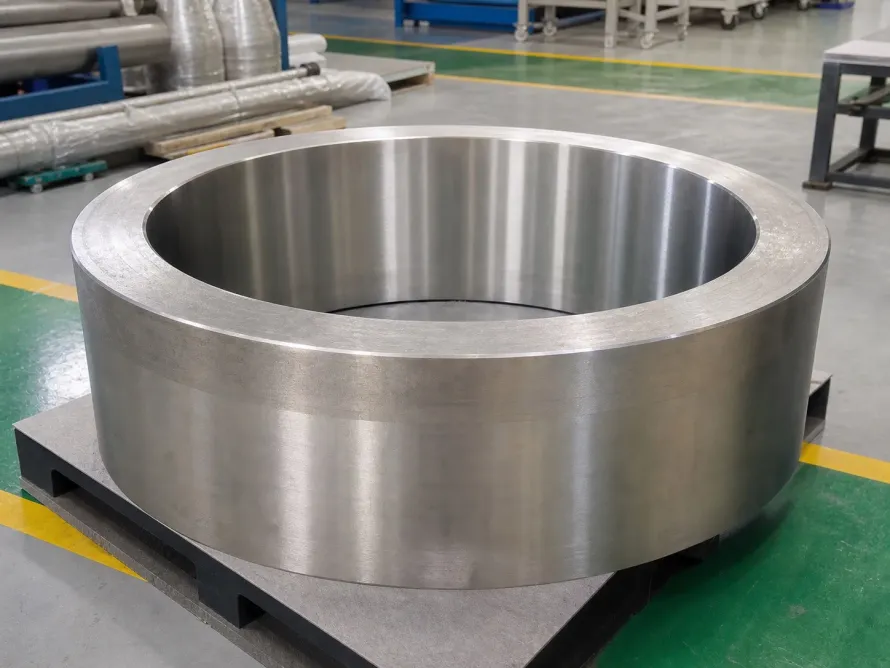
Worker checking machined titanium-like rings with calipers, illustrating that critical parts need dimensional, process and release evidence before shipment.
By Jason/ On 14 Jul, 2026

Defense AM Guide and Titanium Criticality Release Evidence

On 2026-07-09, Metal AM reported that ASTM International's Additive Manufacturing Center of Excellence had published the Strategic Guide to Certification of Additively Manufactured Parts in Defence Applications. ASTM AM CoE's own publications page says the guide was developed in support of the UK Ministry of Defence and Project TAMPA, and describes it as a practical, criticality-based framework for understanding certification evidence expected for AM parts. The news is broader than titanium. It is written to be technology- and nation-agnostic, and it applies across air, land and maritime applications rather than to one alloy or one machine platform. That is exactly why titanium product buyers should pay attention. A titanium component does not become acceptable because it is printed, machined, HIP-treated or inspected in a modern route. It becomes acceptable when the required evidence matches the consequence of that part failing in service. For procurement teams, the useful takeaway is a criticality-to-release file. Instead of asking whether a supplier "can print titanium," buyers should ask how the part is classified, who owns the design authority, which qualification path is being used, and what evidence travels with the released lot, assembly or spare. Criticality Comes Before Capability Metal AM summarized the guide as a signposting resource rather than a standard or regulation. It also reported that the guide includes Classes A-D, two certification pathways, and evidence areas such as feedstock control, machine and process qualification, product verification and non-destructive evaluation. 3D Printing Industry separately noted the same basic structure: evidence scales with part criticality, and suppliers may rely on either process qualification or finished-part testing depending on the route. That distinction matters for titanium. The material often enters applications where weight, corrosion resistance, fatigue behavior, temperature exposure or biocompatibility are part of the value case. Yet those advantages do not remove the need to decide what type of proof is proportionate to the part. A non-critical bracket, a marine replacement part, a pressure-boundary component, an aerospace fitting and a medical implant cannot all be released with the same evidence packet just because the alloy family is familiar. Criticality also changes how a buyer should read supplier claims. A powder lot, LPBF build, HIP preform, DED repair, machined ring or finished flange may all be technically impressive. But the release question is narrower: does the evidence prove this item, made by this route, under this authority, is acceptable for this function? The Criticality-to-Release FileA practical titanium RFQ can turn the guide's logic into a criticality-to-release file. The file does not replace the design authority or customer specification. It organizes the questions that keep AM capability, titanium material identity and final release from drifting apart.Evidence layer Buyer question Why it matters for titanium productsPart criticality What happens if the part fails, and is it treated as Class A-D or another customer-defined category? Evidence should scale with consequence, not with supplier confidence alone.Design authority Who approves the part, drawing, allowable route, deviation and repair decision? A supplier cannot release beyond the authority assigned by the customer, prime or regulator.Material boundary Which alloy, feedstock form, powder or wire lot, bar stock or preform is in scope? Titanium identity has to stay connected to chemistry, source, heat or lot records.Qualification path Is release based on process qualification, finished-part testing, or a combination? The path controls how much repeat evidence is needed on future lots.Machine and process window Which machine, build parameters, atmosphere, HIP cycle, heat treatment, machining and surface condition are locked? Titanium outcomes can change when oxygen pickup, thermal history or machining allowance changes.Verification route Which dimensional checks, mechanical tests, chemistry checks, NDT/NDI, CT or other inspection methods are required? High-criticality titanium parts often need more than a final visual or generic certificate.Release packet What CoA, MTR/MTC, concession status, traceability map and change-control language ship with the part? The buyer needs a document that says what is actually released, not only what was possible in development.This is not paperwork for its own sake. It is the bridge between a promising manufacturing route and a buyer-ready titanium product. If the part is low consequence, the file may be compact. If the part is safety-critical, the file should show why the selected proof is enough and who accepted it. The same evidence discipline runs through benchmark-to-release evidence for titanium powder, heat-treatment release evidence for titanium parts, audit-scope evidence for titanium AM suppliers and AM data-package evidence for titanium parts. What Buyers Should Not Overread The public sources do not say that ASTM has certified any specific titanium part. They do not make the guide a titanium specification. They also do not show that a supplier can use the guide alone to override a customer's drawing, material standard, source-control list, quality clause or release authority. That boundary is important. The guide is valuable because it pushes the conversation toward shared evidence expectations. It does not make every AM titanium route interchangeable, and it does not turn a process demonstration into approved production supply. For titanium buyers, the next RFQ should therefore be more precise. Ask for the criticality class or equivalent category. Ask which path is being used: process qualification, part testing or both. Ask what happens if the supplier changes powder source, wire heat, machine, HIP vendor, heat-treatment cycle, machining site or inspection method. Ask whether the release packet will include CoA, MTR/MTC, NDT/NDI results, retained-sample policy and change notification. For titanium suppliers, the commercial lesson is just as direct. Do not sell AM capability as if it were release authority. Sell the ability to connect material input, process control, verification and documentation to the part's criticality. In defense, aerospace, medical, energy and chemical-processing work, that connection is where buyer confidence is built. The restrained conclusion is the useful one. ASTM AM CoE's defense AM guide does not approve titanium products by itself. It gives the supply chain a clearer way to ask how much evidence is enough. For titanium bars, plates, tubes, forgings, AM preforms and machined components, that turns the buying question from "Can you make it?" into "Can you release it at the criticality this part actually carries?"

Ready to Start Your Project?

Get factory-direct pricing on titanium products. No minimum order.

Get a Free Quote
Quick Inquiry