Type something to search...

News Posts

Aerospace and Defense
Bolted titanium pressure component with machined flanges and vessel interfaces
By Jason/ On 03 Jul, 2026

Northrop's Single-Piece Titanium Tank Turns AM Buying Into an Inspection-Map Question

Northrop Grumman's reported single-piece Ti-64 propellant tank is a useful signal for titanium buyers because it does not just say additive manufacturing can save machining time. It shows what happens when a traditional pressure assembly is collapsed into one titanium product. According to 3D Printing Industry, the tank was built with directed energy deposition in titanium Ti-64, drew on the GAMAT material-data effort, and moved into formal performance testing after showing roughly 50% lead-time reduction and about 30% cost reduction versus the forged-and-welded version. The important procurement lesson is not the percentage alone. It is that the old evidence structure changes. In a forged and welded tank, buyers can ask separate questions about forging route, weld procedure, weld inspection, joint geometry and final pressure testing. In a single-piece DED tank, some of those interfaces disappear physically, but the buyer's responsibility does not disappear with them. It moves into a different map: material data, deposition route, integrated hard points, inspection access, pressure-boundary proof and release authority all have to describe the same part. Consolidation Removes Parts, Not Evidence Part consolidation is often sold as a design advantage. For a titanium pressure component, it is also an evidence transfer. A weld that no longer exists cannot be inspected as a weld. A hard point printed directly into a tank wall cannot be treated as an attached bracket unless the local geometry, build history and acceptance route support that interpretation.That is why the Northrop case is more useful when read as a buyer framework than as an AM success story. The source says the team used DED in Ti-64 and drew on the GAMAT dataset. America Makes describes GAMAT as a project to generate statistically based bulk material properties for Ti-6Al-4V through laser powder feed DED, addressing a lack of widely accepted design data for AM parts. That kind of material-data work helps the industry speak more consistently about DED Ti-64. But a material dataset is not the same as a released tank. The buyer still has to connect the dataset to the process route, machine envelope, part geometry, local features, inspection method and performance test. For critical titanium products, the mistake is to let "single piece" sound like "single question." It is not. It is a different set of questions. The Inspection Map Buyers Should Ask For A practical inspection map for a monolithic titanium pressure part should separate seven evidence layers (see our earlier reads on the titanium pressure-retention evidence file and AM data-package release evidence).Evidence layer What the buyer needs to see Why it mattersPressure-boundary definition Which surfaces, ports, transitions and local features carry pressure or launch load The releasable product is defined by function, not only by alloy and shapeMaterial-data basis How Ti-64 allowables, coupon data or internal design data apply to the exact DED route General AM material confidence does not automatically cover every build envelopeDeposition and thermal route Machine, feedstock, process controls, heat treatment and post-processing records The route becomes part of material identity for AM titaniumIntegrated feature control Hard points, feed tubes, bosses, flanges and transition zones tied to drawing intent Consolidated features can shift stress, inspection access and acceptance criteriaInspection access NDE, dimensional, surface, internal-quality and leak or pressure-test methods matched to geometry Old weld-inspection logic may not cover the new risk locationsPerformance test bridge How the tested article represents future production parts or purchase-order lots A demonstration result has to be translated into repeatable release evidenceRelease authority The customer, design authority or quality system that accepts the part for its intended boundary Supplier capability is not the same as buyer authorizationThis framework applies beyond spacecraft tanks. It matters for titanium pressure vessels, heat-exchanger shells, custom tube assemblies, machined flanges, AM preforms and any buyer-facing product where fabrication stages are consolidated. A buyer comparing a traditional route with an AM route should ask which evidence has been removed, which evidence has been replaced and which evidence has become newly necessary. The Product Form Still Matters Northrop's official space additive manufacturing page lists titanium across electron beam powder bed fusion, laser powder bed fusion, automated stir friction welding and wire directed energy deposition for structures, subsystem products, launch vehicles, motors and space vehicle or payload products. That range is important because it shows why titanium procurement cannot be reduced to "AM or conventional." Titanium bar, tube, plate, forging, shell and machined-component buyers still buy a product form. AM can change the route into that form, or it can make the route and final form harder to separate. In either case, the release packet has to be specific. A tube-stock certificate does not release a pressure tank. A DED material dataset does not release an integrated port. A performance test on one article does not automatically release every future geometry.For export buyers, that distinction affects RFQs and supplier evaluation (see our read on AM audit-scope-to-order release evidence). If a supplier quotes a single-piece titanium component, the buyer should not ask only for alloy grade, lead time and price. The RFQ should ask for the process route, inspection surfaces, pressure or leak evidence where relevant, drawing change rules, material-data basis, acceptance authority and the exact wording that will appear on the certificate or release document. The Strong Signal Is Discipline, Not Hype The most useful point in the Northrop story is that additive manufacturing is treated as a way to solve a product problem, not as a universal replacement for forgings and welds — the same discipline we saw in the titanium lattice load-curve release file. The reported savings matter because they are tied to a specific pressure component and a formal testing path. They would be much less meaningful if they were detached from inspection and qualification. For titanium suppliers, the opportunity is to make consolidated products easier to trust, not merely easier to print. For buyers, the safer question is not whether a single-piece Ti-64 tank is impressive. It is whether the evidence map is as integrated as the part. When that map is complete, AM consolidation can reduce interfaces without weakening buyer control. When it is incomplete, the missing weld can become a missing inspection point.

Aerospace and Defense
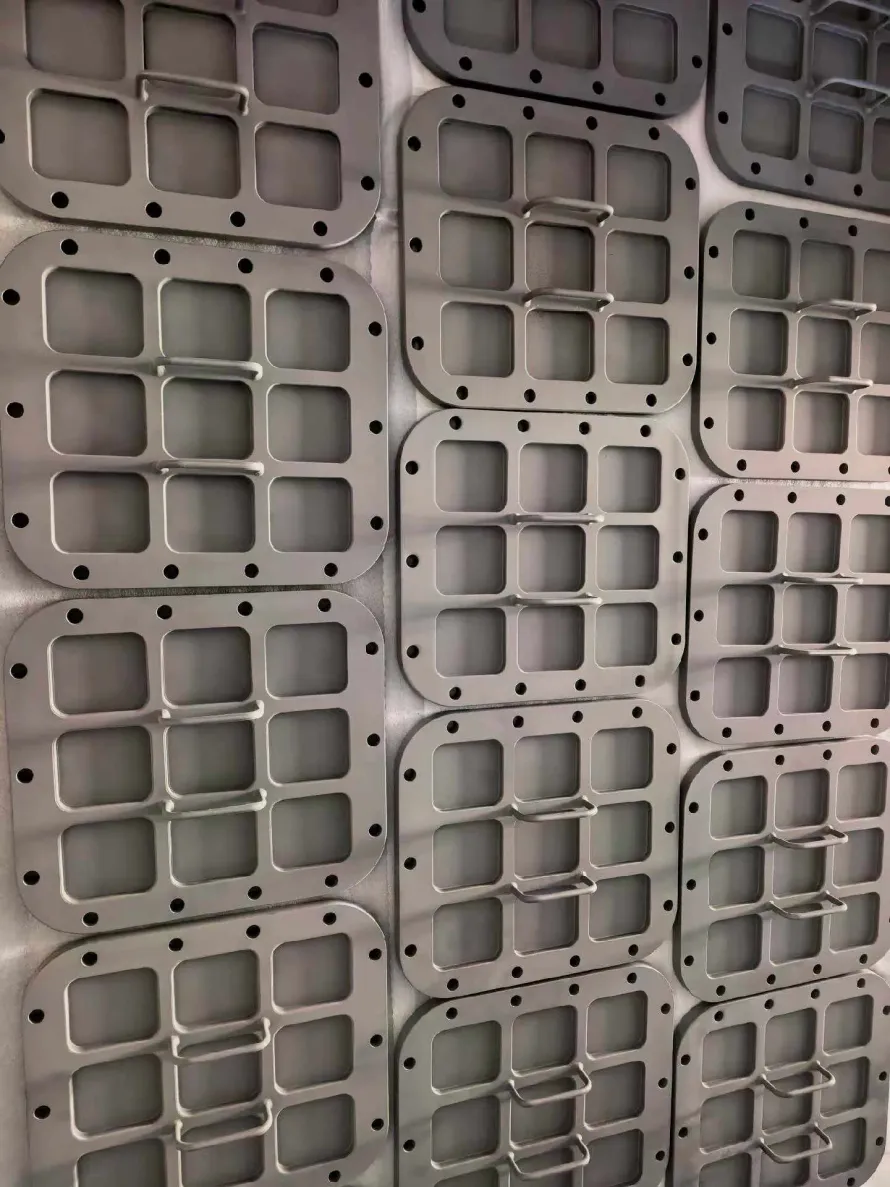
Machined titanium parts displayed on an inspection table, showing why complex titanium geometries need functional release evidence beyond alloy grade
By Jason/ On 02 Jul, 2026

NASA JPL's Titanium Lattice Signal Turns AM Buying Into a Load-Curve Release Question

The useful signal in NASA JPL's titanium lattice work is not simply that additive manufacturing can make shapes that conventional machining cannot. Titanium buyers have already heard that argument. The sharper procurement question is whether a function-critical lattice can be released with evidence that its load curve, relative density, internal quality, surface condition and final qualification boundary match the application. 3D Printing Industry reported on 2026-06-30 that Ryan Watkins of NASA Jet Propulsion Laboratory detailed how 3D printed titanium lattice structures are being used in the baseline design for Mars Sample Return impact protection. The article describes the structures as force-limiting crushables intended to protect Martian sample tubes during a hard-impact Earth landing without parachutes or powered descent. That is a very different buyer signal from a generic "lightweighting" story. A titanium lattice for impact protection is not valuable because it looks complex. It is valuable only if it collapses in a controlled way, absorbs energy across the intended stroke and avoids passing a damaging force into the item it is meant to protect. The public sources used here do not release a specific commercial titanium order, and the 3D Printing Industry article is a professional report on a NASA JPL presentation, not a NASA procurement instruction. The useful lesson is narrower and more practical: when titanium AM geometry becomes part of the function, buyers need a load-curve release file, not only an alloy certificate. Controlled Collapse Is the Product Function The Mars Sample Return example makes the mechanism unusually clear. The report says the sample container's worst-case design load is around 50 m/s, or about 110 mph. The baseline design uses a 3D printed titanium crushable structure inside the Earth Entry System to attenuate impact energy and limit force transmitted to the sample tubes. In that type of part, the important property is not maximum strength in isolation. A crushable lattice first responds linearly, then buckles or plastically collapses into a stress plateau. During that plateau, the structure keeps compressing while holding a relatively stable load. The area under the load-displacement curve represents energy absorbed. If densification arrives too early, the void space is gone, the structure stiffens and the force-limiting function can fail. For titanium buyers, that changes the evidence conversation. The release question is no longer only "What grade is the titanium?" or "Which AM machine printed it?" The release question becomes: did this lattice show the required load-displacement behavior in a representative test condition, and does the production route protect that behavior from lot to lot? Why This Is a Procurement Signal NASA's own standards context reinforces why this kind of AM part cannot be treated as a decorative geometry. The NASA Technical Standards System lists NASA-STD-6030 as an active standard with document date 2021-04-21 for additive manufacturing requirements for spaceflight systems. A NASA NESC article on AM standards explains that NASA-STD-6030 begins with an AM Control Plan and QMS, then separates foundational process control from part production control (NASA). That standards language matters even for buyers outside spacecraft programs. A titanium lattice, porous implant feature, energy absorber, vibration isolator or lightweight support is not just a material. It is a material-process-geometry system. If one part of that system changes, the function may change. This is why a supplier's brochure phrase such as "Ti-6Al-4V lattice" is not enough. Ti-6Al-4V identifies the alloy family, but it does not prove the unit-cell design, relative density, strut quality, heat treatment, surface condition, test setup or acceptance threshold. For critical orders, those details are not academic. They are the difference between a printed shape and a released component. The Load-Curve Release File A practical load-curve release file should connect application demand to the exact titanium item being shipped. The file will differ by sector, but the buyer logic is consistent (see our earlier reads on the titanium AM data-package release file and data-to-allowables evidence for titanium AM).Release layer Buyer question Evidence to requestApplication load case What impact, compression, vibration or crush event is the lattice meant to control? Load case, service boundary, allowable transmitted force, required energy absorptionFunctional target What should the load-displacement curve look like? Target plateau load, acceptable stroke, densification limit, failure mode notesGeometry basis Why was this unit cell and relative density selected? Unit-cell record, CAD model, relative-density target, design revision and simulation summaryMaterial and process Which titanium route creates the lattice? Ti-6Al-4V or other grade, powder or wire lot, LPBF or other process record, machine and parameter setInternal quality How are voids, lack of fusion and premature fracture risks controlled? Build record, witness coupons, CT or NDT plan, defect acceptance criteriaSurface condition How is roughness controlled inside complex cells? As-built surface data, chemical etching or finishing record, cleanliness and residue checksFunctional proof Does the part family show the required crush behavior? Compression test, load-displacement curve, plateau stability, densification point and sample planFinal qualification What is actually approved for use? Qualification report, drawing revision, route freeze, certificate language and change-control ruleThis structure prevents a common mistake: treating the lattice as a beautiful geometry while leaving the function unsupported. If the buyer cannot see the load curve, the plateau and the qualification boundary, the buyer cannot know whether the ordered part is a force limiter or only a printed structure.Geometry Becomes a Material Condition One of the strongest details in the report is that lattice manufacturing operates near the practical limits of metal AM. It says that in JPL's LPBF process, printable ligament thicknesses are around 1 mm while the overall print volume is on the order of 200 mm. That scale mismatch matters because a lattice can fail through local defects long before the larger component looks wrong. The article also describes a design workflow where unit-cell selection is not chosen because a shape is popular in AM research. JPL used tool-assisted screening to narrow more than thirty unit-cell types to two candidates, then printed test structures around 3% relative density and selected a diamond unit cell for a target crush strength in the 2-3 MPa range. The reported manufacturable relative-density range was around 2% to 4%. For buyers, that means geometry is not a drawing detail left to the engineering file. It is a release condition. A change from one unit cell to another can change stiffness, buckling behavior, stress propagation and densification. A small change in relative density can change the load plateau. A different build orientation or support strategy can shift surface quality and defect distribution. So the buyer should ask whether the drawing, CAD model, simulation assumptions, process route and test samples all describe the same geometry. If the quoted part is "equivalent" but uses a different unit cell, different strut thickness or different post-processing route, equivalence should be proven, not assumed. Post-Processing Is Part of the Function The report is also useful because it does not hide the manufacturing compromise. It says surface roughness and internal defects can both matter, but process tuning that improves one may compromise the other. JPL's approach, as described in the article, prioritized internal quality during printing and then used post-processing to improve the lattice surface. Chemical etching was highlighted because it can reach complex internal geometry. In one aluminum honeycomb example, the report says etching reduced surface roughness by 50% and relative density by 75%, bringing the structure to about 8% relative density. The same article says beam-based lattices can reach around 2% relative density in materials including Ti-6Al-4V. For titanium procurement, the lesson is not that every lattice needs the same etching route. The lesson is that finishing changes function. If post-processing removes material, changes surface roughness, opens internal passages, changes relative density or affects fatigue-sensitive features, it belongs in the release file. That matters for aerospace impact structures, medical porous features, energy absorbers, lightweight fixtures and severe-service components. A post-processed titanium lattice cannot be released by the as-built record alone. The buyer needs the before-and-after boundary: what changed, why it changed, how it was measured and whether the final curve still meets the application target. What Titanium Buyers Should Ask Before treating a titanium lattice or porous AM component as buyer-ready, procurement and engineering teams should ask five direct questions. First, what is the function of the lattice? If the answer is energy absorption, vibration control, bone ingrowth, fluid flow or lightweight support, the evidence must match that function. Second, what curve or test proves the function? For a crushable lattice, a load-displacement curve and densification boundary are more useful than a generic tensile value. Third, what geometry is frozen? Unit cell, relative density, strut thickness, build orientation and support strategy should be controlled as release variables, not decorative choices. Fourth, what internal and surface defects are acceptable? A visual check will not explain whether voids, roughness, trapped powder or etched surfaces affect the functional response. Fifth, what is the qualification boundary? The public report says the Mars Sample Return lattice structures are part of the baseline design and that remaining work is focused on final qualification. That distinction is exactly what buyers should preserve: promising baseline design is not the same as unrestricted production release. From AM Showcase to Buyer Evidence The best titanium AM stories are becoming less about whether a machine can print a difficult shape and more about whether a supplier can prove a difficult function, a shift we also traced in our read on audit-scope-to-order release evidence. The NASA JPL lattice signal is important because it shows that geometry, material and process are merging into one release problem. For titanium product buyers, the practical takeaway is simple. Do not accept a lattice component on grade, process route or visual complexity alone. Ask for the load curve, the plateau target, the relative-density basis, the surface and internal-quality controls, the post-processing record and the final qualification language. When those pieces connect, a titanium lattice can become a controlled functional component. When they do not, it remains a printed promise with an attractive shape.

Aerospace and Defense
Titanium bar and tube stock staged in a clean warehouse, illustrating why aerospace audit scope must connect to material form, order requirements and release evidence.
By Jason/ On 01 Jul, 2026

Nadcap's New AM Audit Framework Turns Titanium Orders Into a Scope-to-Release Test

The latest Nadcap additive-manufacturing signal is not only about whether more aerospace suppliers can pass an AM audit. For titanium buyers, the sharper question is whether a supplier's audited scope actually covers the route, material input, post-processing, inspection and release language attached to a specific purchase order. 3D Printing Industry reported on June 30, 2026 that Performance Review Institute's Nadcap program has moved additive manufacturing into a more defined aerospace audit framework, with AM now treated as one of the program's 26 critical process categories. The report says PRI conducted 6,140 audits in 2025 across 53 countries, using about 350 contracted auditors and accrediting around 4,600 suppliers. PRI's own Nadcap page describes the program as an industry-managed accreditation system for critical processes in aviation, defense and space (PRI). Those figures matter because they show the scale of the audit machinery. They do not mean a titanium bar, tube, forging, machined part or AM component is automatically releasable because a supplier has an accreditation. The public sources used here do not approve any specific titanium order. The useful lesson is narrower: aerospace AM auditing is moving deeper into the path from order intake to controlled process and final evidence. Audit Scope Is the New Procurement Question The Nadcap AM framework described by 3D Printing Industry separates the discussion from a simple "does the supplier have a certificate?" check. Revised metallic powder bed fusion criteria, AC7131/1, were reported as published in 2025-04 and effective from 2025-08-03. Directed energy deposition criteria, AC7131/2, were reported as published in June, covering laser powder, laser wire, electron beam wire, gas metal arc and plasma wire DED, with first audits beginning in Q4 2025. For titanium buyers, those distinctions are not technical decoration. A Ti-6Al-4V bracket made by laser powder bed fusion, a wire-fed deposited preform, a machined part cut from certified bar and a tube assembly made from welded or seamless stock may all appear under the broad label of titanium supply. They do not carry the same evidence burden. That is why the buyer should ask for the exact process scope, not just the accreditation name. Does the audited scope cover the process family used for the order? Does it cover powder production, wire input, build operation, heat treatment, hot isostatic pressing, machining, inspection or only part of that chain? Does the supplier's certificate match the product family being quoted? Why Titanium Makes the Audit More Demanding Titanium is often ordered for places where the cost of a mismatch appears late: fatigue exposure, pressure retention, flight hardware, seawater service, chemical corrosion, medical-adjacent hardware, high-temperature assemblies or long-life replacement parts. A purchasing team may be tempted to treat accreditation as a shortcut through that complexity. It is better to treat it as the beginning of the evidence request. The 3D Printing Industry report says every AM facility audit begins with a general checklist covering how a company takes a purchase order into the business, performs contract review and flows customer-specific requirements into internal procedures. That language is highly relevant to titanium orders. The first release risk may appear before the build, heat treatment or inspection step. It may appear when the customer requirement is translated into the supplier's internal route. A titanium supplier may be excellent at one route and weakly documented in another. A buyer may approve Grade 5 bar machining but not PBF. A design authority may allow DED repair or preform manufacture only inside a narrow envelope. A final certificate may reference material chemistry but fail to explain whether the order's special process, inspection method and customer drawing revision were inside the approved scope. The Scope-to-Order Release File For critical titanium orders, the practical file should connect audit scope to order release. The exact packet will vary by application, but the buyer logic should be consistent.Release layer Buyer question Evidence to requestAudit scope Is this order inside the supplier's accredited AM or special-process scope? Nadcap scope, relevant AC7131 family, process family, site and equipment coverageContract review Did the supplier flow the customer requirement into internal procedures? Purchase-order review, drawing revision check, customer specification matrix, deviation controlMaterial input Is the titanium input controlled for the selected route? Heat or lot identity, powder or wire records, MTR, storage and contamination controlsProcess family Is the route PBF, DED, machining, hybrid manufacture or another approved path? Frozen parameters, traveler, machine and software revision, build or route recordPost-processing Are stress relief, HIP, heat treatment, cleaning and machining inside the release boundary? Furnace record, HIP record, machining plan, surface condition and rework controlInspection Does inspection address the failure mode of this part? Dimensional report, tensile or coupon data, NDT, CT where needed, calibration recordsFinal release Does the certificate say what the buyer is allowed to use? Certificate of conformity, nonconformance closure, customer approval, lot or serial linkThis table is deliberately order-centered. Nadcap and QML checks can tell a buyer that a supplier has demonstrated capability in a defined area. They do not replace the need to match the released titanium item to the quoted route and customer requirement. Read PBF, DED and Powder Scope Separately One of the most useful details in the current report is that the audit framework does not treat AM as one undifferentiated process. PBF, DED and powder production have different control points. PBF may push the buyer to examine powder lots, build interruption rules, machine capability, software control, parameter sets, stress relief and HIP. DED may raise questions about wire or powder feedstock, shielding, thermal history, interpass control, post-build machining and NDT. Powder production introduces its own gas atomization or plasma route controls before the powder ever reaches a build. That distinction helps titanium buyers avoid a common mistake: accepting a supplier's strongest accreditation statement as proof for the weakest part of the order. If the quoted part depends on a subcontracted heat treatment step, outside HIP capacity, external machining, customer-specific tensile testing or a powder source not covered by the same quality route, the release file should make that boundary visible. The same logic applies outside AM. A machined titanium part cut from certified bar may not need AM audit evidence, but it still needs material identity, route control, dimensional inspection and final release language. The point is not to over-audit every order. The point is to ask for the evidence chain that matches the route. Nonconformances Are Buyer Signals, Not Just Auditor Notes The current report also described recurring AM audit findings around moisture and contamination control, operator training, key process variable documentation, software control, calibration plans and non-compliant tensile test results. It says nonconformances beyond a threshold can trigger a Mode B failure, with PRI categories including potential product impact and confirmed unserviceability. PRI EAN also states that its platform houses a searchable Qualified Manufacturers List that procurement can use to identify accredited companies (PRI EAN). For a titanium buyer, those findings translate into practical questions. How is powder or wire protected before use? Who is qualified to run the machine or route? Which variables are locked and which can be changed? Which software revision controlled the build or inspection? What happens if tensile results miss a customer requirement? How does the supplier prove that a nonconformance did not affect the shipped lot? Those questions are not hostile. They are the normal bridge between audit language and procurement risk. What to Ask Before Placing the Order Before placing a critical titanium order with an AM or special-process supplier, a buyer should ask five direct questions. First, what exact audited scope covers this order? A general aerospace quality system is not the same as process-family coverage. Second, where does the customer requirement enter the supplier's internal route? The purchase order, drawing revision and specification matrix should not be separated from the traveler. Third, which material input is controlled? Titanium powder, wire, bar, tube, plate and forging stock all require different release evidence. Fourth, which steps sit outside the audited or quoted boundary? Heat treatment, HIP, machining, cleaning, NDT and testing can all become release gaps if they are treated as afterthoughts. Fifth, what does the final certificate actually release? It should connect the lot or serial identity, material route, process record, inspection result and customer approval language. The real signal in Nadcap's AM audit expansion is not that titanium buyers should prefer one process route over another. It is that the market is becoming less tolerant of vague process claims. A supplier that can connect audit scope to purchase-order review and final release will be easier to qualify than one that only presents a badge. For titanium procurement, that is the practical takeaway. The order is not release-ready when a supplier says it has accreditation. It is release-ready when the audit scope, material input, process route, post-processing, inspection data and certificate all describe the same titanium item.

Aerospace and Defense
Machined titanium parts and stock material arranged for buyer release planning, illustrating why digital spare-part files still need material and inspection evidence.
By Jason/ On 30 Jun, 2026

Defence AM Turns Titanium Spares Into a Digital-Inventory-to-Release Question

The latest defence additive-manufacturing signal is not only about whether more parts can be printed. It is about who can turn an obsolete or hard-to-source part into a release-ready item when the old supplier, drawing trail or physical stock route is no longer enough. That distinction matters for titanium buyers. Titanium bar, plate, tube, forged and machined parts are often purchased for applications where alloy identity, heat history, inspection evidence and design authority matter as much as availability. A digital file may shorten the search for a spare-part route, but it does not answer whether the delivered titanium part is acceptable for the specific platform, load case, environment and maintenance boundary. 3D Printing Industry reported on June 29 that the UK Ministry of Defence has spent GBP 6.25 million on Project Tampa, including up to GBP 5 million with industry, as part of a four-spiral defence additive-manufacturing programme aimed at obsolescence and parts shortages across ageing platforms. The report says the programme has produced safety-critical components across land and air domains and sits alongside the MOD's first Defence Advanced Manufacturing Strategy (3D Printing Industry). The public sources do not say that Project Tampa has approved a specific titanium part. That limit is important. For a titanium supplier or buyer, the useful lesson is not "defence AM equals titanium approval." The useful lesson is that digital manufacturing is changing where the release burden sits. The bottleneck moves from finding stock to proving the chain from design data to material route, process control, inspection and sign-off. Digital Inventory Is Not the Same as Released Supply GOV.UK has also described additive manufacturing in submarine maintenance as a way to improve availability, reduce reliance on traditional supply chains and build industrial capability for submarine programmes (GOV.UK). The same page explains additive manufacturing as building components layer by layer from a digital file. For routine, low-risk items, that digital-file logic can be a practical supply-chain tool. For titanium components used in aerospace, defence, marine, chemical or high-fatigue service, it is only the beginning of the file. The titanium buyer still needs to know whether the replacement route is equivalent, substituted or newly qualified. A machined titanium spare cut from certified bar is a different evidence problem from a laser powder bed fusion part, a wire-fed deposited preform, a powder-metallurgy compact, or a reverse-engineered obsolete bracket. Each route can produce a useful part. None should be accepted on route label alone. That is why the next procurement question should be: what exactly travels with the digital inventory record? The Titanium File Needs Five Gates A useful digital-inventory-to-release file for titanium parts should separate five gates.Gate Buyer question Evidence that should travel with the partDesign authority Who owns the approved geometry and change boundary? Drawing revision, scan-to-CAD controls, deviation approval, design-owner sign-offMaterial identity What titanium grade and source route are being used? Heat or lot identity, material certificate, chemistry and mechanical records, permitted substitute rulesProcess route How is the part made this time? Machining, forging, AM, powder metallurgy or hybrid route record, frozen parameters, heat treatment and post-processing evidenceInspection logic How are hidden and service-critical risks checked? Dimensional report, NDT, surface condition, build monitoring, CT or targeted inspection where requiredRelease language What does the certificate actually allow the buyer to do? Final QA sign-off, application boundary, serial or lot link, nonconformance closure, customer approval and change-notice ruleThe framework applies whether the supplier ships a titanium flange, bracket, tube assembly, forged ring, machined housing or AM preform. The file does not need to be identical for every product. It does need to explain why the selected route is acceptable for the specific part family.Inspection Data Is Becoming Part of the Product The quality burden is also shifting inside the build or process route. On June 27, 3D Printing Industry reported that Phase3D closed a $2.9 million funding round for metal AM inspection. The report describes Fringe Inspection as structured-light heightmap sensing for metal powder bed fusion, capturing layer-level data such as powder-bed consistency, spatter, recoater streaks and internal feature geometry (3D Printing Industry). That does not make any one technology a universal release answer. It does show where the buyer discussion is going. When a titanium part has fatigue exposure, internal channels, thin walls, pressure-retention duty, marine service or aerospace interface risk, downstream paperwork alone may not explain the process history well enough. Build or process data can become part of the evidence needed to interpret the final inspection result. For powder bed fusion titanium, that could mean linking powder lot, build plate location, layer monitoring, heat treatment, surface finishing, internal inspection and final certificate. For wire-fed titanium deposition, it could mean wire chemistry, shielding records, thermal history, interpass control, post-build machining and NDT. For a machined replacement part, it may mean bar or billet identity, split history, machining route, dimensional records, cleaning, packaging and final release. The commercial risk is similar across routes: the buyer may receive a part that looks available before the evidence package is ready. What Buyers Should Ask Before Accepting a Replacement Route The current defence AM push should make titanium buyers more precise, not more suspicious by default. Additive manufacturing, reverse engineering and digital inventory can reduce downtime, keep older platforms supportable and create shorter routes for low-volume spares. The mistake is to treat those benefits as automatic release evidence. For titanium orders, buyers should ask four practical questions before accepting a digital or substitute route. First, is the route a like-for-like production method, or is it a material-process substitution? A machined part from certified titanium bar may be easier to document than an AM replacement, but it still needs drawing, material, dimensional and release continuity. Second, what is the application boundary? A non-critical cover, fixture or bracket does not carry the same evidence burden as a pressure part, fatigue-loaded structure, seawater-exposed assembly, implant-adjacent component or flight hardware. Third, what inspection evidence explains the risk? General certificates are not enough when the real risk sits in internal geometry, surface condition, weld or deposition quality, heat treatment, residual stress, or product-form mismatch. Fourth, who has release authority after a change? Digital files can move faster than approval systems. The buyer should know whether the OEM, platform owner, maintenance authority, design holder, supplier quality team or customer engineer controls final acceptance. The Real Signal for Titanium Supply Project Tampa and the MOD's advanced-manufacturing strategy point toward a broader industrial change: critical spares are becoming partly digital assets. That can be good news for titanium supply chains because many titanium parts are expensive to stock, slow to qualify and difficult to source once a platform ages. But the titanium opportunity is not simply that more parts can be printed or scanned. The opportunity is to build release-ready evidence around whichever route is chosen. A supplier that can connect material certificates, route records, inspection data, nonconformance handling and final release language will be more useful than one that only says a part can be made. For buyers, the safest conclusion is narrow and practical. Digital inventory can shorten the path to a replacement titanium part, but it does not remove the need for a product-specific release file. In high-value titanium procurement, the part is not truly available when the file exists. It is available when the file, the material, the route and the release record describe the same item.

Manufacturing and Technology
Large titanium machining and process equipment in a factory, used here to frame route-control and release planning for advanced metal parts.
By Jason/ On 29 Jun, 2026

Newport News' ARCEMY Fleet Turns Titanium WAAM Into a Wire-to-Release Question

AML3D's latest Newport News Shipbuilding update is easy to misread as another metal 3D printing capacity story. For titanium buyers, the more useful signal is narrower and more demanding: large-format wire additive manufacturing is moving closer to shipbuilding production, but a deposited titanium shape is still not a released titanium product. In a June 19, 2026 ASX release, AML3D said it had commissioned the first two custom, large-scale ARCEMY X systems for Newport News Shipbuilding, a division of HII. The company said that work completed an initial approximately AU$4.5 million order. It also said a second approximately AU$9.9 million order for four additional systems is tracking for delivery in early 2027, giving Newport News a planned fleet of six custom ARCEMY X systems. The detail that matters for product buyers is not only the system count. AML3D said the first two Newport News systems use a 10,886 kg positioner to create heavy-capacity build capability for shipbuilding applications. It also connected the fleet to lead-time reduction and alternatives to traditional manufacturing techniques. That is a real capacity signal. It is not, by itself, a titanium part approval. Why Titanium Buyers Should Watch the Signal AML3D separately lists titanium among the materials for its WAM and ARCEMY systems, including Ti-6Al-4V and CP-Ti. That makes the Newport News signal relevant to titanium product buyers, but only with a boundary: the public release does not say Newport News is producing titanium parts, naming titanium alloys for a specific ship component, or approving a released titanium route. That boundary is exactly why the news is useful. Wire arc additive manufacturing can change the economics and lead-time profile of large metallic parts, especially where casting, forging, billet machining or replacement-part sourcing is slow. Titanium raises the evidence bar because its value comes from the controlled relationship between alloy identity, oxygen exposure, thermal history, post-processing, inspection and application environment. For procurement teams, the question is no longer simply whether a supplier has a large metal AM machine. It is whether the supplier can produce a wire-to-release file that keeps material identity and process evidence connected from feedstock to final acceptance. The Capacity Story Is Becoming a Control Story Defense and maritime manufacturing are pushing additive systems closer to end-use workflows. A UK government update on additive manufacturing for submarine maintenance and support points in the same direction: production and repair capability are being pulled nearer to fleet support, maintenance and constrained supply chains. That shift can reduce waiting time for some part families, but it also moves more responsibility onto the digital and physical control system around the part. In titanium, the release question becomes sharper because the buyer must know what is being controlled and where the approval boundary sits. An ORNL technical paper on safety analysis for a titanium wire arc additive manufacturing system with an inert enclosure is a useful reminder that titanium WAAM is not only a robot path. Shielding, atmosphere, material handling and process safety are part of the operating envelope. The same discipline carries into buyer evidence: if the product depends on titanium's corrosion resistance, strength-to-weight ratio or service reliability, the build record must show how the process protected those properties.What a Wire-to-Release File Should Contain For titanium bars, plates, tubes, forgings, deposited preforms or machined components, a buyer should not treat wire AM as a shortcut around qualification. It is a different route that needs its own evidence chain.Evidence layer Buyer question Useful recordWire and chemistry Does the deposited material start from the specified titanium alloy and controlled lot? Wire certificate, chemistry record, supplier lot identity, incoming inspectionShielding and atmosphere Was titanium protected from the exposure risks that can change properties? Shielding plan, inert enclosure or local shielding record, oxygen monitoring where applicable, handling procedureMachine and software Is the build tied to a controlled machine, parameter set and program revision? Machine ID, software version, build file, parameter log, operator authorizationThermal and build history Does the heat input, interpass condition and deposition sequence match the accepted route? Build log, temperature or process-monitoring data, pause/restart records, nonconformance notesPost-processing How does the deposited shape become the released geometry? Heat treatment, stress relief, machining route, cutting plan, surface finish recordInspection and acceptance What proves the part is acceptable for the intended service? Dimensional report, NDT or CT where required, mechanical test plan, corrosion or pressure evidence if service demands itRelease authority Who has approved the route and what is the change boundary? Customer approval, qualified procedure, drawing revision, concession record, change-control ruleThis file matters even when the final product is not a fully printed part. Many titanium buyers will see hybrid routes: deposited preforms that are machined later, repaired or built-up features on traditionally made bodies, or large near-net shapes that replace heavy billet removal. In those cases, the weakest link is often the boundary between additive deposition and conventional finishing. How Buyers Can Use the News Now The Newport News/AML3D fleet should make buyers ask better questions, not rush to replace existing titanium supply routes. First, separate machine capacity from product release. A six-system fleet can improve optionality, but it does not tell a buyer whether a specific titanium alloy, geometry, wall condition, service environment or inspection route has been qualified. Second, identify the product form affected. A titanium pressure part, submarine-adjacent fitting, aerospace bracket, heat-exchanger component and machined ring do not share one evidence burden. The release file should follow the function and failure mode, not the marketing category "metal AM." Third, ask whether the AM route is substituting for forging, plate machining, tube fabrication, casting, repair or spare-part stocking. Each substitution changes the comparison baseline. If the legacy route had MTRs, NDT hold points and customer approval, the wire AM route needs equivalent or better evidence, not a thinner document packet.Supplier Implications Titanium suppliers that want to benefit from the wider move toward large-format metal AM should prepare evidence before buyers ask for it. The most useful supplier package will connect product form to route: wire source, alloy designation, build envelope, shielding method, heat treatment, machining recovery, inspection, release authority and change-control triggers. The package should also state what is not covered. If a route is proven for a demonstration geometry, it should not be presented as blanket approval for all titanium parts. If the process is approved for one alloy, that approval should not be stretched to another alloy or service environment. The site-original lesson is simple: as wire AM scales into shipbuilding and maintenance ecosystems, titanium buying becomes less about whether a machine exists and more about whether the route is auditable. A heavy-capacity system can make a large shape. A wire-to-release file is what makes that shape a buyer-ready titanium product.

Manufacturing and Technology
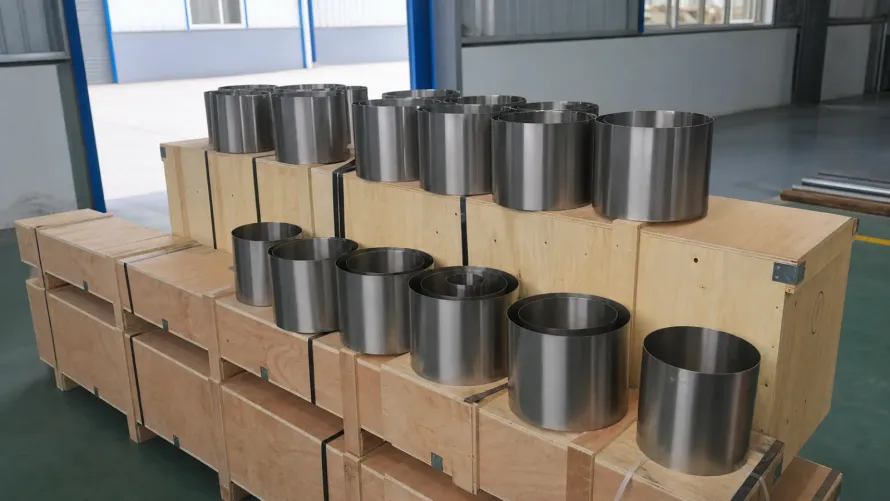
Titanium cylindrical parts staged on export crates, illustrating why AM buyers need batch identity and release data before acceptance.
By Jason/ On 28 Jun, 2026

ISO/ASTM 52951 Turns Titanium AM Buying Into a Data-Package Release Question

A new additive-manufacturing data standard gives titanium buyers a useful signal, but not because it makes any printed titanium part automatically acceptable. The more important change is practical: AM part acceptance is becoming a data-package question. China's national standards portal records ISO/ASTM 52951:2026 as published on 2026-06-24, and ISO lists the standard as Additive manufacturing - Data - Data packages for AM parts. For buyers of titanium components, especially in aerospace, medical, energy, pressure equipment, and precision machinery, that language matters because the risk rarely sits in the alloy name alone. It sits in whether the part can carry a connected record from design intent to release. The standard should not be read as a shortcut to approval. Public catalogue pages do not disclose the full paid standard text, and they do not certify a supplier, part number, machine, powder lot, or customer application. Its value for titanium procurement is different: it clarifies the kind of evidence discipline buyers should expect when AM moves from trial geometry to deliverable part. Why a data package is now part of the product Titanium AM is often sold through words such as lightweight, near-net shape, short lead time, and design freedom. Those words are useful only after the release path is clear. A Ti-6Al-4V bracket, sleeve, housing, implant blank, pressure component, or machined preform is not accepted because the build was successful on a machine. It is accepted because the buyer can connect the material, process, inspection, and exception records to the exact part being shipped. That is the product-hotspot collision created by ISO/ASTM 52951:2026. The news is not that titanium AM suddenly has a universal paperwork form. The news is that the standards system is making the data package more visible as an acceptance object. For buyers, the delivered item is no longer only a geometry plus a material certificate. It is a geometry plus a controlled evidence file. A useful titanium AM data-package-to-release file should connect at least seven layers:Layer Buyer question Release risk if missingDesign basis Which drawing, revision, tolerance set, and functional boundary was built? The record may describe a different design state than the shipped part.Material and feedstock identity Which alloy, powder or wire lot, reuse state, and chemistry basis entered the build? Correct alloy naming can hide uncontrolled feedstock changes.Machine and build record Which machine, parameter set, orientation, nesting, and build ID produced the part? A good test coupon may not represent the delivered geometry.Process monitoring data What in-process signals were collected, retained, reviewed, and linked to the build? Monitoring becomes decoration if exceptions are not tied to release decisions.Post-processing route What heat treatment, HIP, stress relief, machining, finishing, or cleaning followed the build? Mechanical and dimensional evidence can drift from the as-built state.Inspection and imperfection record Which NDT, CT, metrology, surface, and defect-language records apply? Defects may be named without a clear acceptance boundary.Acceptance and change control Who accepted, who conceded, what changed, and what triggers requalification? A shipment can look compliant while carrying unresolved exceptions.Imperfection language is not the same as acceptance The data-package story becomes stronger when read beside adjacent standards. ISO lists ISO/ASTM 52948:2026 for classification of imperfections in powder bed fusion parts. Standards listings also identify ISO/ASTM 52953:2025 for registration of process-monitoring and quality-control data, while ISO/TC 261 lists ISO/ASTM TR 52958:2026 on in-situ coaxial photodiode monitoring for lack-of-fusion flaw generation in metal PBF-LB. For titanium buyers, the practical lesson is that defect vocabulary, monitoring data, and acceptance are related but separate. A supplier may be able to classify an imperfection. A machine may capture process signals. A report may show in-situ monitoring traces. None of that, by itself, answers whether the part is releasable for a pressure boundary, aerospace bracket, medical blank, semiconductor fixture, or high-cycle rotating component. The release decision needs a bridge: which imperfection terms are used, which inspection method can detect them, which limit applies to the part family, which exception was reviewed, and which change would force a new qualification step. Without that bridge, buyers can receive more data without receiving more confidence. What should change in titanium supplier comparison The strongest supplier comparison is no longer "same alloy, same printer type, same price." Two suppliers may both quote Ti-6Al-4V and powder bed fusion, but they can represent very different risk if one can link build records, monitoring data, post-processing, NDT, and concessions into one release package while the other treats those files as separate attachments. That matters in export titanium buying because many orders pass through distributors, machining shops, and application-specific quality teams. When a printed preform is later machined, heat treated, inspected, packed, and documented for cross-border shipment, the AM build record must still remain connected to the final product identity. If the link breaks, the buyer may have a pile of correct documents that no longer describe the same part. The most useful buyer questions are therefore specific:Does the quote define the data package, or only the alloy and geometry? Are build ID, feedstock lot, machine state, post-processing route, and inspection records tied to the shipped serial, lot, or batch? Are imperfection classifications tied to acceptance rules, not only listed as technical vocabulary? Are process-monitoring records reviewed against a release rule, or merely stored? Which change in feedstock, parameter set, build layout, heat treatment, machining, or inspection would require buyer notification or requalification?The buyer framework: data-package-to-release file For titanium products, the reusable framework is simple: do not evaluate AM evidence as a stack of isolated PDFs. Evaluate it as a data-package-to-release file. That file should start with the part boundary: drawing, revision, service condition, and acceptance basis. It should then follow the material into the process: alloy identity, feedstock history, machine state, parameter set, build position, and monitoring record. It should continue after the build through heat treatment, HIP if used, machining allowance, final dimensions, surface condition, NDT or CT evidence, cleaning, packaging, and certificate wording. Finally, it should show exceptions, concessions, and change-control triggers in language the buyer can audit. This framework does not make AM paperwork heavier for its own sake. It prevents the most common procurement mistake: treating the most advanced part of the process as the whole quality story. In titanium AM, the printer is only one stage. The accepted product is created by the connection between build data, post-processing, inspection, and release authority. The clearest conclusion from ISO/ASTM 52951:2026 is therefore cautious but useful. Titanium buyers do not need to wait for every AM standard to settle before improving supplier questions. They can already ask whether a supplier's data package is complete enough to support the exact part, route, inspection boundary, and release decision being quoted. The supplier that can answer that question is offering more than a printed titanium shape. It is offering traceable acceptance evidence.

Aerospace and Defense
Machined titanium ring blanks grouped for shipment, illustrating why source control has to travel from strategic supplier decisions into lot-level release records.
By Jason/ On 27 Jun, 2026

Airbus and Safran's Aubert & Duval Move Makes Titanium Buyers Ask a Source-Control Question

Airbus, Safran and Tikehau Capital said on 2026-06-25 that they had signed an agreement for Airbus and Safran to buy Tikehau Capital's stake in Aubert & Duval. The transaction is expected to close before the end of 2026, subject to customary approvals. For titanium buyers, the useful signal is not that one more supplier has changed ownership. Aubert & Duval sits in a part of the aerospace supply chain where ownership, alloy route, melt practice, forging scope, machining boundary, recycling input and release documentation can all affect whether a titanium product is acceptable for a particular program. The buyer question is therefore narrower and more practical: when a strategic metallurgical source becomes more tightly controlled by prime aerospace groups, what evidence still has to travel with each titanium lot? The official release describes Aubert & Duval as a strategic supplier of critical components and materials for sectors including civil and military aerospace, defence, nuclear and medical applications. It also names high-performance steels, superalloys, titanium and aluminum, and says the company has a fully integrated industrial value chain from the design of new materials to the production of forged and machined parts. Aubert & Duval's own civil aviation materials page says it works with high-performance steels, superalloys, aluminum and titanium for complex aviation parts, with activity that reaches from material and part design to after-sales recycling. That wording matters because it is not only a capacity story. It is a source-control story. Ownership Control Is Not Lot Release A prime-controlled metallurgical supplier can improve continuity for aircraft programs that need stable material knowledge, approved routes and long-cycle industrial planning. It may also reduce uncertainty around strategic investments in melting, forging, machining, heat treatment and recycling. But none of that automatically releases a titanium billet, ring, bar, tube, plate or machined component for a buyer. A released titanium product still needs a chain of evidence. The alloy grade and specification have to match the order. The melt route and any VAR or other remelting step have to be recorded where they matter. The forging or conversion route has to stay inside the approved envelope. Heat treatment, machining, dimensional inspection, NDT where required, MTR data and change-control records have to connect the physical lot to the paperwork. If recycled titanium input is part of the route, the buyer still needs the material pedigree and allocation boundary, not just a broad recycling claim. That is why the Airbus-Safran move should not be read as a simple shortage or price signal. The public sources do not say that titanium supply has changed, that pricing will move, or that any buyer allocation has been revised. The stronger reading is procedural: high-value aerospace titanium is moving further into source-controlled systems where buyers must understand which evidence belongs to the supplier, which evidence belongs to the product form, and which evidence belongs to the released lot.The Source-Control-to-Lot Release File For procurement and quality teams, the reusable framework is a source-control-to-lot release file. It should not be a marketing folder. It should be a short, auditable bridge between the strategic source and the physical titanium product.Evidence layer Buyer question Why it mattersStrategic source identity Which approved source, mill, converter or forging route is tied to the product? Ownership control does not prove that this exact route is approved for this order.Alloy and specification basis Which grade, specification, chemistry and mechanical requirements govern the lot? Titanium product forms are not interchangeable just because they come from a strategic supplier.Melt and input pedigree What melt, remelt, scrap or recycled-input record supports the material identity? Recycling and integrated metallurgy need traceability before they become buyer evidence.Conversion and forging route Which billet, bar, ring, plate, tube or forged blank route created the product form? The release risk sits in the route boundary, not only in the company name.Heat treatment and machining boundary What process steps changed the material condition or final geometry? A good source can still produce a nonconforming part if the process envelope changes.Inspection and release package Which MTR, dimensional, PMI, NDT or other acceptance records travel with the lot? Buyers release physical material, not corporate strategy.Change-control trigger What source, route, facility, input or process change requires buyer review? Prime ownership can reduce uncertainty, but change control still decides continuity.This file is especially useful for titanium rings, forgings, precision machined parts and aerospace stock where buyers cannot treat material availability as separate from qualification evidence. It also helps non-aerospace buyers who purchase titanium for medical, chemical, energy or semiconductor equipment. The names in the source-control chain may differ, but the logic is the same: product acceptance depends on a documented route, not on a broad statement that an important supplier exists. What Buyers Should Watch Next The next useful public evidence will not be a headline saying that a shareholder transaction closed. It will be more specific: approved-source list changes, route disclosures, mill or forging investments, recycling qualification language, customer program references, audited process credentials, or product-form data that shows where the new control structure reaches the lot level. For titanium suppliers outside the Airbus-Safran-Aubert & Duval chain, the practical lesson is also clear. Competing in source-controlled product categories requires more than saying that Grade 5 or Ti-6Al-4V material is available. Buyers will increasingly ask how the supplier connects material origin, conversion route, inspection release and change control. A clean quote without that bridge may look cheaper, but it leaves the buyer with a qualification gap.The defensible conclusion is restrained. The Aubert & Duval agreement does not prove a new titanium shortage, a new price direction or a new approval path. It does show that strategic aerospace metallurgy is being treated as a controlled industrial capability. For titanium product buyers, that makes the release file more important, not less: every bar, tube, plate, forging or machined component still has to carry its own evidence from source control to lot release.

Aerospace and Defense
Stacks of titanium plate in a processing workshop, showing why supersonic aircraft programs need product-form and route evidence before release.
By Jason/ On 24 Jun, 2026

Supersonic Aircraft Push Titanium Buyers Toward a Release-Envelope File

The U.S. Defense Department's latest advanced-manufacturing call for supersonic aircraft is a titanium signal, but not in the simple sense of "more titanium demand." The more useful signal is that titanium alloy parts are being pulled into a tighter evidence environment, where material form, process route, inspection, repair and digital records all have to match the service envelope before a part can be treated as releasable. The WIRE Advanced Manufacturing for Supersonic Aircraft special topic collected submissions from 2026-05-15 through 2026-06-24. The notice says compliant submissions are scheduled for assessment from 2026-07-01 to 2026-07-31 and may be rated "awardable" or "non-awardable." It is not a contract award, and it should not be read as a titanium purchase order. It is still important because it defines the kind of manufacturing problem public buyers are trying to solve. The desired capability list is unusually revealing for titanium suppliers. It names additive manufacturing for flight-critical components, including PBF-LB and EBF3, and explicitly includes titanium alloys and nickel-based superalloys. It also asks for robotics, reverse engineering for legacy components, advanced repair technologies such as laser cladding and cold spray with non-destructive inspection, and digital tools such as MBSE and digital twins. For titanium buyers, that combination changes the question. A quote for Grade 5 plate, bar, tube, forging or machined stock is only the start. In a supersonic aircraft context, the buyer has to know whether the specific product form can survive the load, temperature, repair and inspection environment attached to the actual application. Why The Notice Matters Beyond Additive Manufacturing Inside Defense reported that the Pentagon was asking industry to pitch technologies for developing and sustaining supersonic aircraft, with submissions due 2026-06-24. The source framing matters: this is not only about printing new parts. It is about building and maintaining aircraft where cost, production speed, supply-chain risk and obsolete legacy systems are all part of the same problem. That is where titanium products become more complicated. Titanium is attractive in aerospace because it combines strength, low density, corrosion resistance and temperature capability. But those properties do not travel by name alone. A titanium alloy designation does not prove that a plate, billet, tube, forging, deposited preform or machined part is acceptable for a high-stress, high-temperature or repair-sensitive location. The WIRE notice also joins manufacturing and sustainment in the same request. That pairing is important. A supplier may be able to produce a part once, but the buyer still needs to know how the route will be repeated, repaired, inspected, reverse-engineered or digitally documented when the platform ages. For titanium, that turns the release file into a living boundary around material identity, route control and maintenance history.The Release-Envelope File A useful procurement framework is a load-temperature-sustainment release-envelope file. It does not replace engineering approval, customer specifications or regulatory requirements. It helps buyers ask whether the evidence they receive actually matches the environment in which the titanium product will work.Release-envelope layer What buyers should verifyService boundary Speed, temperature, load, vibration, corrosion, fatigue, pressure or maintenance exposure that makes this part different from a normal commercial titanium item.Material and form identity Alloy, melt route, product form, heat lot, geometry, stock removal and whether the delivered form matches the approved route.Process route Forging, rolling, machining, PBF-LB, EBF3, LMD-w, heat treatment, HIP, surface treatment or other locked process steps.Inspection and release NDI method, dimensional evidence, destructive or coupon testing when required, certificate wording, acceptance criteria and exception handling.Repair and sustainment Laser cladding, cold spray, reverse-engineering, replacement route, legacy data limits and when repair changes the approval boundary.Digital thread MBSE, digital twin, process record, inspection record and change-control link between the physical part and its release history.This framework prevents a common shortcut: treating stock availability as release readiness. Stock matters, especially when lead times are tight, but it does not answer whether the route, thermal state, surface condition, inspection package and repair rules fit a supersonic application. What Credible Route Evidence Looks Like Recent titanium AM programs show the same discipline. On 2026-04-14, GKN Aerospace launched the US$8.4 million TITAN-AM program with AFRL to industrialize wire-fed laser metal deposition for large-scale titanium aerostructures. The program is not proof of WIRE participation, but it is a useful example of the evidence pattern that serious aerospace titanium routes are moving toward: large-scale component processes, robust material datasets, simulation, additive-specific NDI and structural demonstration. That is the difference between a process claim and a release claim. A process claim says a supplier can print, deposit, machine, form or repair a titanium shape. A release claim has to show where the material came from, how the route was frozen, how the part was inspected, what changed after repair or post-processing, and which records prove that the delivered part still sits inside the approved envelope. For conventional titanium products, the same logic applies. Rolled plate for a hot structure, bar stock for a machined fitting, tube for a thermal or fluid system, and forgings for load-bearing geometry all need a product-specific file. The file may be simpler than an additive qualification package, but it still has to connect material identity, route, inspection and change control. Supply Context Makes The Evidence More Important The supply-chain backdrop makes this evidence discipline more valuable. The USGS 2026 titanium summary reported that the United States did not produce titanium sponge metal in 2025 and estimated net import reliance at 100%. It also estimated 2025 titanium sponge imports at 44,000 tons and noted that the majority of titanium metal was used in aerospace applications. Those figures should not be turned into a simple shortage claim. They do show why buyers cannot treat the supply chain as invisible. If feedstock, sponge, scrap, melt, mill product, machining and inspection cross different suppliers or regions, the release envelope has to preserve the evidence chain across those boundaries. For export titanium suppliers, this creates a practical commercial divide. A catalog supplier can answer "Do you have titanium?" A qualified supplier for supersonic or other critical aerospace work has to answer a harder question: "Can you prove that this titanium form, made by this route, released by this inspection package and controlled through this change history fits the application's envelope?"The Buyer Question Changes The clearest outcome of the WIRE notice is not that every titanium order becomes an additive manufacturing order. It is that high-speed aircraft manufacturing makes the boundary between material, process and sustainment harder to separate. Buyers should therefore avoid comparing suppliers only by alloy grade, diameter, thickness, quoted lead time or machining price. For critical or near-critical aerospace work, the better comparison is evidence maturity: service-envelope understanding, route stability, heat-treatment and post-process control, NDI access, repair rules, digital record quality and source transparency. Suppliers should read the same signal calmly. The opportunity is not a promise of immediate demand. It is a reminder that advanced aircraft programs reward suppliers who can package titanium products as controlled release systems rather than isolated pieces of metal. In that market, the strongest titanium offer is not just availability. It is a documented path from material form to verified release inside the load, temperature and sustainment envelope.

Ready to Start Your Project?

Get factory-direct pricing on titanium products. No minimum order.

Get a Free Quote
Quick Inquiry