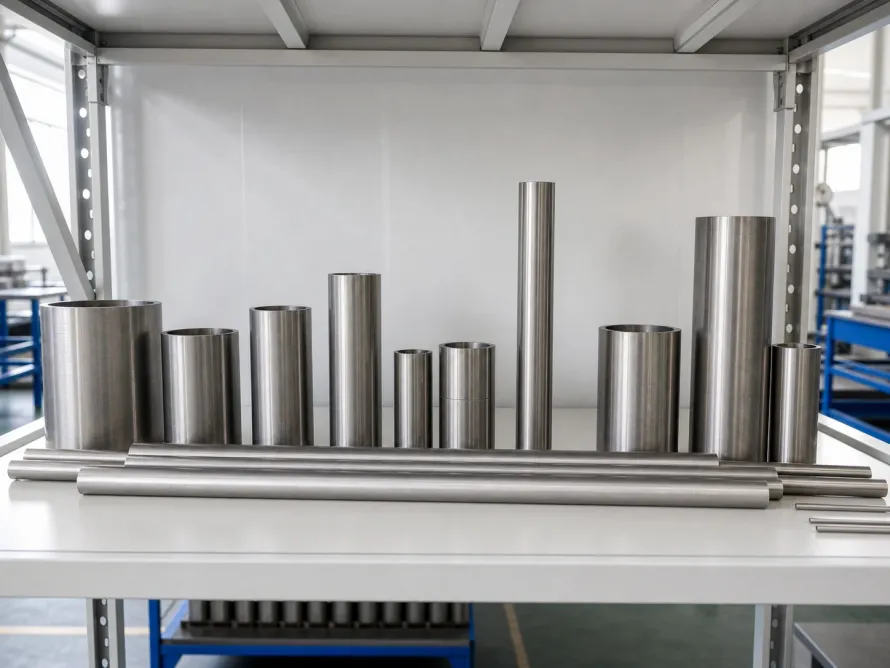
In fine chemical synthesis, hydrometallurgy, pharmaceutical decolorization, ozone contactors, and proton-exchange membrane (PEM) electrolyzer fluid circuits, process media impose brutal mechanical and corrosive loads. Operating conditions are harsh. Conventional 316L stainless steel sintered elements and polymeric PTFE membranes frequently suffer pitting perforation, stress corrosion cracking, or catastrophic structural collapse within weeks of exposure.
When specifying corrosion-resistant metallic filter media, procurement engineering teams face a decisive crossroad: should they deploy Cold Isostatic Pressed (CIP) high-vacuum sintered porous titanium filter cartridges or industrial woven titanium wire mesh? Proper selection is critical.
Drawing upon empirical quality control data from certified partner facilities, this technical guide breaks down the metallurgical, hydrodynamic, structural, and maintenance differences between these two titanium filtration forms. Quality standards cannot be compromised.
1. Metallurgical Architecture: 3D Sintered Network vs. 2D Interlacing
The fundamental operational boundary between sintered cartridges and woven mesh originates in their manufacturing route and microstructural geometry. Processing paths differ completely.
High-Purity HDH Titanium Powder ──> 300 MPa Cold Isostatic Pressing ──> 1,250°C Vacuum Sintering ──> Rigid 3D Micro-Porous Element
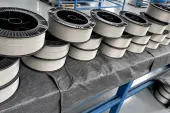
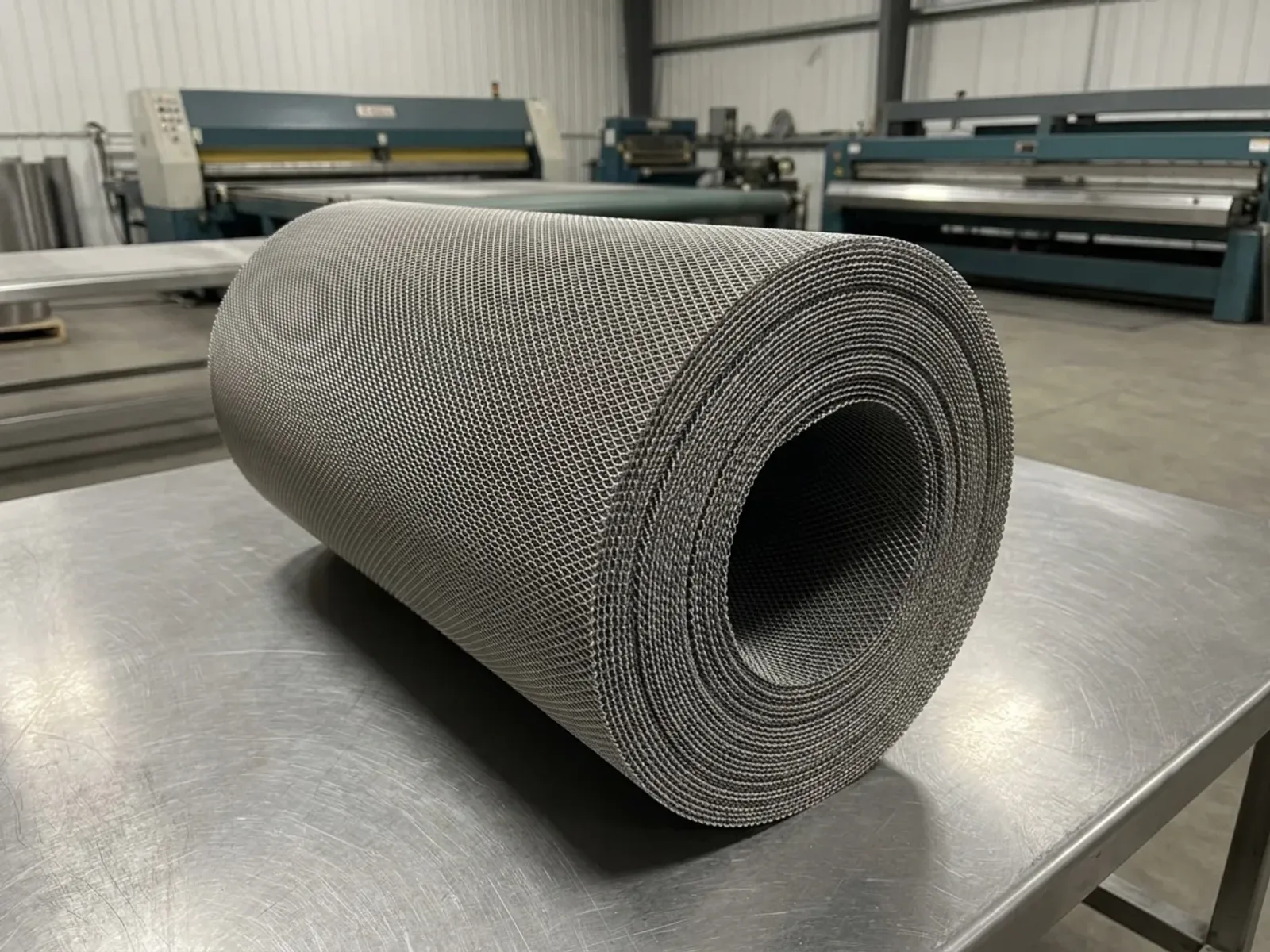
Industrial Pure Titanium Wire (Gr1 / Gr2) ──> Shuttleless Plain/Twill Weaving ──> Ultrasonic Cleaning ──> Flexible 2D Woven Mesh (5–200 Mesh)
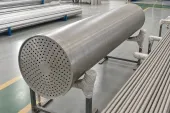
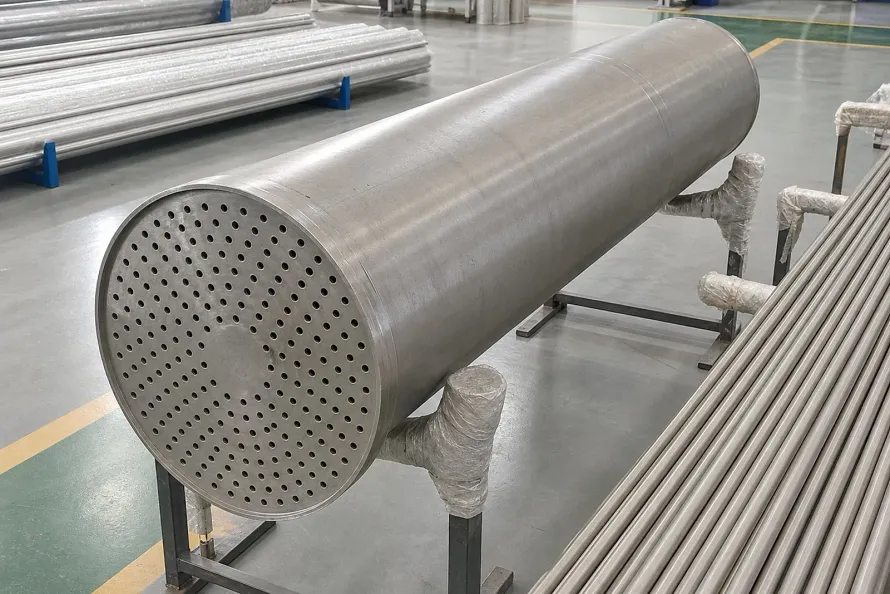
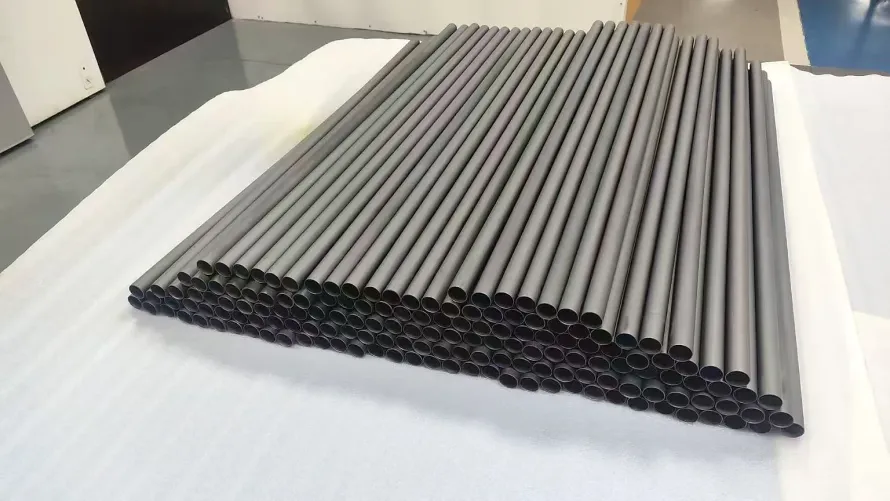
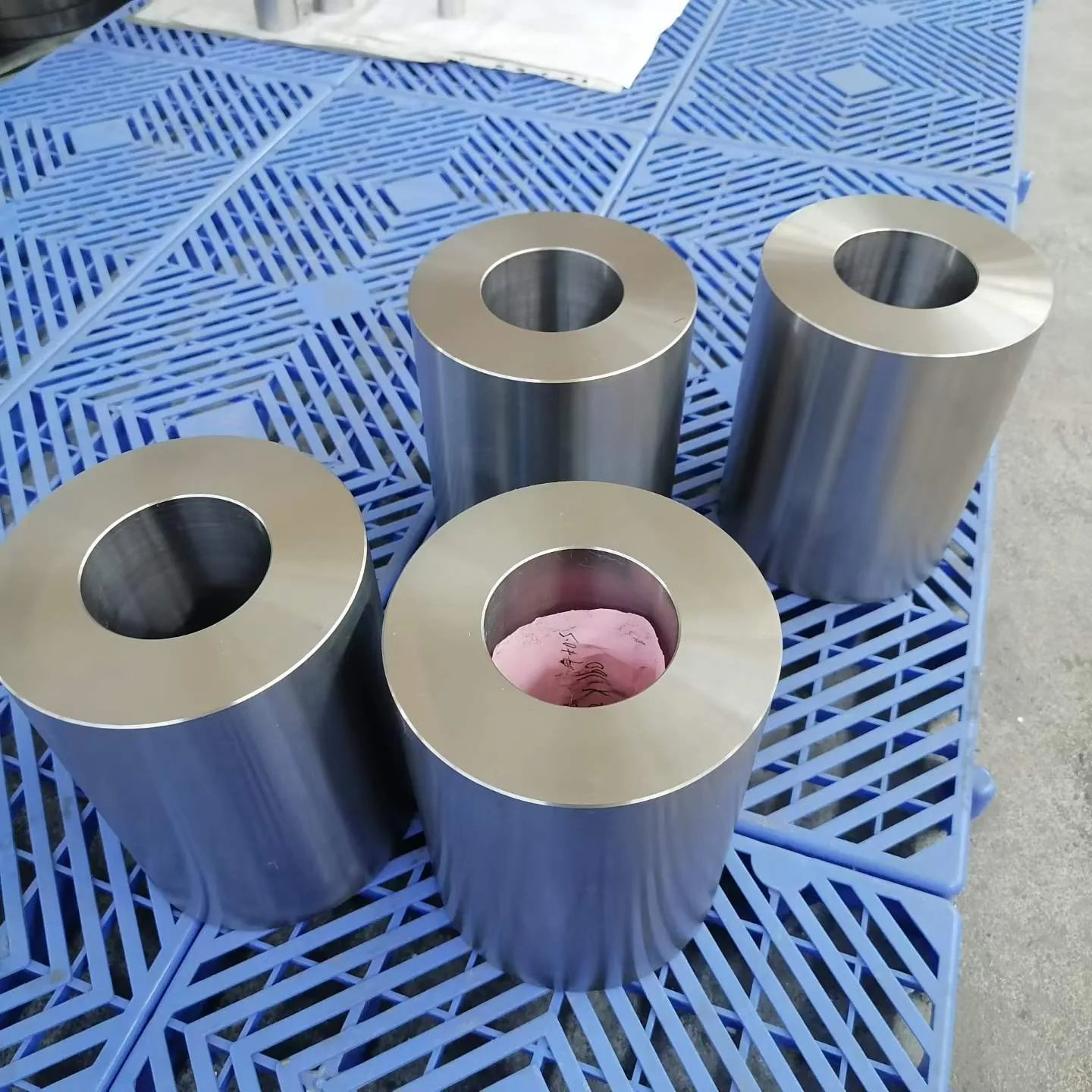
In certified partner facilities, porous sintered cartridges utilize classified hydride-dehydride (HDH) sponge powder. Classified powder is compacted in elastomeric tooling under 300 MPa cold isostatic pressing (CIP) or precision multi-roll powder rolling. Powder classification is meticulous. The green compact is then sintered in an ultra-clean vacuum furnace operating at pressures below $10^{-2}\text{ Pa}$ at 1,250°C.
At this sintering temperature, solid-state surface and volume diffusion create permanent metallurgical neck connections between neighboring titanium particles. The resulting isotropic matrix provides a stable 35% to 50% open porosity featuring complex, tortuous three-dimensional pore channels. Structural rigidity is exceptional. Because the element contains zero chemical binders or organic lubricants, it guarantees zero particle shedding or media migration into downstream pharmaceutical or chemical streams.
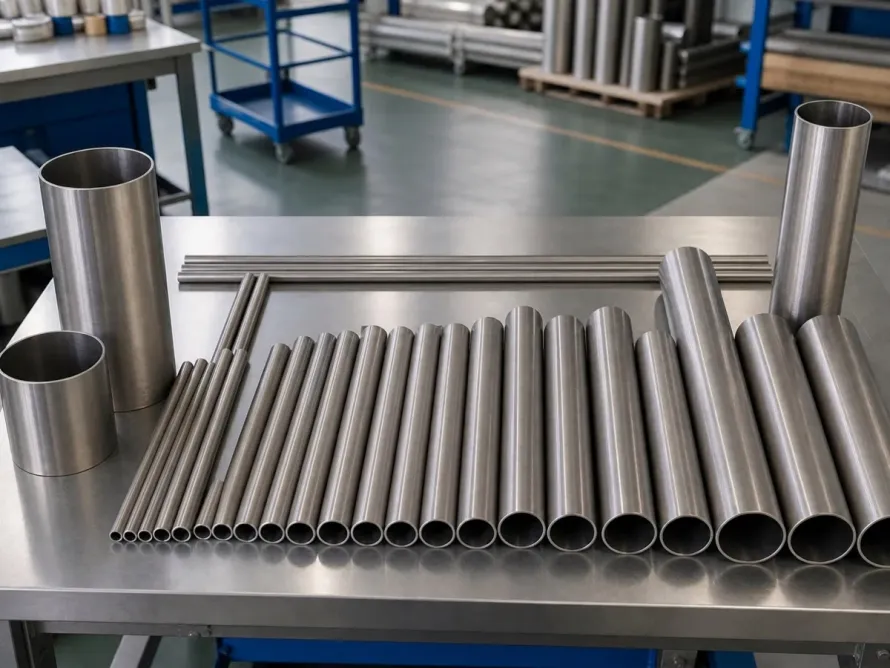
In contrast, woven titanium wire mesh is manufactured from bright-annealed Grade 1 commercially pure titanium cold-drawn wire ranging from 0.2 mm to 2.0 mm in diameter. Wire diameters are tightly controlled. Woven on precision shuttleless looms in plain or twill patterns, standard industrial mesh spans 5 to 80 mesh (with 8 to 30 mesh predominating in MMO anode baskets), while fine filtration weaves reach 100 to 200 mesh. Woven mesh is fundamentally a single-plane two-dimensional sieving boundary.
2. Engineering Performance Matrix
Clear operational numbers guide smart procurement. The comparative table below outlines the essential physical and operational parameters across both filter forms:
| Engineering Parameter | 300 MPa CIP Sintered Porous Titanium | Precision Woven Titanium Mesh (100–200 Mesh) | Expanded / Perforated Titanium Sheet |
|---|---|---|---|
| Filtration Mechanism | 3D Tortuous Depth Interception + Inertial Impaction | 2D Single-Plane Surface Sieving | Coarse Particle Straining / Structural Core |
| Pore Rating Range | 0.22 μm to 100 μm (Absolute & Nominal) | 75 μm to 150 μm (~100–200 Mesh) | 250 μm to 4,000 μm (0.25–4 mm Aperture) |
| Open Porosity / Void Fraction | 35% to 50% (Volume Porosity) | 30% to 45% (2D Geometric Open Area) | 40% to 65% (Macro Open Area) |
| Continuous Service Temperature | -200°C to +300°C (Up to 450°C in inert gas) | -200°C to +300°C | -200°C to +400°C |
| Max Differential Pressure ($\Delta P$) | Forward $\ge 0.6\text{ MPa}$, Reverse $\ge 0.4\text{ MPa}$ | Limit $\le 0.15\text{ MPa}$ (Distorts easily) | Structural Rating (Depends on plate thickness) |
| Back-Blow / Back-Wash Resistance | Superior (Withstands high-frequency pulses) | Poor to Moderate (Prone to wire displacement) | High (Rigid sheet resists hydraulic shock) |
| Media Migration Risk | Zero Shedding (1,250°C Diffusion Bonded) | Low (Wires intact, but trapped debris sheds) | Zero Shedding |
| Primary Failure Mechanism | Sub-micron cake compaction (Requires acid flush) | Mechanical wire slippage, flexural fatigue | Surface fouling, weld boundary tearing |
3. Four Core Procurement Decision Criteria
Procurement officers evaluating technical bids should apply four functional engineering criteria. Evaluation rules must be explicit.
1. Filtration Cutoff: The 50 μm Watershed
When chemical synthesis requires capturing fine particulates between 0.22 μm and 45 μm—such as precious metal catalyst recovery (Pt/C or Pd/C) or activated carbon removal in pharmaceutical batching—engineers must specify porous sintered titanium filter cartridges. Micron retention is uncompromising. Tortuous depth pathways ensure filtrate turbidity remains below $0.5\text{ NTU}$.
Conversely, if the process stream only requires trapping pipe scale, weld spatter, or suspended macro-solids larger than 75 μm (200 mesh), deploying industrial titanium wire mesh delivers lower initial hydraulic resistance at maximum throughput. Low pressure drops dominate.
2. Differential Pressure Pulses and Online Back-Washing
Unplanned shutdowns to manually swap blinded filter bags or cartridges generate unacceptable downtime costs. Plant uptime is paramount. Sintered porous titanium cylinders feature high compressive and hoop strength. When surface cake build-up drives pressure drop across the filter to $0.2–0.3\text{ MPa}$, automated systems can pulse 0.4–0.5 MPa clean nitrogen or steam backward through the element.
Because the sintered particles form a unified structural lattice, reverse shockwaves dislodge the filter cake instantly without displacing pore channels. Woven wire mesh lacks this three-dimensional rigidity; without heavy perforated backing cores, repeated reverse pulses cause wire mesh pleats to balloon, stretch, and tear. Mechanical backing is mandatory.
3. Chemical Regeneration and Pickling Compatibility
Both product forms utilize commercially pure titanium’s passive $\text{TiO}_2$ surface film, offering outstanding resistance to wet chlorine gas, sodium hypochlorite, and nitric acid. Corrosion resistance is proven. However, sintered cartridges excel during heavy chemical cleaning: soaking in $15%–20%\text{ }\text{HNO}_3$ for 2 to 4 hours dissolves scale without enlarging calibrated micropores, while warm $3%–5%\text{ }\text{NaOH}$ ultrasonication dissolves stubborn organic resins. Pure water rinses return permeability to over 90% of factory clean baseline.
4. Incoming Quality Inspection: Bubble Point and MTC Verification
To protect against counterfeit elements manufactured from cheap contaminated titanium scrap powder or under-sintered green bodies, procurement agreements must mandate clear verification gates. Receiving checks are essential.
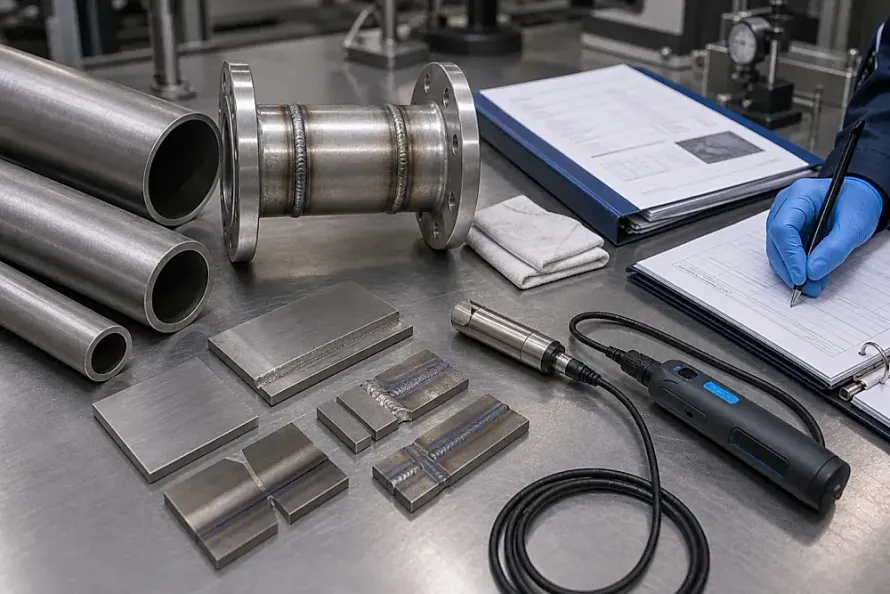
Every production heat of sintered cartridges must undergo an absolute bubble point test per ASTM E128 or ISO 4003. Submerged in pure ethanol (surface tension $\gamma = 22.3\text{ mN/m}$), the element is pressurized until the first continuous stream of micro-bubbles emerges from the surface. The test logic is rigorous. Under the Washburn equation: $$D_{\max} = \frac{4 \gamma \cos\theta}{P}$$ This recorded pressure directly certifies the maximum pore diameter, detecting gross structural fissures before delivery.
End fitting adapters—including 222 O-ring plugs, 226 locking lugs, and NPT threaded couplings—must be joined to the porous tube using automated high-purity argon chamber TIG welding. Weld quality demands strict control. The weld bead must exhibit a bright silver or pale straw metallic luster. Blue, gray, or powdery white discolored welds indicate atmospheric contamination, which leads to brittle stress corrosion cracking under cyclical process vibrations.
Suppliers must provide certified Material Test Certificates (MTC) with complete heat number and lot traceability. Supply chain traceability is seamless. Interstitial impurity limits in raw powder must be strictly verified: oxygen must remain $\le 0.35%$ and iron $\le 0.15%$. Excess iron and oxygen embrittle powder contact necks, causing elements to shatter under sudden water-hammer shock.
Related Products & Services
- Porous Sintered Titanium Filter Cartridges Product Overview
- Woven Titanium Wire Mesh and Expanded Titanium Products
- Industrial Pure Titanium Tubing and Seamless Pipes
- Grade 1 Commercially Pure Titanium Technical Specifications
- Small-Batch & Prototype Customization Services
- Certified Partner Facilities Production Lines and Quality Inspection
Complimentary Pre-RFQ Engineering Drawing and Specification Audit
Whether your project requires custom-diameter porous titanium filter candles, gas sparging tubes, or fine-mesh anode baskets for corrosive reactors, submit your specifications through our Complimentary Pre-RFQ Audit. Our engineering review is free.
Our metallurgical specialists will review your operating temperatures, chemical compositions, target micron ratings, and back-wash cycle parameters to ensure full material and dimensional compliance. Small prototype test orders and custom length cuts can be accommodated directly through our certified supply chain network. Engineering support is responsive.