Precision Ultra-Thin Titanium & Specialty Metal Foils
Rolling titanium below 0.05 mm is one of the hardest jobs in flat-product metallurgy. Buyers of thin foil typically run into the same problems: springback during forming, edge waves, uneven mechanical properties along the coil, and color shading on the surface after annealing.
Titanium Seller supplies foil through a partner rolling mill in Baoji that runs a dedicated strip-and-foil line. Thickness, width, temper, surface and test requirements are confirmed against your drawing or specification before the order is placed.
Size Range
| Material | Thickness | Width |
|---|---|---|
| Pure titanium strip & foil | 0.02–1.0 mm | 350–680 mm |
| Ultra-thin pure titanium foil | down to 0.005 mm (5 µm) | up to 320 mm |
| Titanium alloy foil (TC4 / Gr5, TA18 / Gr9, TB5) | 0.03–1.0 mm | 350–680 mm |
| Zirconium strip & foil | 0.02–0.8 mm | 350–680 mm |
| Nickel strip & foil | 0.03–0.8 mm | 350–680 mm |
Supplied as coil; slit widths and cut-to-length sheets on request. Thickness tolerance, flatness and surface roughness are quoted per order against the standard or drawing you specify (for example ASTM B265 for titanium).
The Partner Mill’s Strip-and-Foil Line
The line was built around a 750 mm 20-high precision cold rolling mill, supported by:
- an ultrasonic cleaning line for degreasing between passes,
- a continuous annealing line and a vacuum annealing furnace,
- a leveling line,
- a surface grinding line, and
- a slitting line for narrow and ultra-thin strip.
The mill’s process development targets the defects that matter most in thin titanium: surface color differences after annealing, thickness accuracy, degreasing chemistry, strip tension during rolling, uniform ground surfaces, uniform annealed structure, and slitting of ultra-thin material. These are the points we ask to see evidence for — inspection records and MTC results — on each order.
Grades
| Grade | Composition | Reference properties | Typical uses |
|---|---|---|---|
| Grade 1 | CP titanium | ASTM B265: O ≤ 0.18%, elongation ≥ 24% | Deep-drawn parts, electrolyzer components, acoustic diaphragms |
| Grade 2 | CP titanium | ASTM B265: O ≤ 0.25%, yield ≥ 275 MPa | Chemical linings, implant housings, shims |
| TC4 / Grade 5 | Ti-6Al-4V | ASTM B265: tensile ≥ 895 MPa | Thin high-strength parts, aerospace shims |
| TA18 / Grade 9 | Ti-3Al-2.5V | — | Cold-formed thin parts, sensor diaphragms |
| TB5 | Ti-15V-3Cr-3Sn-3Al (β) | — | Thin springs and formed parts (aged after forming) |
| Zirconium 702 | Zr + Hf ≥ 99.2% | ASTM B551 R60702 | Corrosive-service rupture discs and liners |
Reference properties are the minimums in the cited standards. Actual results are reported on the MTC for each coil or lot.
Applications
1. Hydrogen PEM Electrolyzers & Fuel Cells
Thin Grade 1 and Grade 2 foil is used for bipolar plates and as the substrate for porous transport layers, where corrosion resistance under anodic polarization is the reason for choosing titanium.
2. Acoustic Diaphragms
Grade 1 and Grade 5 ultra-thin foil is formed into tweeter domes and headphone diaphragms, where titanium’s stiffness-to-density ratio is the key property.
3. Medical Device Housings
Grade 1 and Grade 2 foil is laser-welded into hermetic housings for implantable electronics. Medical orders are placed with the material standard and documentation your device file requires.
4. Rupture Discs
Thin titanium and zirconium foil is used for rupture discs in chemical reactors and gas storage, where repeatable burst pressure depends on consistent thickness and strength.
Quality Documents & Packaging
- Mill test certificate: chemical composition (including O / N / H), tensile properties and thickness measurements for each coil or lot.
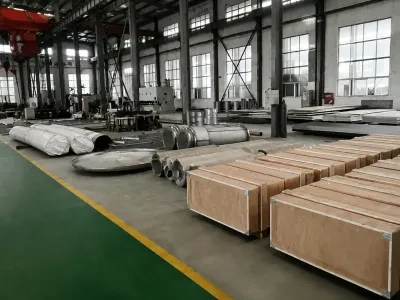
- Packaging: wound on rigid cores, wrapped in moisture-proof VCI paper and packed in wooden crates to prevent transit indentation.